After 13 years of deadlock, the EU has finally agreed to guarantee free cabin luggage on every flight — and, just as importantly, it has kept the flight-delay compensation you already rely on. The European Parliament gave the overhaul its formal blessing on 7 July 2026, voting 646 to 12 with three abstentions, and the new rules are set to take effect in 2027.
For anyone who flies in Europe — and especially for those of us who travel out of a single bag — this is the biggest shake-up to air-passenger rights since the original 2004 regulation. Here is what actually changes, and what it means for the bag on your back.
Free cabin luggage, for real this time
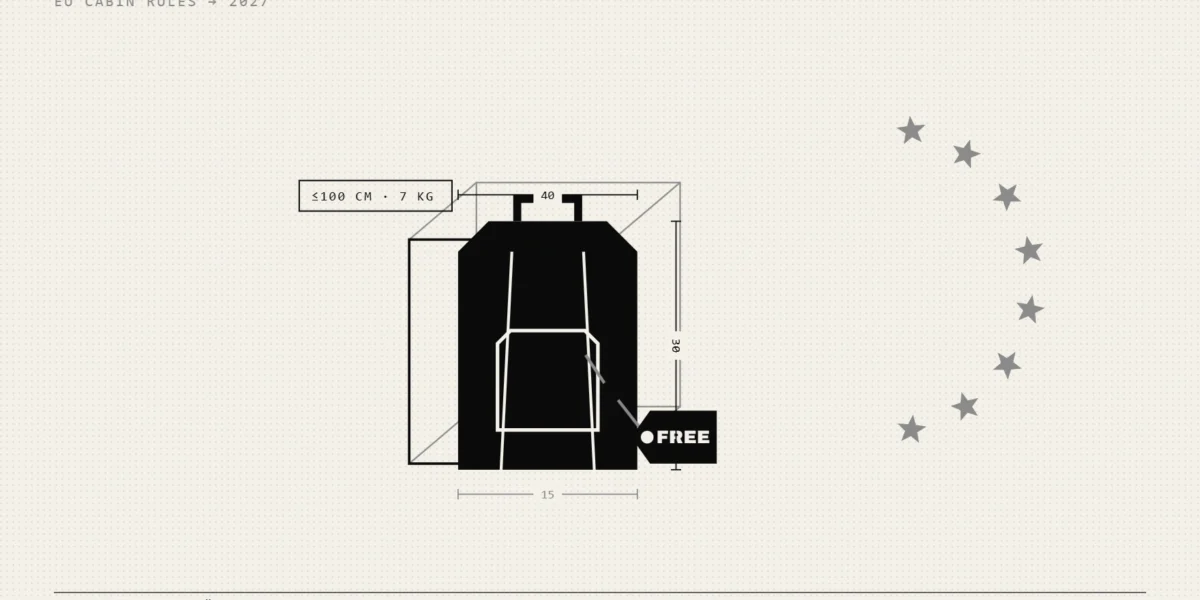
The headline win is baggage. Every passenger will be entitled to two pieces of hand luggage at no extra charge: a small personal item and a larger cabin bag. This means no more paying Ryanair, easyJet or Wizz Air a gate fee to bring the bag you were always going to bring.
| What you get free | Maximum size | Weight |
|---|---|---|
| Personal item (fits under the seat) | 40 × 30 × 15 cm | — |
| Cabin bag (goes overhead) | Up to 100 cm total — length + width + height added together | Up to 7 kg |
Two more changes travellers will feel straight away: airlines will have to display ticket prices with hand baggage included from the very start of booking, so you can finally compare fares like for like — and they can still offer a cheaper “no cabin bag” fare if you genuinely travel light and choose to opt out.
The delay compensation you already had — kept
Airlines lobbied hard to water down delay payouts, pushing to raise the threshold to four or even six hours. Parliament refused, and the three-hour threshold survived. Compensation stays tied to how far you were flying:
- €250 for flights up to 1,500 km
- €400 for flights between 1,500 and 3,500 km
- €600 for flights over 3,500 km
The same right covers cancellations made less than 14 days before departure, and denied boarding. A few other protections come bundled in:
- Care while you wait: refreshments after two hours, a meal after three, and a hotel for overnight disruptions.
- Simpler claims: airlines must proactively tell you your rights within four days, you have up to nine months to file, and they have 30 days to pay or explain a refusal.
- Families and access: children under 14 sit next to an accompanying adult for free, as do companions of passengers with reduced mobility — with added protection when an airport failure causes a missed flight.
What it means for the bag on your back
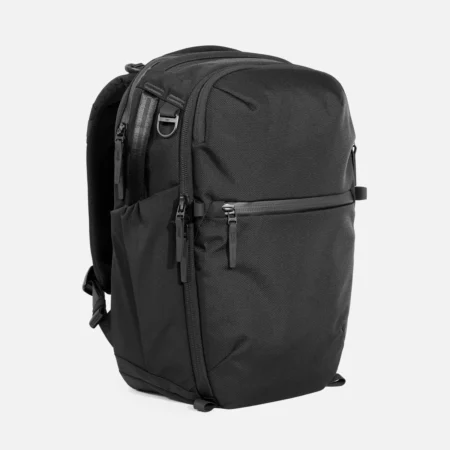
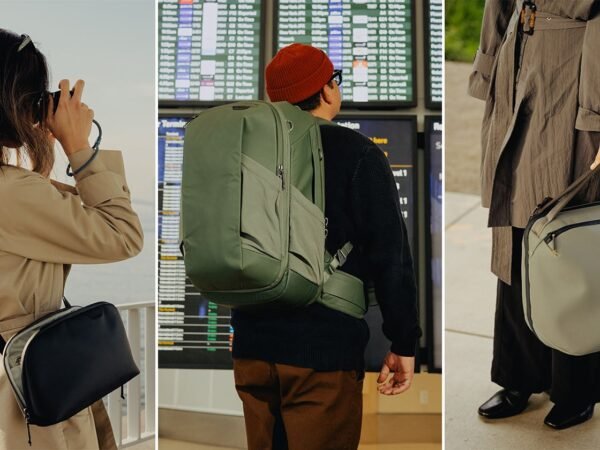
Here is the part that matters if you pack light: those two size classes are about to become the de facto baggage standard across Europe. Buy your next bag to hit them and you should never think about cabin fees again.
- A true personal item has to slip inside 40 × 30 × 15 cm — roughly an 18-litre daypack that lives under the seat in front of you.
- A cabin bag can be a good deal bigger, but the catch is in the wording: up to 100 cm when you add length, width and height together — not a litre count. That is around a 30–40-litre travel pack depending on its shape, kept under 7 kg loaded.
If you are shopping, our complete guide to one-bag travel covers how to size a pack for carry-on rules, and reviews like the Osprey Daylite 35 show the trade-offs at the larger end. Because the new limit adds the three dimensions together rather than counting litres, the smartest move is to measure your bag and run it through our airline fit check before you fly.
When does it actually start?
Not tomorrow. Parliament has approved the deal, but the Council still has to formally adopt it, after which it is published in the EU’s Official Journal and applies 12 months later — so realistically some time in 2027. Worth knowing before you assume a gate agent will wave your second bag through this summer.
Sources
The story broke from the EU institutions themselves, which announced the provisional deal on 15 June 2026; the Parliament then approved it on 7 July. Primary sources:
- European Parliament — Deal on air passenger rights: MEPs secure improved traveller protection
- Council of the EU — Council and Parliament reach landmark agreement on stronger EU air passenger rights
- European Commission — Commission welcomes landmark agreement on revised air passenger rights
Secondary coverage: Euronews (Marta Pacheco), 15 June and 7 July 2026.