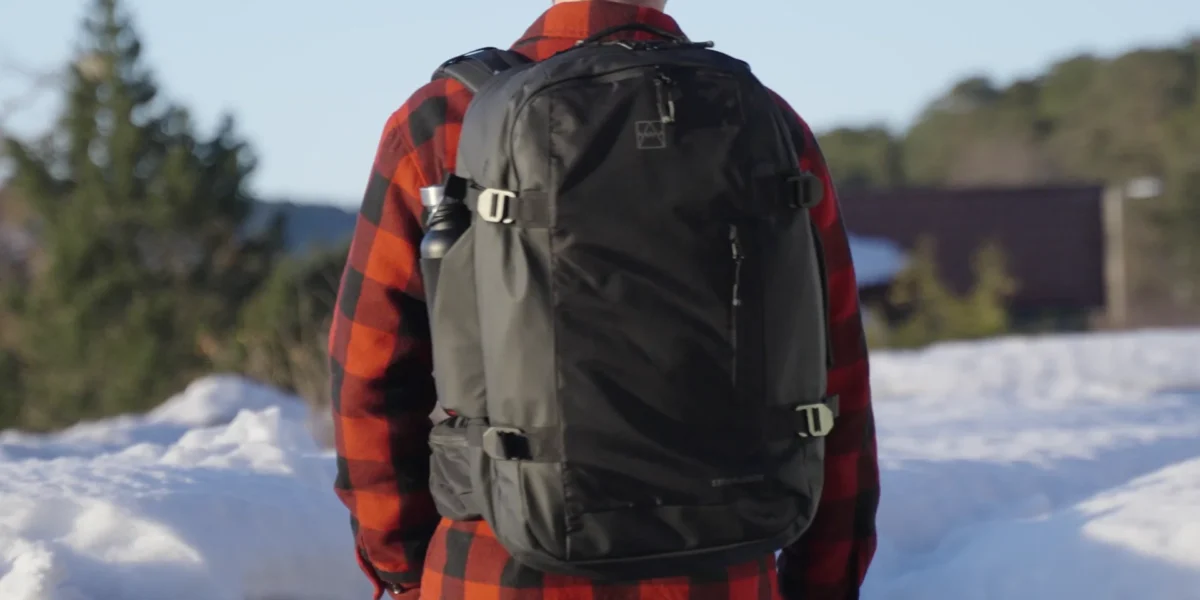
Pack Less. Experience More.
What Is One-Bag Travel?
One-bag travel is exactly what it sounds like: traveling with a single carry-on-sized bag that holds everything you need for your trip, whether it lasts a weekend or several months. No checked luggage, no rolling suitcase trailing behind you—just one bag on your back or over your shoulder, and the freedom to go wherever you want.
The concept has grown into a global movement, popularized by online communities like the r/OneBag subreddit (with over 370,000 members) and pioneering websites like OneBag.com. At its core, one-bag travel is the packing equivalent of minimalism: fewer but better items, carefully chosen to serve multiple purposes, so you can focus on the experience rather than the logistics.
Why Travel With One Bag?
Freedom of movement. Without bulky luggage, you can navigate airports, train stations, cobblestone streets, and bus terminals with ease. You can take the stairs while others wait for escalators, hop on and off public transport, and walk comfortably to your accommodation.
No lost luggage. Your bag is with you at all times—in the overhead bin above your seat, not somewhere in the belly of the aircraft. The stress of waiting at a baggage carousel or filing a lost luggage claim simply disappears.
Save money. Many budget airlines charge substantial fees for checked bags. One-bag travel eliminates those costs entirely, and on some routes, the savings can cover an extra night of accommodation.
Save time. You skip the check-in counter, the baggage drop-off line, and the wait at baggage claim on arrival. For experienced one-baggers, arriving at the airport an hour before departure is often enough.
Spontaneity. With everything on your back, you can change plans on a whim—switch flights, hop on a train, or walk to a different neighborhood without worrying about where your bags are.
Less stress overall. Fewer possessions to keep track of means fewer things to worry about. You know exactly what you have, where everything is, and that it’s all within arm’s reach.
💡 The One-Bag Mindset: The biggest shift isn’t about what you pack—it’s about changing how you think about packing. Instead of asking “what might I need?”, ask “what will I definitely use every day?” If the answer is “maybe” or “just in case,” leave it behind. You can almost always buy what you need at your destination.
Choosing Your Bag
Your bag is the foundation of the entire system. Choose wisely and everything else falls into place. Choose poorly, and you’ll fight your gear for the entire trip.
Size: How Many Liters?
Most experienced one-bag travelers settle on a bag between 25 and 40 liters. Here’s a rough guide:
| Size | Best For | Notes |
|---|---|---|
| 20–25 L | Minimalists, warm-weather trips | Personal-item size on most airlines. Requires extremely disciplined packing. |
| 26–35 L | Most travelers (sweet spot) | Fits as carry-on on virtually all airlines. Enough room for a week’s worth of clothing plus electronics and toiletries. |
| 36–45 L | Cold-weather trips, beginners | Maximum carry-on size. Gives extra room for bulkier layers or if you’re still learning to pack light. |
For first-timers, a bag in the 30–35 liter range is ideal. It’s forgiving enough that you won’t feel claustrophobic, but small enough to keep you disciplined.
Key Features to Look For
Clamshell opening. A bag that opens fully flat, like a suitcase, makes packing and finding items dramatically easier than a top-loading design.
Carry-on compliance. Check the maximum carry-on dimensions for the airlines you fly most. The standard is roughly 56 × 36 × 23 cm (22 × 14 × 9 inches), but budget carriers can be stricter.
Comfortable harness. Padded shoulder straps, a sternum strap, and ideally a removable hip belt. You’ll be carrying this bag for extended periods, so comfort matters.
Water resistance. Look for water-resistant fabric or a DWR (durable water repellent) coating. A full waterproof bag is nice but not essential if you pack a lightweight rain cover.
Lockable zippers. Two zipper pulls that meet so you can thread a small padlock through them for security.
Laptop compartment. If you travel with a laptop, ensure there’s a dedicated, padded sleeve—ideally one that lays flat for airport security.
Popular Bags to Consider
You don’t need to spend a fortune, but investing in a quality bag pays off. Some well-regarded options across different price points:
- Osprey Farpoint/Fairview 40 — Excellent comfort with a proper hip belt; great for beginners.
- Cotopaxi Allpa 35 — Suitcase-style clamshell opening, lockable zippers, colorful designs.
- Aer Travel Pack 3 — Sleek, urban aesthetic with superb organization. A community favorite.
- Tortuga Travel Backpack 40L — Designed specifically for one-bag travel with dedicated tech features.
- Tom Bihn Techonaut 30 — Premium build quality, multiple carry modes.
- Peak Design Travel Backpack — Expandable from 35L to 45L with a polished, structured design.
- Tomtoc Navigator T66 — Outstanding value under $90.
- Decathlon Forclaz series — Budget-friendly entry point.
💡 Pro Tip: Test Before You Buy. If possible, visit a store and try bags on with weight inside them. A bag that feels great empty can feel terrible loaded. Pay attention to how the weight sits on your hips versus your shoulders, and whether the straps dig in anywhere.
Building a Capsule Wardrobe
Clothing is where most beginners go wrong. The instinct is to pack for every possible scenario, but the key insight of one-bag travel is this: you don’t need a different outfit for every day. You need a small collection of versatile, quick-drying, odor-resistant garments that mix and match.
The Capsule Wardrobe Formula
A solid baseline for a one-week trip (or longer, with laundry):
| Item | Qty | Why |
|---|---|---|
| T-shirts (merino wool) | 2–3 | Odor-resistant, quick-dry, temperature-regulating. Wear each for 2–3 days. |
| Long-sleeve layer | 1 | For sun protection, cooler evenings, or dressing up slightly. |
| Underwear (merino or synthetic) | 3 | Quick-drying so you can wash and rotate. |
| Socks (merino blend) | 3 pairs | Odor-resistant and moisture-wicking. Avoid cotton. |
| Versatile pants | 1–2 | Choose technical-looking pants that can pass as casual wear. |
| Shorts | 1 | Double as swimwear if possible. |
| Light jacket or fleece | 1 | Mid-layer for cooler temps. Packable down works well for cold climates. |
| Rain shell | 1 | Lightweight, packable. Protects against wind and rain. |
| Comfortable walking shoes | 1 pair | Worn on travel days. Choose something versatile. |
| Sandals or flip-flops | 1 pair | For showers, beaches, and giving your feet a rest. |
Why Merino Wool Is the One-Bagger’s Best Friend
If there’s one material that comes up in every one-bag travel conversation, it’s merino wool. Here’s why:
- Antimicrobial. Naturally resists odor-causing bacteria. Wear it multiple days between washes.
- Temperature-regulating. Keeps you cool in heat and warm in cold thanks to its unique fiber structure.
- Moisture-wicking. Draws sweat away from skin while feeling dry to the touch.
- Soft and itch-free. Unlike regular wool, merino fibers are extremely fine.
- Wrinkle-resistant. Roll it in a packing cube and it bounces back looking presentable.
- Quick-drying. Hand-wash in a sink and it’s ready to wear by morning.
The downside is cost: quality merino garments typically run between $60–$180 per item. But the investment pays off because you need far fewer pieces.
Well-regarded merino brands include Icebreaker, Wool & Prince, Smartwool, Seagale, and Unbound Merino. For those on a tighter budget, Decathlon’s merino range offers a solid entry point.
The Layering Principle
Rather than packing one heavy jacket, build warmth through layers:
- Base layer — Merino t-shirt
- Mid-layer — Fleece, light sweater, or packable down jacket
- Outer shell — Lightweight, packable rain jacket
When it’s warm, wear just the base layer. When it’s cold, stack all three. This approach is far more packable and versatile than bringing a single bulky coat.
On travel days, wear your heaviest and bulkiest items—walking shoes, jacket, and long pants. This frees up valuable space in your bag and keeps you comfortable in chilly aircraft cabins.
💡 The Neutral Color Strategy: Stick to a palette of 2–3 neutral colors (black, navy, grey, olive) so that every top works with every bottom. This creates the maximum number of outfits from the minimum number of garments. Add a single accent color through an accessory if you want variety.
Packing Techniques and Organization
Packing Cubes: Your Best Organizational Tool
Packing cubes are lightweight fabric pouches that compartmentalize your bag. They compress your clothing, keep things organized, and make it easy to find what you need without unpacking everything. Most one-bag travelers use 2–3 cubes: one for tops, one for bottoms and underwear, and one for miscellaneous items. Compression cubes squeeze air out for even more space savings.
Rolling vs. Folding
Rolling your clothes instead of folding them minimizes wrinkles and allows you to fit more into a given space. This technique is especially effective when combined with packing cubes. For items that wrinkle easily, use the bundle wrapping method: lay items flat on top of each other and wrap them around a central core (like your toiletry bag) to create a tight package that resists creasing.
The Organized Bag Principle
Place frequently-needed items at the top or in easily accessible pockets. Your passport, headphones, snacks, and phone charger should never require digging through the entire bag. Liquids and toiletries go in a clear, zip-top bag for easy security screening. Electronics can live in a slim tech organizer. The goal is to know exactly where everything is without thinking about it.
💡 The “Leave Room” Rule: Never pack your bag to 100% capacity. Leave 10–15% empty for souvenirs, snacks picked up along the way, or items of clothing that aren’t yet dry from hand-washing. A bag that’s bursting at the seams is uncomfortable, harder to close, and more likely to exceed airline size limits.
Toiletries and Electronics
Toiletries: The Minimalist Approach
Toiletries are a common source of overpacking. Remember that most destinations have shops where you can buy anything you forget. For flights, all liquids must comply with the 3-1-1 rule: containers of 100 ml (3.4 oz) or less, all fitting in a single quart-sized (1 liter) clear zip-top bag, one per passenger.
Consider solid alternatives to liquids—shampoo bars, solid deodorant, toothpaste tablets—which don’t count toward your liquid allowance and last longer per gram. A multi-purpose soap (like Dr. Bronner’s) can serve as body wash, shampoo, and hand-wash laundry detergent. Bring travel-sized sunscreen, a toothbrush, and any prescription medications. Skip the “just in case” items.
Electronics: Pack What You’ll Actually Use
For most travelers, the electronics list comes down to:
- Phone
- Headphones (noise-canceling if you fly often)
- Power bank (10,000–20,000 mAh)
- Universal adapter with multiple USB ports
- Necessary charging cables
- Laptop or tablet (if needed for work)
- E-reader (replaces a stack of books)
A slim tech organizer pouch keeps cables, adapters, and small electronics tidy. SIM card removal tools and a spare set of earbuds are tiny items that can save the day.
💡 Adapter vs. Converter: A travel adapter changes the plug shape so it fits a foreign outlet. A converter changes the voltage. Most modern electronics (phones, laptops, cameras) have dual-voltage chargers (look for “100–240V” on the power brick), so you typically only need an adapter, not a converter.
Doing Laundry on the Road
Laundry is the key that unlocks indefinite travel with a single bag. If you can wash and dry a few items every couple of days, you only need 2–3 of each garment, no matter how long your trip is.
Sink Washing
The simplest method is hand-washing in a sink or basin. Here’s the process:
- Bring a small supply of concentrated laundry detergent sheets (flat, lightweight, and TSA-friendly) or a travel-sized bottle of multi-purpose soap.
- Fill the sink with water, add detergent, submerge your clothing.
- Agitate for a few minutes, then rinse thoroughly.
- Wring out excess water.
- To speed up drying, roll the garment in a towel and press firmly to absorb moisture.
- Hang to dry overnight.
Merino and synthetic fabrics typically dry within a few hours; cotton can take much longer, which is another reason to avoid it.
Laundromats and Hotel Services
If you prefer not to hand-wash, laundromats are available in most cities worldwide and cost very little. Some hostels and Airbnbs have washing machines you can use. Hotel laundry services exist but tend to be expensive. Apps and local tips from fellow travelers can help you find the nearest and cheapest option.
💡 The Overnight Dry Trick: Wash items in the evening and hang them in front of an air conditioning unit, near a fan, or in a breezy window. By morning, merino and synthetic items will almost always be dry and ready to wear.
Navigating Airline Rules
Understanding airline carry-on policies is crucial for stress-free one-bag travel. While most full-service airlines allow a carry-on bag of approximately 56 × 36 × 23 cm (22 × 14 × 9 inches) plus a personal item, budget airlines often have stricter limits and may only include a small personal item in the base fare.
Tips for Smooth Boarding
Know before you go. Check your airline’s specific carry-on dimensions and weight limits before packing. Budget carriers like Ryanair, Spirit, and AirAsia have notably strict policies.
Weigh your bag at home. Many airlines enforce weight limits of 7–10 kg for carry-on bags. A small luggage scale costs very little and prevents surprises at the gate.
Use a soft-sided bag. Backpacks can be compressed and squeezed into overhead bins or sizers more easily than rigid suitcases. This flexibility is a significant advantage.
Wear your heaviest gear. Clothing on your body doesn’t count toward your bag weight. If you’re close to the limit, wear your jacket, boots, and heaviest pants on the plane.
Security and Safety
Use lockable zippers. A small TSA-approved lock deters opportunistic theft in hostels, airports, and buses.
Distribute valuables. Don’t keep all your cash, cards, and documents in one place. Use a hidden money belt or neck wallet for backup copies and emergency cash.
Digital copies. Photograph your passport, travel insurance, and important documents. Store them in a secure cloud service and email them to yourself.
RFID protection. Consider an RFID-blocking wallet or passport holder, especially in crowded tourist areas.
Stay aware. A single bag is easier to keep track of than multiple bags. Keep it in your lap or between your feet on public transport, and never leave it unattended.
The Daypack Question
Many one-bag travelers carry a small, packable daypack (also called a stuff sack) that folds down to almost nothing when not in use. When you’re out exploring for the day, you can leave your main bag at your accommodation and carry the daypack with just your essentials: phone, wallet, water bottle, sunscreen, and a light layer.
A packable daypack in the 15–22 liter range weighs almost nothing and takes up minimal space in your main bag. Some travelers prefer a small sling bag or crossbody for even less bulk. This is technically “two bags,” but since the daypack lives inside your main bag during transit, most one-baggers consider it fair game.
Your First One-Bag Trip: A Step-by-Step Plan
Step 1: Choose a Short Trip
Don’t start with a three-week international adventure. Pick a weekend trip or a 3–5 day getaway where the stakes are low. If you forget something, you’re close to home or can easily buy a replacement.
Step 2: Make a Packing List
Write down everything you think you’ll need. Then go through the list and remove anything that doesn’t serve at least two purposes or that you wouldn’t use every day. Be ruthless. If an item makes you think “just in case,” that’s a strong signal to leave it behind.
Step 3: Do a Test Pack
Pack your bag at home a few days before your trip. Live with it for a day—carry it around the house, take it on a walk, sit with it on public transit. Notice what’s uncomfortable, what you can’t easily access, and what you packed but don’t actually need.
Step 4: Refine After Each Trip
After your trip, take stock. What did you never use? What did you wish you’d brought? Adjust your packing list for next time. One-bag travel is an iterative process—each trip teaches you something about what you truly need.
💡 The Post-Trip Audit: Lay out everything you packed and sort it into three piles: “used daily,” “used once or twice,” and “never used.” The third pile is what you’ll leave behind next time. Over a few trips, your packing list will become remarkably efficient.
Common Mistakes and How to Avoid Them
Packing for “what if” scenarios. The biggest enemy of light packing is the fear of being unprepared. Remember: most places in the world have shops. You can buy a forgotten toothbrush or an extra pair of socks almost anywhere.
Bringing too many shoes. Shoes are bulky and heavy. One comfortable pair of walking shoes (worn during transit) and one pair of sandals or flip-flops is enough for most trips.
Ignoring fabric choices. Cotton absorbs moisture, dries slowly, wrinkles easily, and holds odors. Investing in merino, synthetic blends, or technical fabrics will make a dramatic difference in how far your wardrobe stretches.
Buying gear before experience. Don’t spend hundreds on the “perfect” bag and wardrobe before your first trip. Start with what you already own, learn what works and what doesn’t, then upgrade selectively.
Overpacking toiletries. You don’t need a full-sized bottle of every product. Decant essentials into small containers, or switch to solid alternatives.
Not doing laundry. If you resist the idea of washing clothes on the road, you’ll end up overpacking to compensate. Embrace the quick sink wash—it takes 15 minutes and makes indefinite travel possible.
Resources for Further Learning
r/OneBag (Reddit) — The largest online community for one-bag travelers. Search for packing lists, bag reviews, and destination-specific advice.
OneBag.com — The original one-bag travel resource, maintained by Doug Dyment since the early days of the internet. Incredibly thorough and opinionated in the best way.
Pack Hacker — In-depth reviews of travel bags, gear, and clothing with a focus on one-bag and carry-on travel.
LighterPack.com — A free tool for building and weighing your packing list item by item, so you can see exactly how much you’re carrying.
Carryology — A community and editorial site devoted to bags and the art of carrying things well.
Happy travels. Pack less. Experience more.