Aer has done something difficult with the Travel Pack 4: it has made a familiar bag feel meaningfully better without turning it into a completely different product. For a bag with this kind of reputation, it is probably the right move.
The Travel Pack line has long been one of the safest recommendations in one-bag travel. It is structured, organized, sleek, and unapologetically urban. It has also carried a few recurring complaints for years: the front pocket could fight for space with the main compartment, the compression setup on the previous version was not universally loved, and the overall look could lean a little too busy for a bag that otherwise sold itself on clean design. Although the onebag travel bag space has been diversified into a plethora of preferences. And for some this bag might be too expensive and heavy. I already read the “nope”s on the onebag subreddit just due to that.
What actually changed?
The biggest change is not the headline feature list. It is the way the bag has been cleaned up.
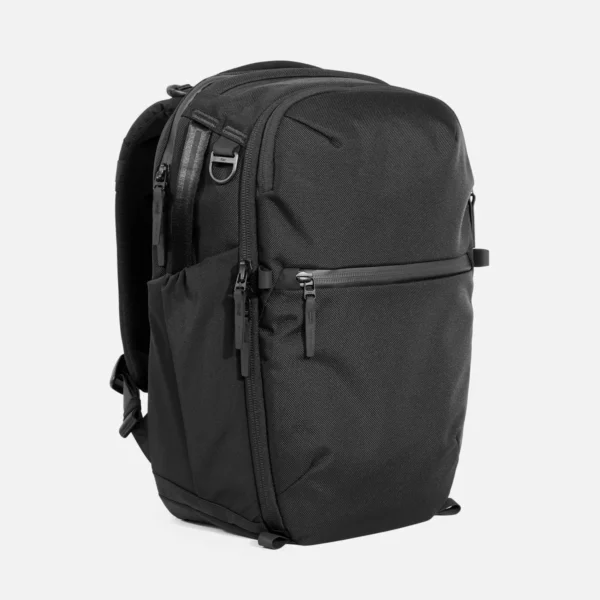
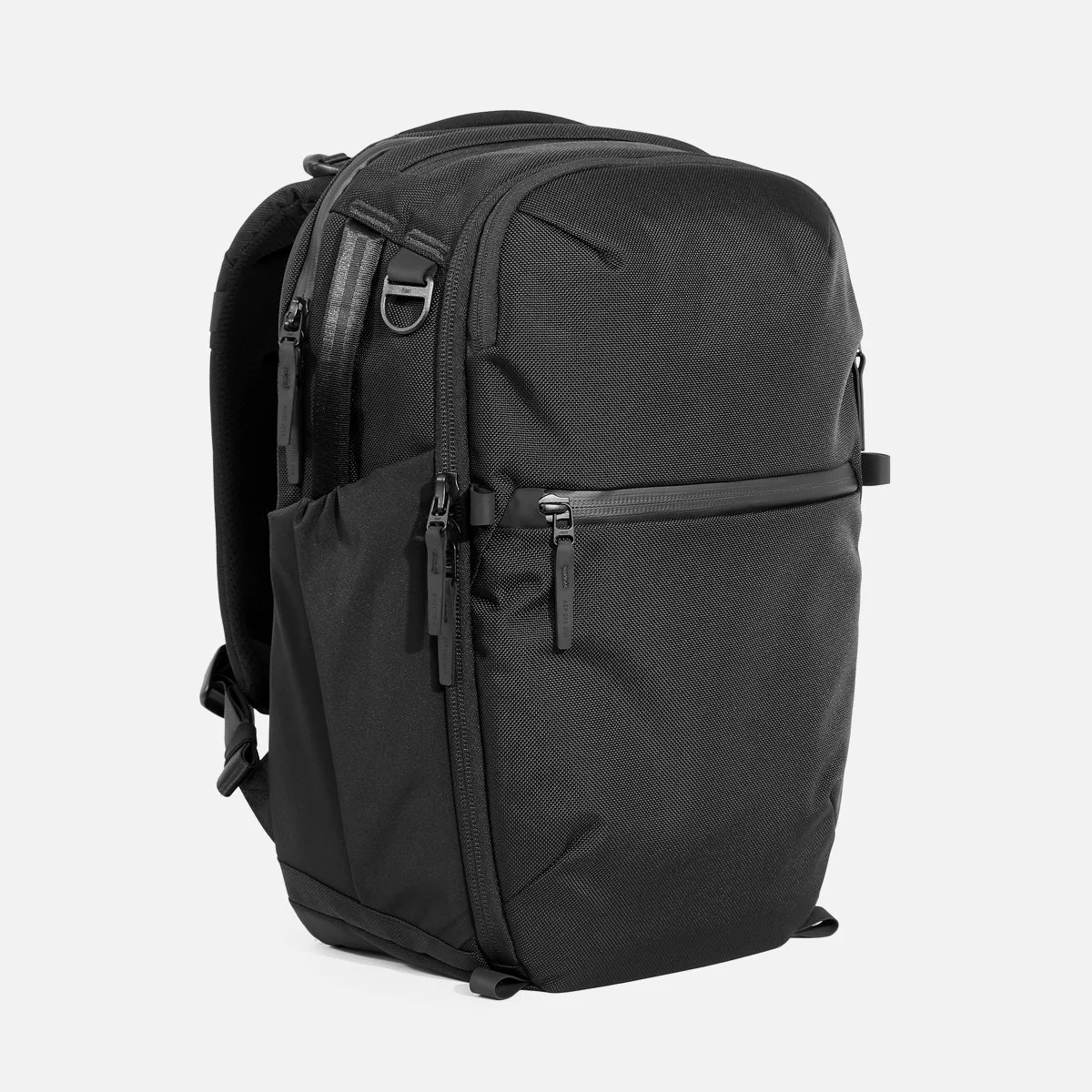
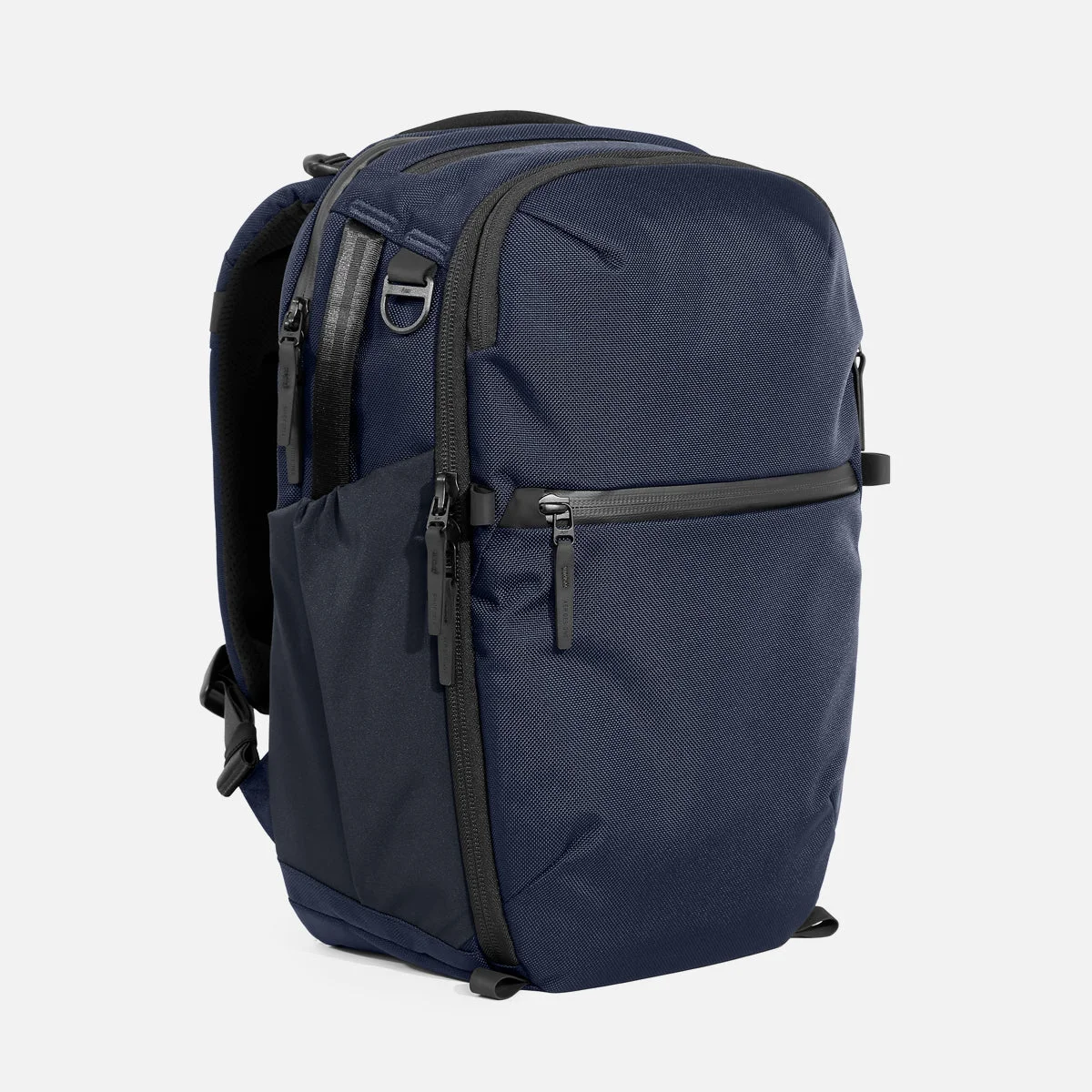
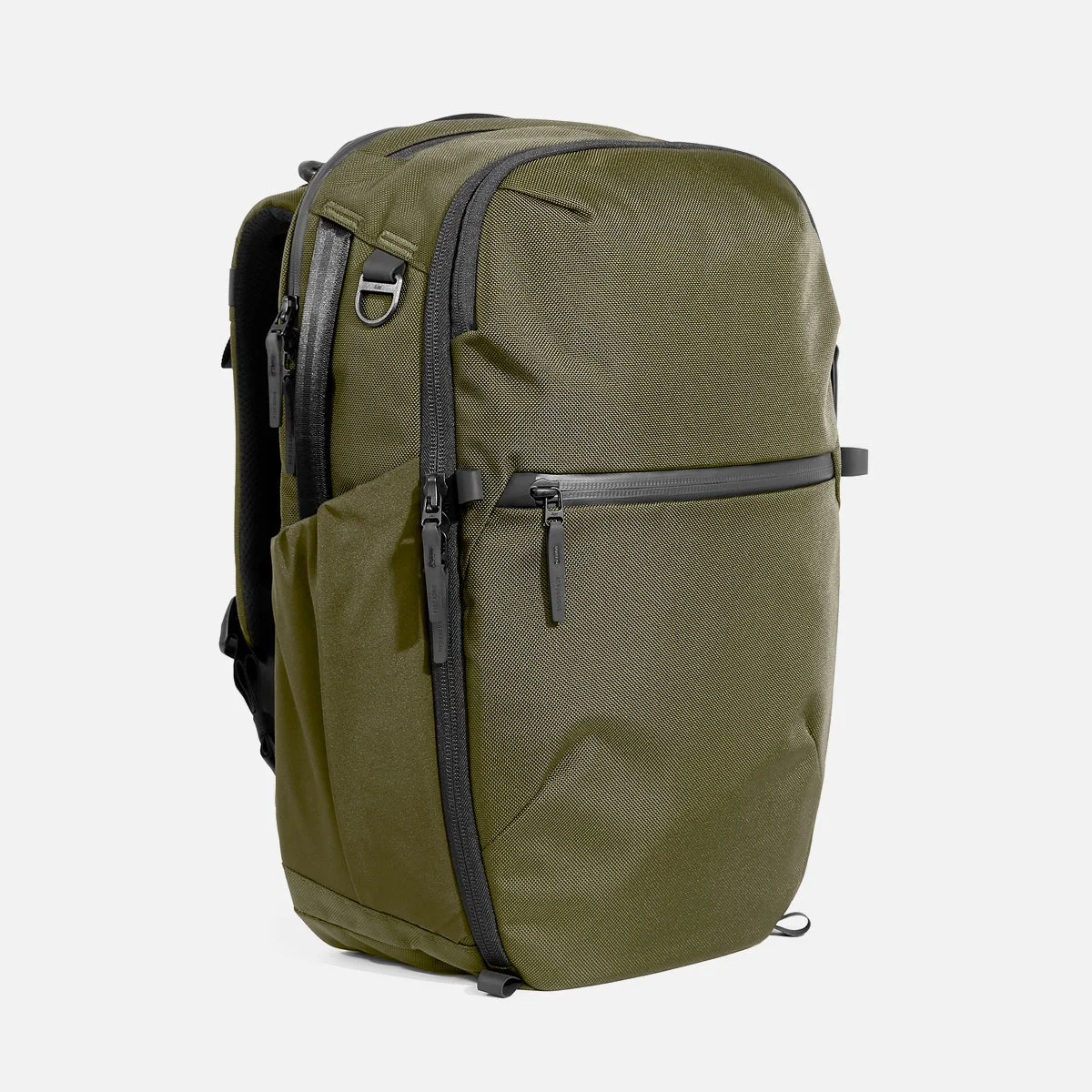
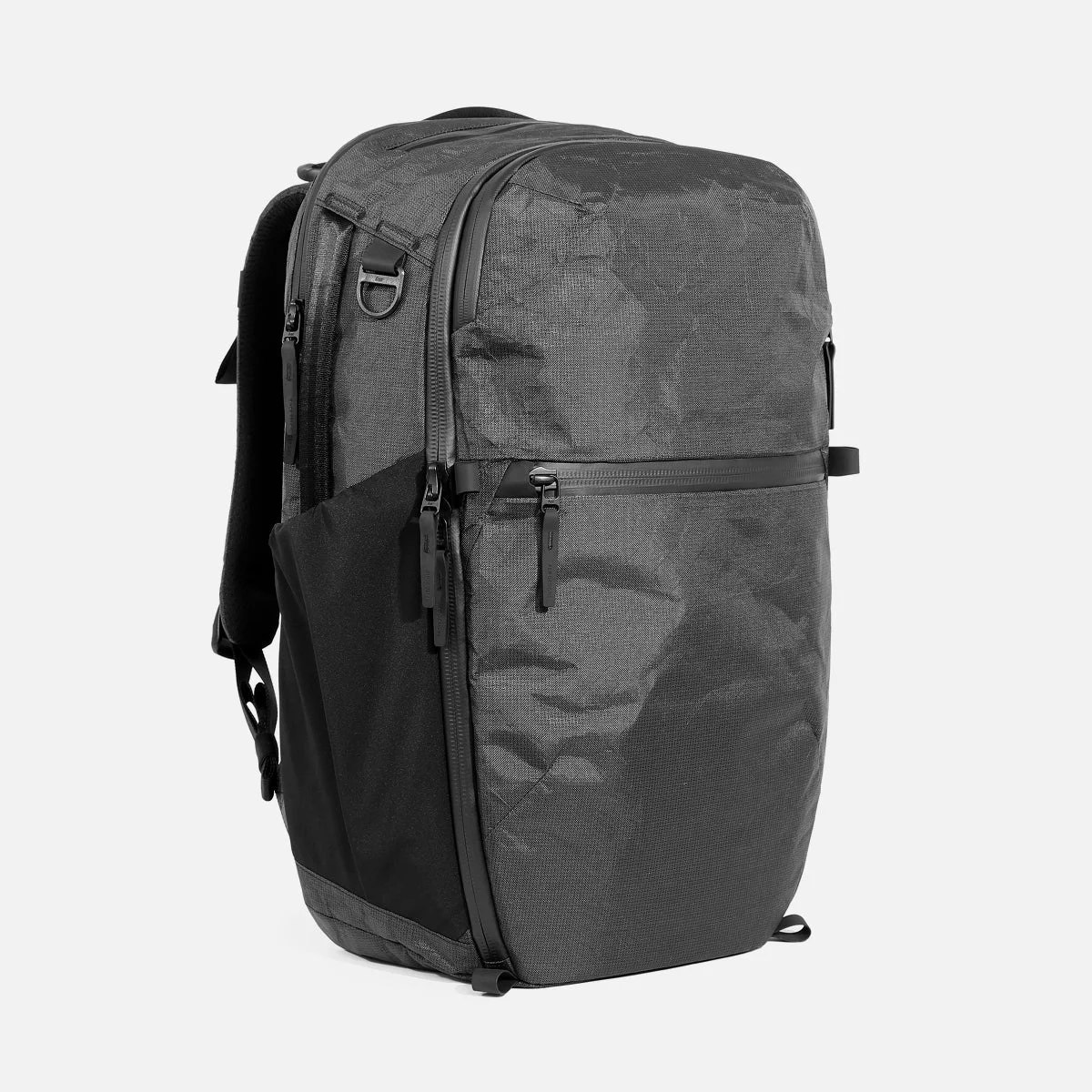
Aer has reshaped the Travel Pack 4 with slimmer lines, lower-profile exterior detailing, and a more resolved silhouette overall. Side by side, it looks more polished than the Travel Pack 3. Less tactical clutter. Less visual noise. More of that restrained, premium Aer feel.
Functionally, the most important revision appears to be the front pocket. On the Travel Pack 3, one of the common frustrations was that the front section could become difficult to use once the main compartment was packed out. On the new bag, early reviewers say Aer has addressed this with gusseting and better volume separation, so the front pocket has more independence instead of constantly competing with the rest of the bag. I do like some front pocket organization and look really forward to trying out a similarly vast one on my Sojourn Porter 30, but I have also noticed the tendency to organize a lot of smaller items into pouches. And it seems like Aer has acknowledged that for its users in version 4 as well.
Aer has also revised the admin area. The new setup includes mesh pockets in different sizes, a zip pocket for smaller valuables, and a repositionable key leash. The interior lining is now lighter as well, which is one of those details that looks minor until you are rummaging for a cable in a dim hotel room or on an early-morning train.
Then there is the hardware. Aer has stepped away from the magnetic compression buckle setup used on the previous generation and gone back to more conventional buckles. Early reactions suggest that is a practical win. The magnetic approach looked clever, but some users found it easier to trigger accidentally than they wanted on a travel bag. The chest strap still uses a FIDLOCK magnetic buckle on a rail system, which gives you easy vertical adjustment without overcomplicating the rest of the bag.
Load lifters remain, which matters. For a bag in this category, especially the 35-liter version, that feature can make a real difference once the pack is full.
Sizes, materials, and prices
Aer is launching the Travel Pack 4 in two sizes: 28L and 35L. Both are available in three material options:
- 1680D CORDURA ballistic nylon
- VX-42 X-Pac
- Ultra400X by Challenge Sailcloth
That gives the collection six total variants. The standard 28L starts at $239, while the standard 35L starts at $259. The X-Pac versions add $30, and the Ultra versions add $50.
This is very much in line with how Aer positions itself now. You are not buying a bargain bag. You are buying a premium travel backpack aimed at people who care about materials, structure, and everyday usability as much as raw capacity.
The lighter technical fabrics are especially interesting here because weight has long been one of the most common caveats attached to Aer travel bags. The numbers tell the story more clearly in table form:
| Size | Material | Weight (lb) | Weight (kg) |
|---|---|---|---|
| 28L | Ballistic nylon | 3.52 | 1.60 |
| 28L | X-Pac | 3.45 | 1.56 |
| 28L | Ultra | 3.28 | 1.49 |
| 35L | X-Pac | 3.75 | 1.70 |
| 35L | Ultra | 3.56 | 1.61 |
So no, the Travel Pack 4 does not suddenly become an ultralight bag, but the premium materials do shave off some of the burden and make the higher-end versions easier to justify for travelers who care about weather resistance and weight in equal measure.
Color and material options
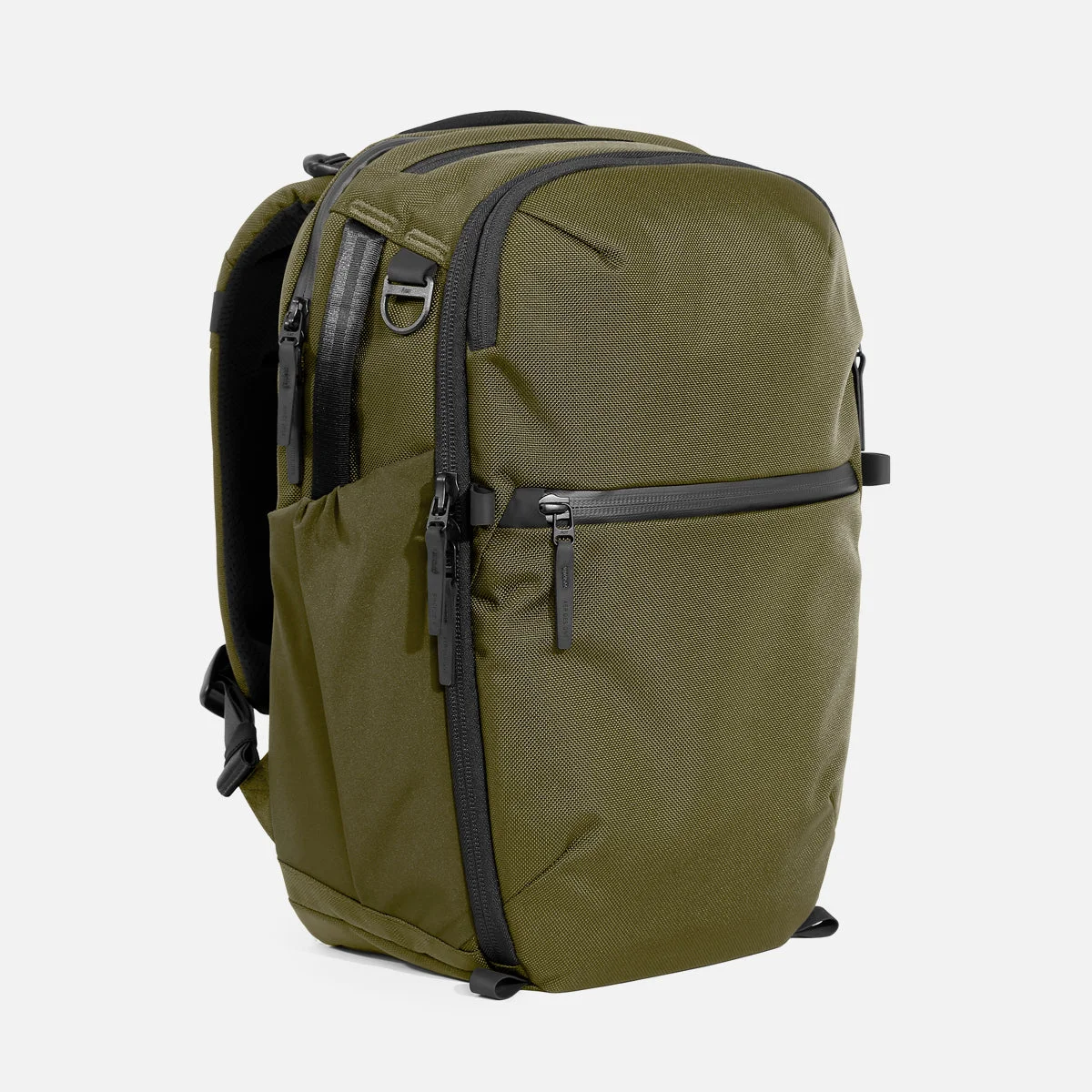
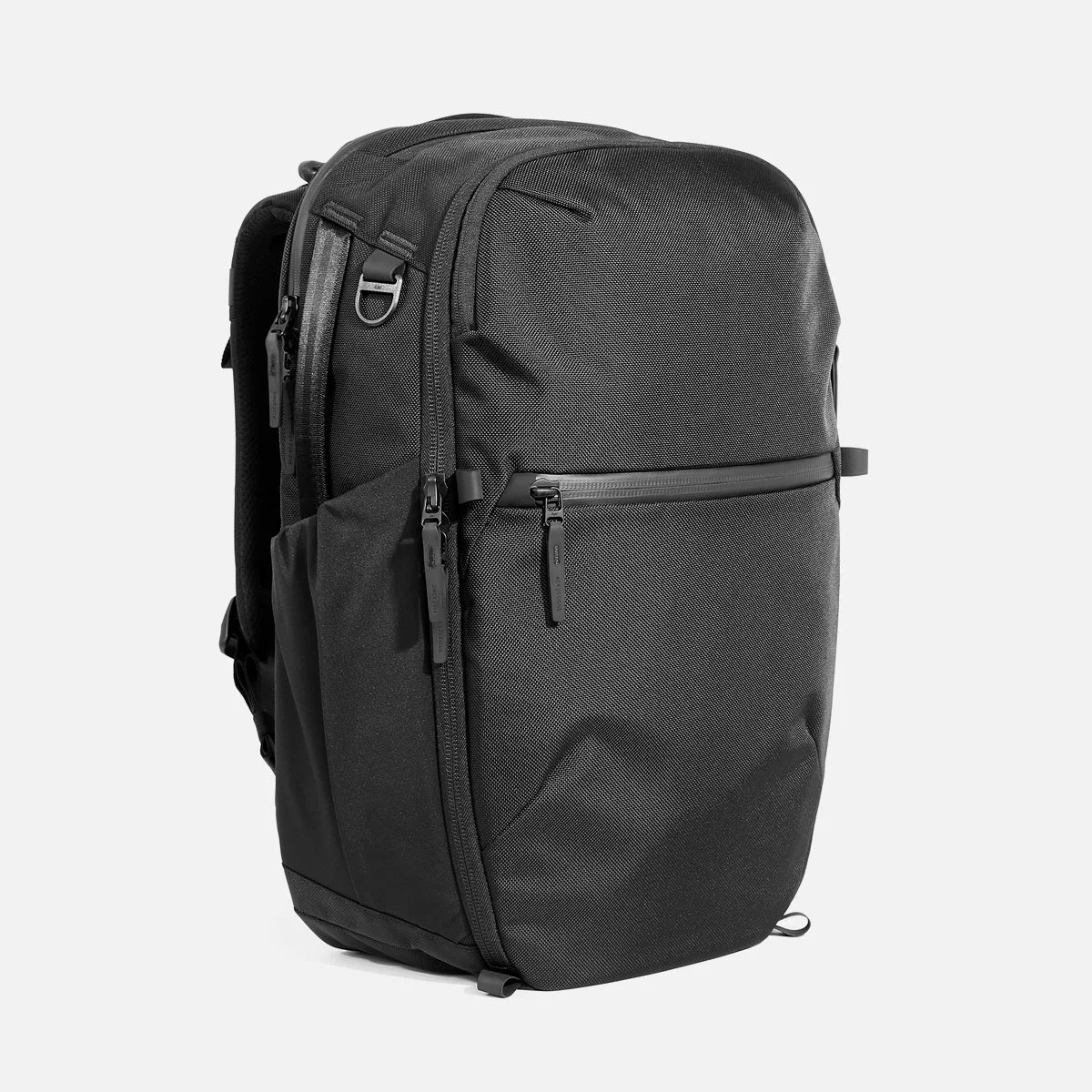
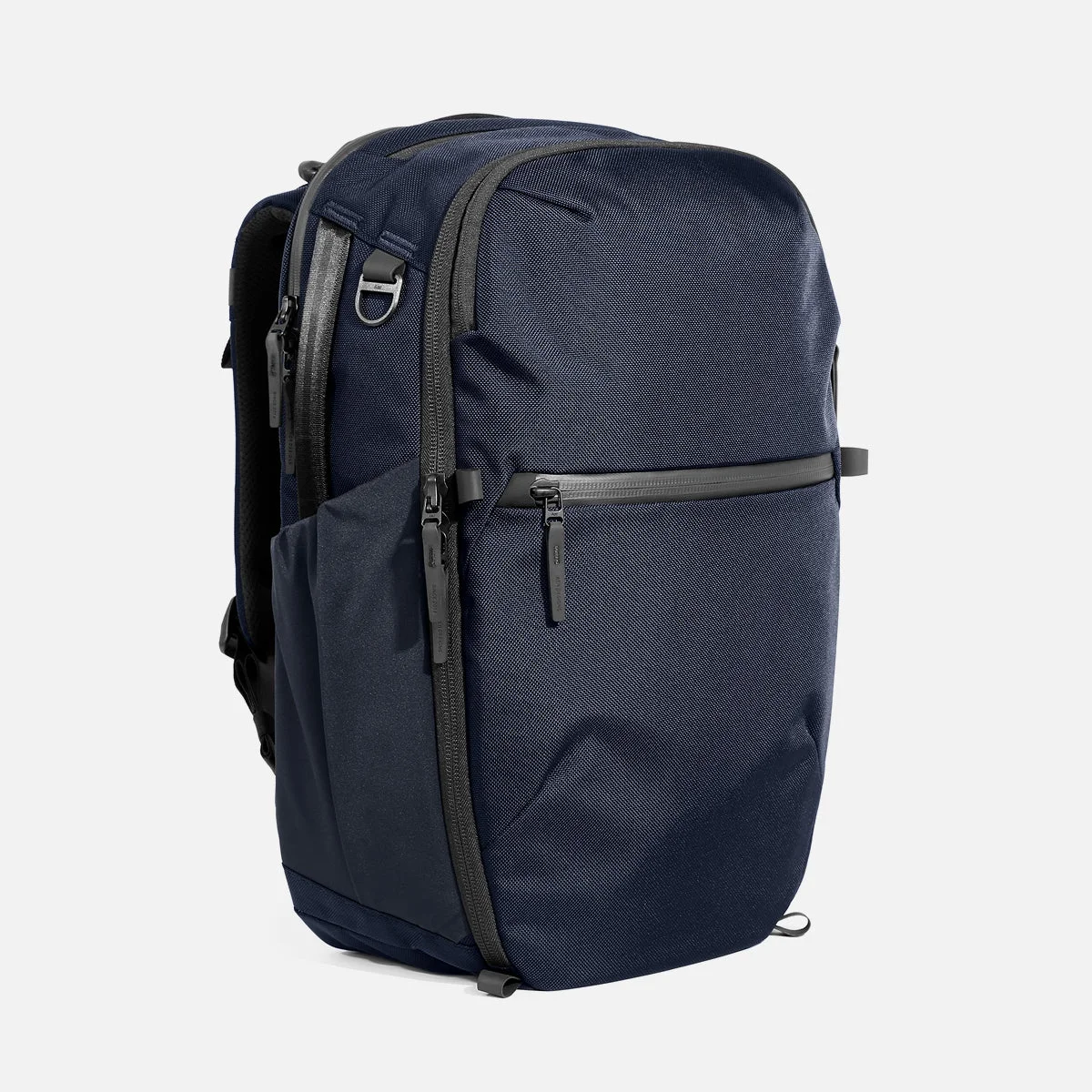
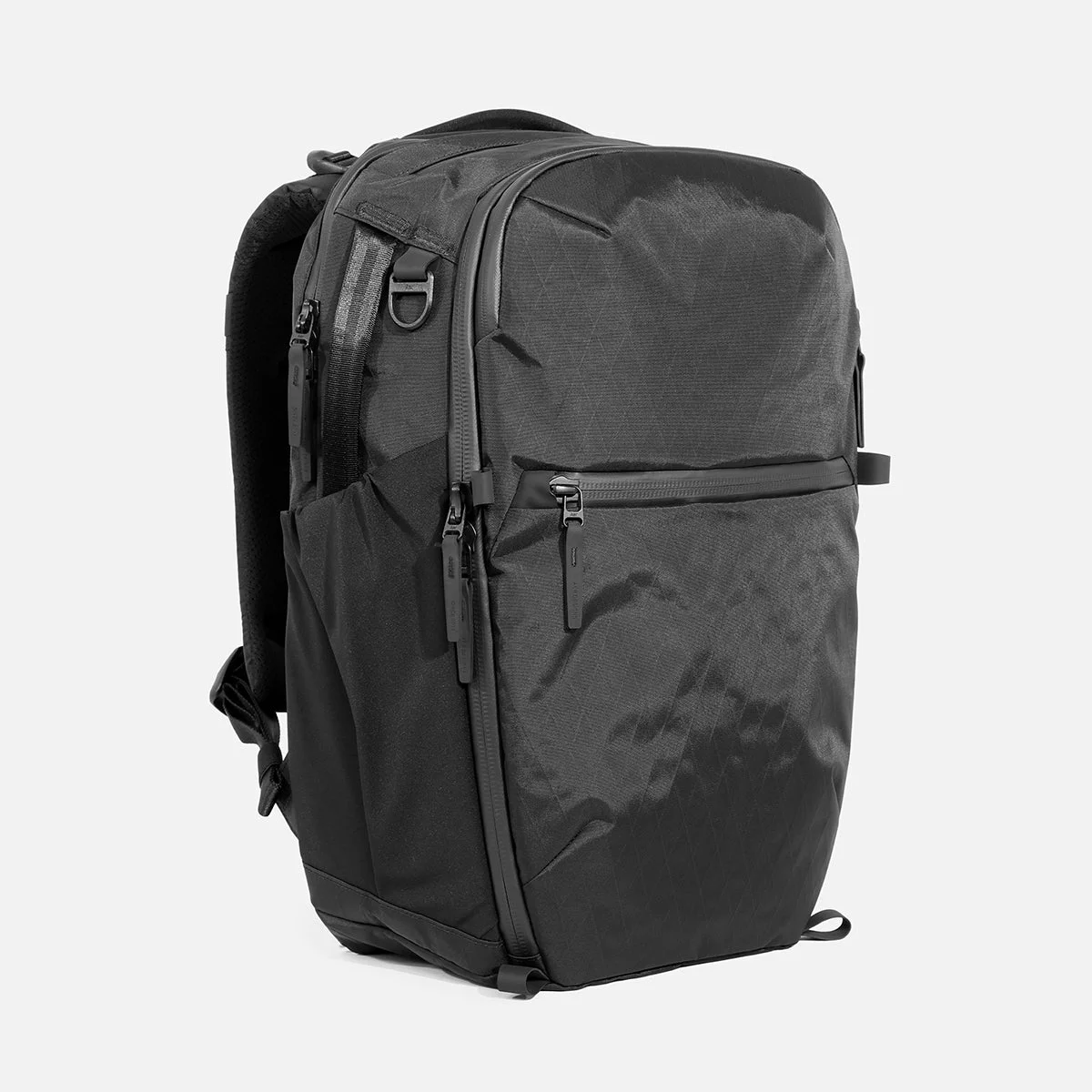
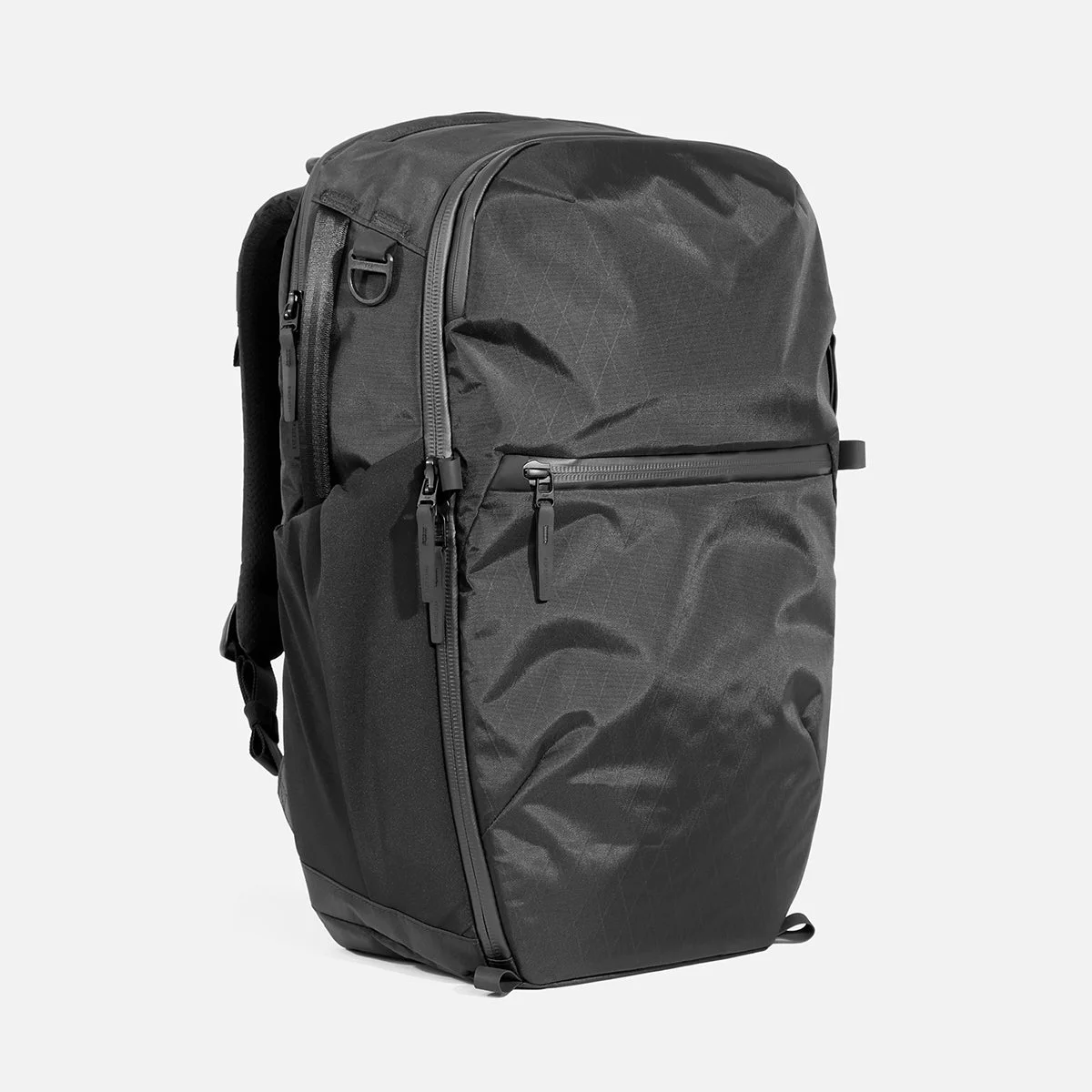
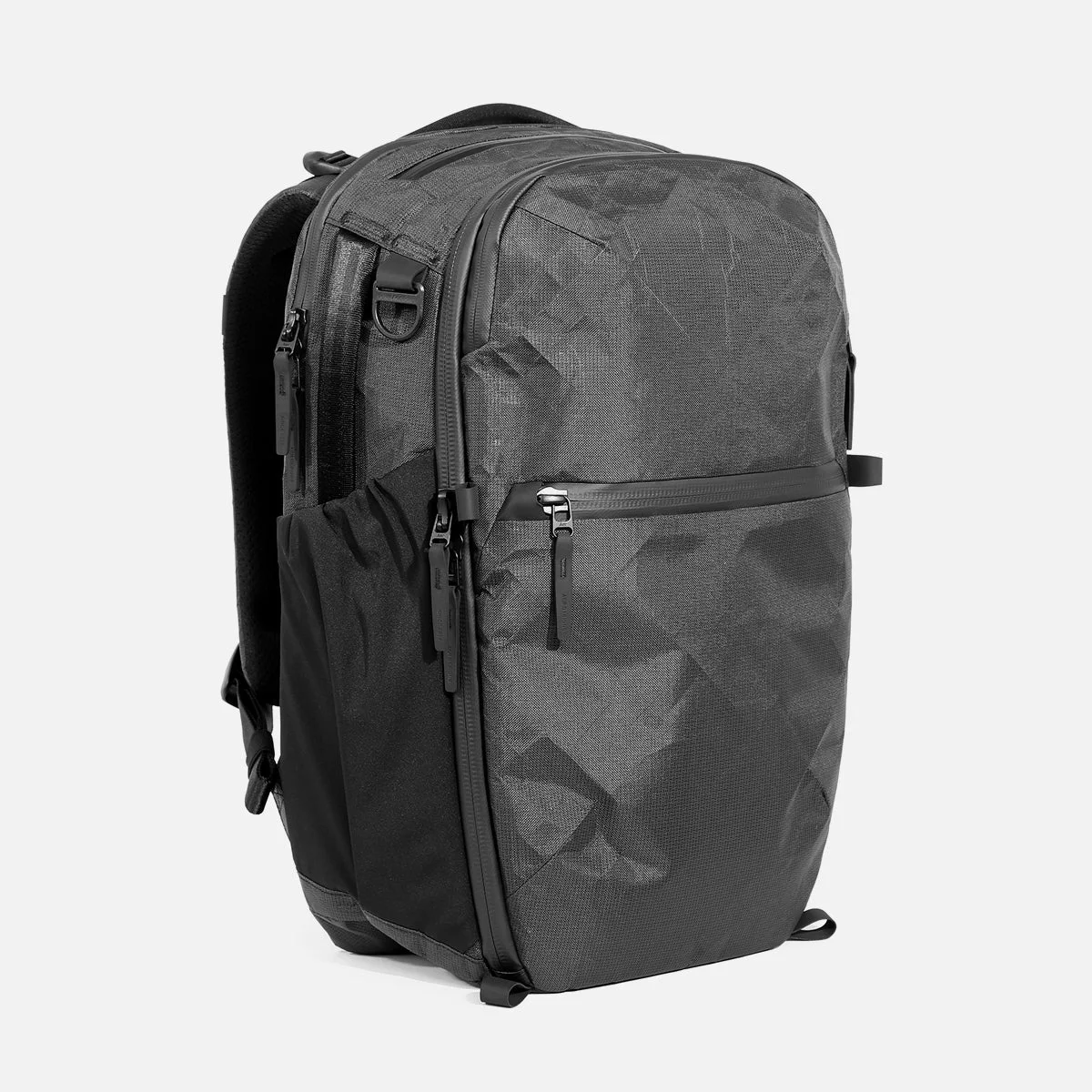
Aer offers the Travel Pack 4 in three distinct materials, each with its own colorway options. Here is a full look at every variant.
Ballistic nylon (1680D CORDURA) — available in Black, Navy, and Olive
28L:
35L:
X-Pac (VX-42) — available in Black
Ultra (Ultra400X by Challenge Sailcloth) — available in Black
What reviewers seem to agree on
The early consensus is surprisingly consistent.
First, this looks like the most refined Travel Pack to date. The bag keeps the core Aer formula intact, but makes it cleaner and easier to live with.
Second, the pocket layout appears better thought through than before. The phrase that keeps surfacing in launch coverage is independence. Pockets are not fighting each other for the same internal volume to the same degree, and that has knock-on benefits across the whole experience.
Third, the bag still feels unmistakably Aer. That means structured rather than floppy, polished rather than rugged, and designed for travelers who like their gear to feel deliberate. This is not a heritage-style travel bag. It is not an outdoors pack pretending to be urban. It is an Aer bag through and through.
And that is important, because a lot of brands lose themselves when they chase broader appeal. Aer does not seem to have done that here.
The caveats are still real
That said, the Travel Pack 4 does not solve every long-running criticism.
The most obvious one is weight. Even in its updated form, this is not a lightweight bag for its class. The Ultra and X-Pac versions help, but the Travel Pack still appears to sit on the heavier, more structured side of the market. If you value a substantial harness, a rigid frame, and a bag that holds its shape beautifully, that tradeoff may feel worth it. If you are chasing the lightest possible one-bag setup, it probably will not.
There is also the question of the missing compression straps. For some travelers, their removal will be a relief. The bag looks cleaner, and there is less going on externally. For others, it is a real loss. Compression straps are not just about shrinking a half-full bag. People use them to stabilize shifting loads, secure outerwear, and make a travel bag feel less bulky during lighter carry. Whether Aer made the right call here depends heavily on how you used the Travel Pack 3.
The admin setup may also divide opinion more than the launch reviews suggest. That is where some of the early community skepticism starts to appear. A few long-time Aer users seem less concerned with what was added than with what was simplified. If you liked the Travel Pack 3 because it felt like a rolling tech pouch strapped to your back, the more restrained approach on the Travel Pack 4 may read as cleaner, yes, but also slightly less flexible.
Aer seems to have simplified and streamlined the layout, which many people will prefer. But long-time fans of the Travel Pack 3’s larger admin area may feel that some flexibility has been traded away. A simpler layout is often better when paired with pouches. It is less ideal if you want the bag itself to act as your entire organizing system.
And then there is the familiar Aer tax: a few useful extras are still optional. On the 35L especially, the hip belt may be worth having when the bag is fully loaded, but it is sold separately rather than included.
28L or 35L?
At a glance, the 28L looks like the more versatile choice for a lot of people. It should be easier as a short-trip bag, easier in urban carry, and a better fit for travelers who want one backpack that can move between weekend travel, train trips, and occasional office use without feeling like overkill.
The 35L is the more classic one-bag travel option. It gives you the full Aer experience with more packing headroom, and it will likely appeal most to travelers who pack heavier, travel longer, or simply prefer the security of extra space. But it also seems to inherit more of the familiar tradeoffs: more visual bulk on smaller frames, more weight once loaded, and more reason to consider the optional hip belt.
If anything, the launch-day conversation makes the 28L feel like the quietly compelling pick, while the 35L remains the flagship.
The real story here
The most interesting thing about the Travel Pack 4 is that it appears to improve the experience in the places where owners actually feel friction: using the front pocket when the bag is packed out, dealing with hardware every day, and living with the bag’s shape and visual bulk over time.
So far, the launch-day verdict is that the Travel Pack 4 is not a dramatic reinvention, but it may well be the most complete version of Aer’s travel backpack yet.
For Travel Pack 3 owners, the decision probably comes down to what bothered you most about the old bag. If the compression straps worked for you and the admin layout was a feature, not a flaw, the upgrade case may be weaker. If you wanted a cleaner silhouette, better pocket separation, and more polished day-to-day usability, this looks much more compelling.
For everyone else, especially buyers coming in fresh, the Travel Pack 4 already looks like one of the strongest premium one-bag launches of the year. Not because Aer changed everything. Because it changed the right things.
Quick spec snapshot
- Available sizes: 28L and 35L
- Materials: 1680D CORDURA ballistic nylon, VX-42 X-Pac, Ultra400X by Challenge Sailcloth
- Starting prices: $239 for 28L, $259 for 35L
- Notable features: clamshell opening, suspended laptop compartment, load lifters, dual water bottle pockets, luggage pass-through, tracker pocket, optional hip belt
Bottom line
The Aer Travel Pack 4 looks like a smarter, calmer, better-balanced version of a bag that was already easy to recommend. It still carries some of the usual Aer compromises, especially around weight and add-on cost, but the early signs point to a more usable and more polished travel backpack overall.
That is not flashy. It is better than flashy. It is the kind of update you appreciate every time you pack it.