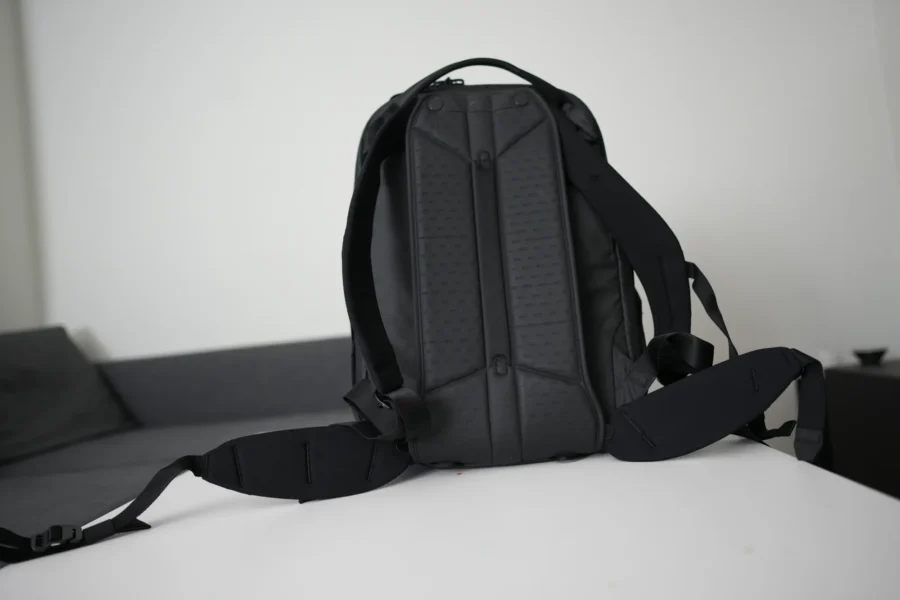
A hands-on review of the Peak Design Everyday Hip Belt — the optional accessory that turns the Travel Backpack 30L from a shoulder-killer into a genuinely comfortable carry.
The Peak Design Travel Backpack 30L is one of the best-looking travel bags on the market. I’ve had mine since the summer of 2023, and there’s a lot to love about it — the materials, the organization, the carry-on compliance. But after months of carrying it loaded with camera gear, and a heavy work laptop one problem became impossible to ignore: comfort. Or rather, the lack of it.
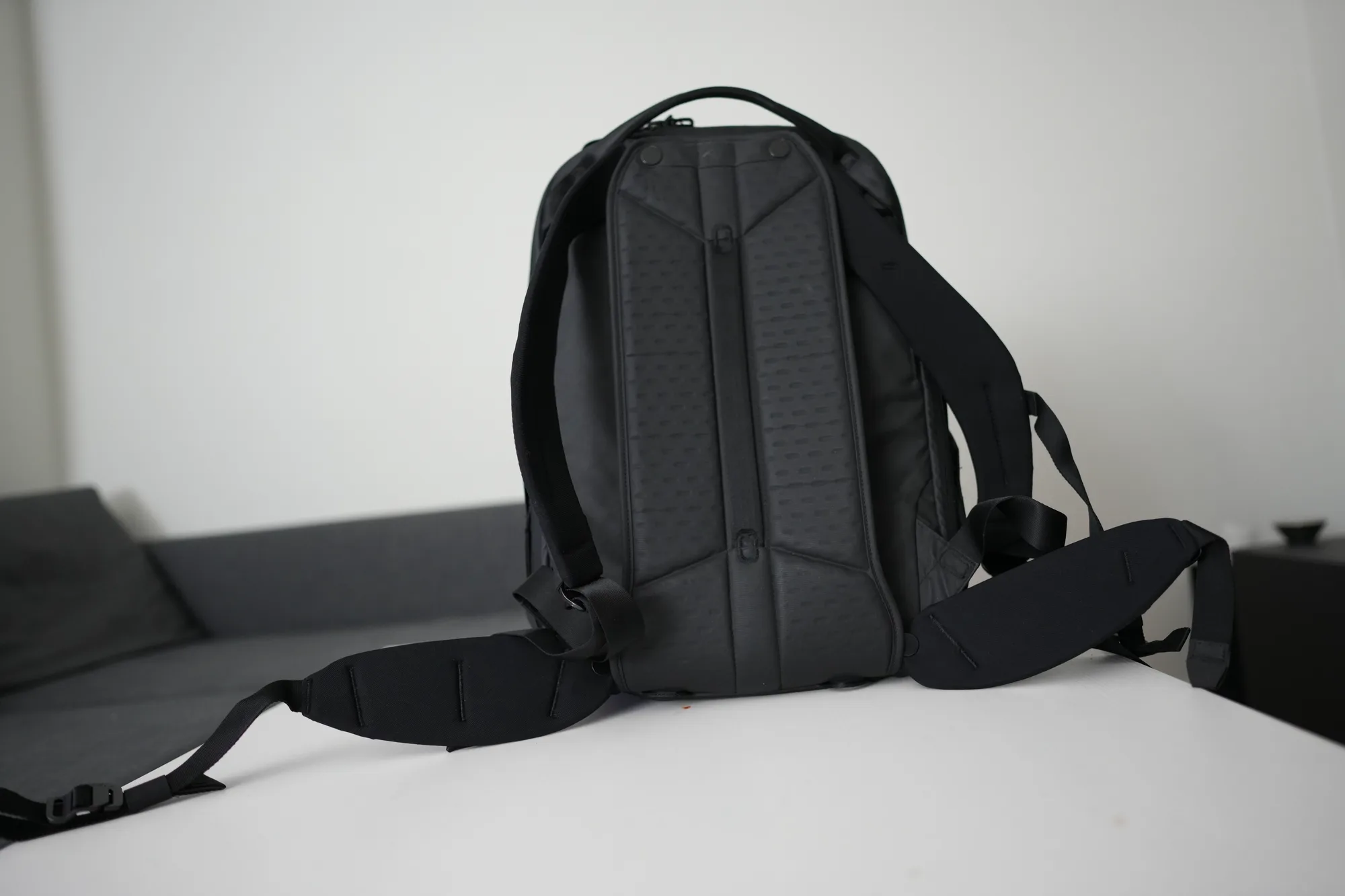
That’s where the Peak Design Everyday Hip Belt comes in. Priced at $29.95, it’s a small, optional accessory that Peak Design designed for both the Travel Backpack 30L and the Everyday Backpack v2 line. And after putting it through extended real-world use, I can say with confidence: it fundamentally changes how the 30L carries.
This is a review of that hip belt — what it does well, where it falls short, and whether it’s worth adding to your setup.
The Problem It Solves
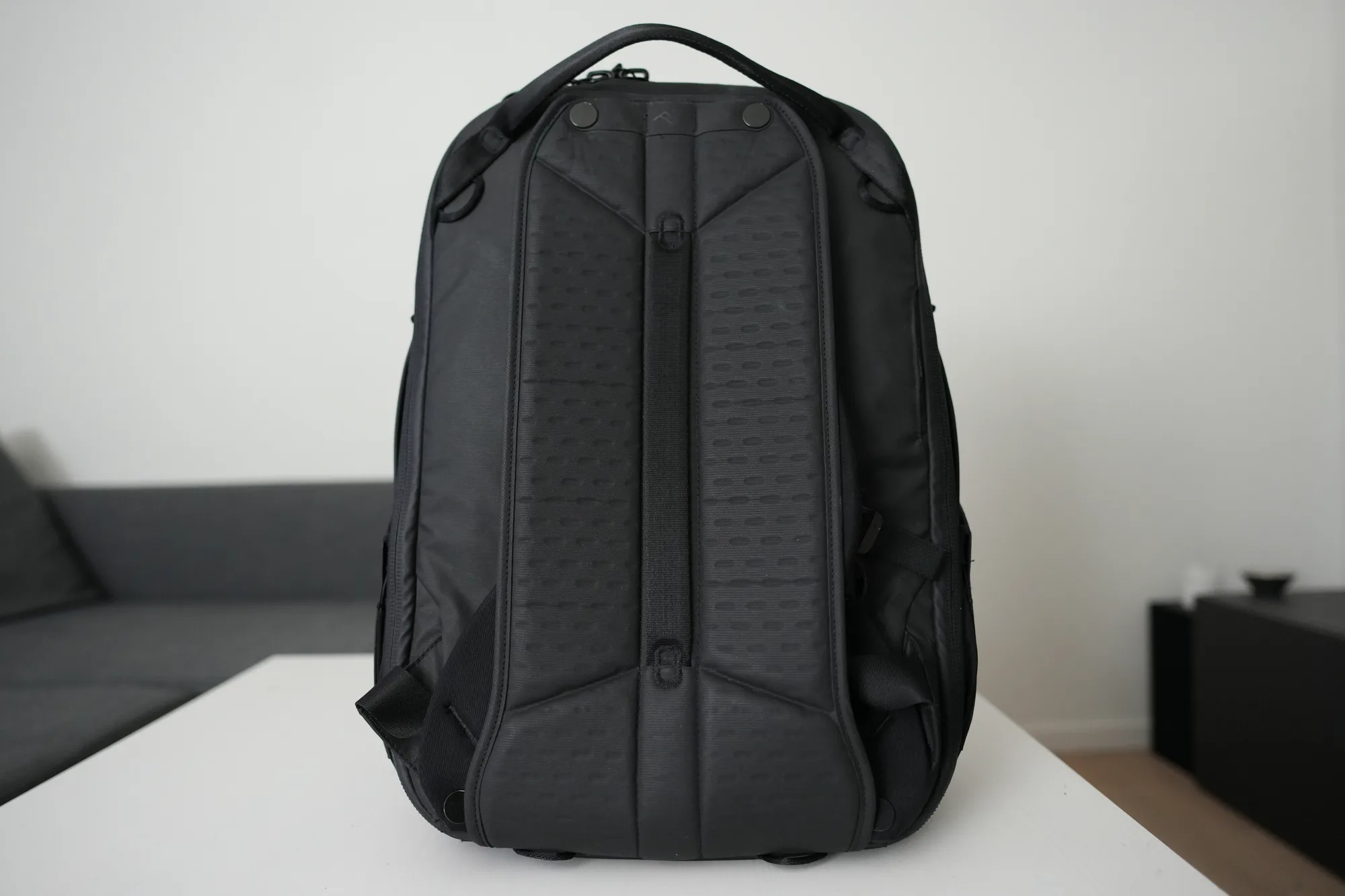
To understand why this hip belt matters, you need to understand the 30L’s biggest weakness.
The Peak Design Travel Backpack 30L kind of a stripped-down, minimalist version of the larger 45L. It compresses to 27 liters and expands to 33 liters via a front expansion zipper. The shell is built from 100% recycled 400D nylon canvas with a heavier 900D waterproof base, and all external zippers are Peak Design’s proprietary UltraZips. It’s a carry-on-compliant bag in both states — a major selling point.
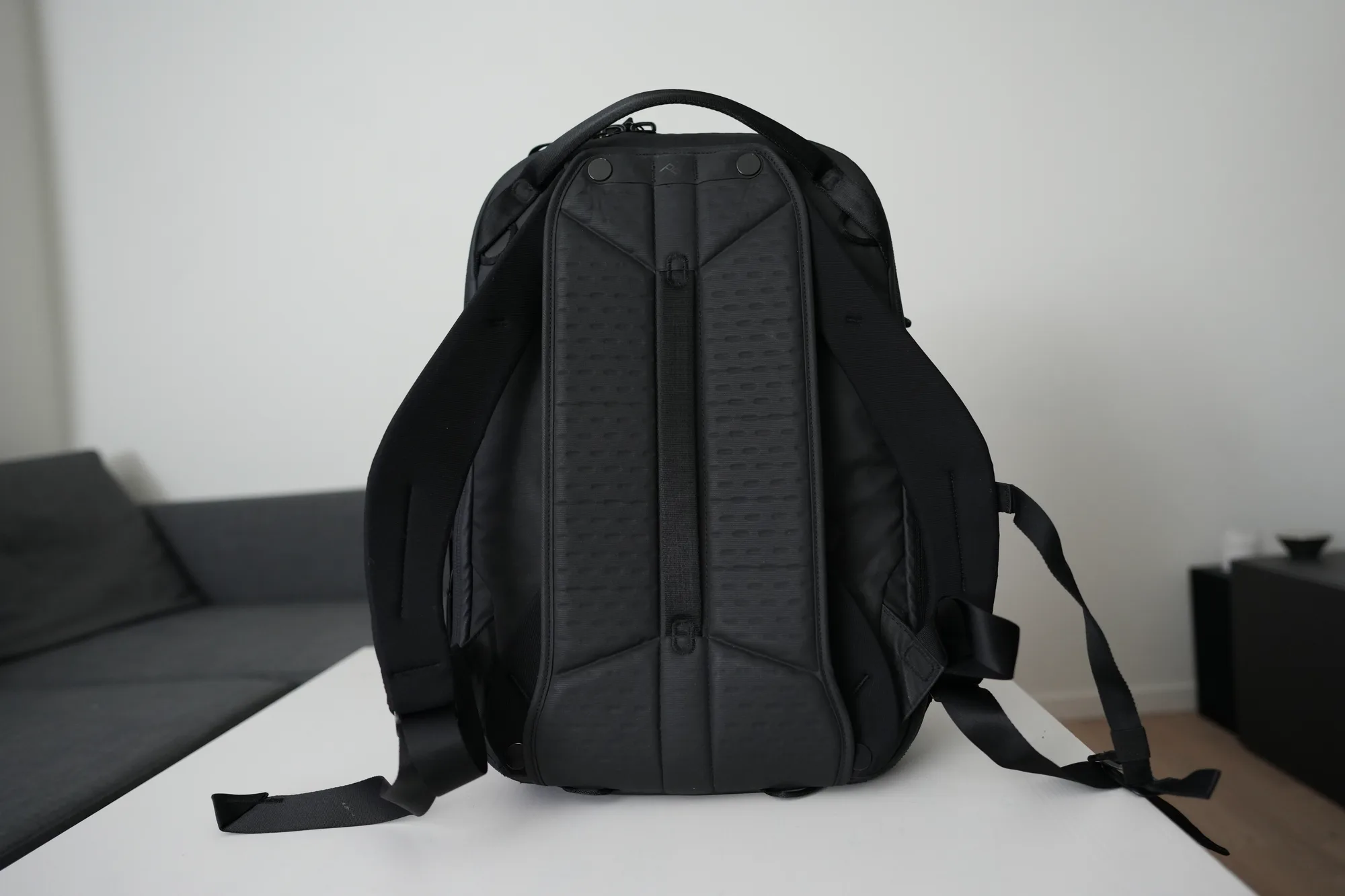
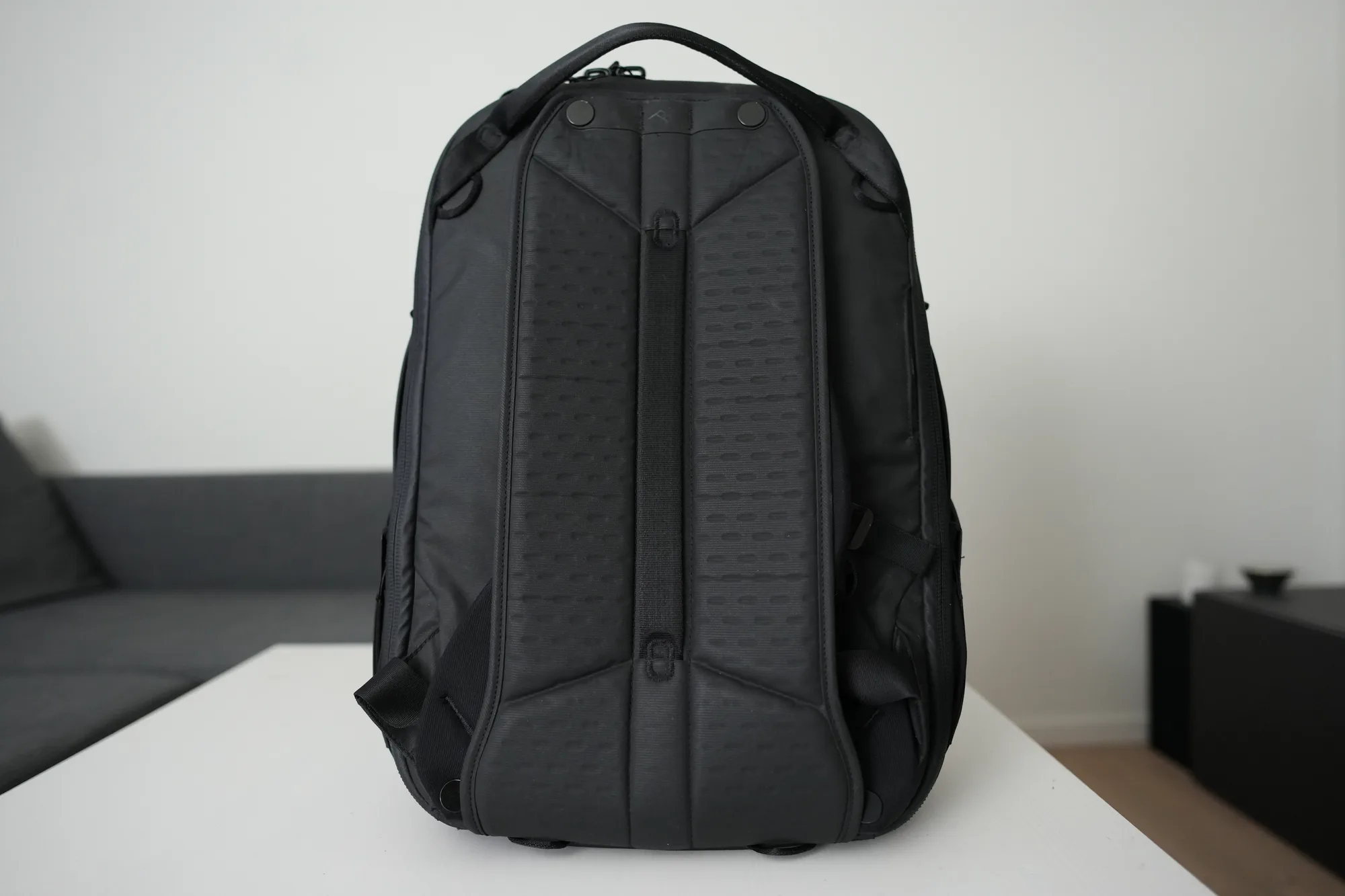
But unlike the 45L, which ships with a built-in stowable hip belt, the 30L relies entirely on its shoulder straps. And once you load it up with camera gear — a mirrorless body, a couple of lenses, a cleaning kit, accessories, plus a laptop — you’re looking at 8 to 15 kilograms sitting squarely on your shoulders. The straps are improved over the 45L’s original design with thicker padding and a curvier shape, but they’re still not enough. There’s no real frame, and the back panel ventilation is decent but nothing special.
This is the most common criticism of Peak Design’s travel line: these bags are engineered for airports, taxis, and hotel lobbies — not for extended walks through a city or hikes to a shooting location. If you’re carrying any real weight over any real distance, the 30L becomes an endurance test.
The Everyday Hip Belt is Peak Design’s answer to that problem.
What You Get
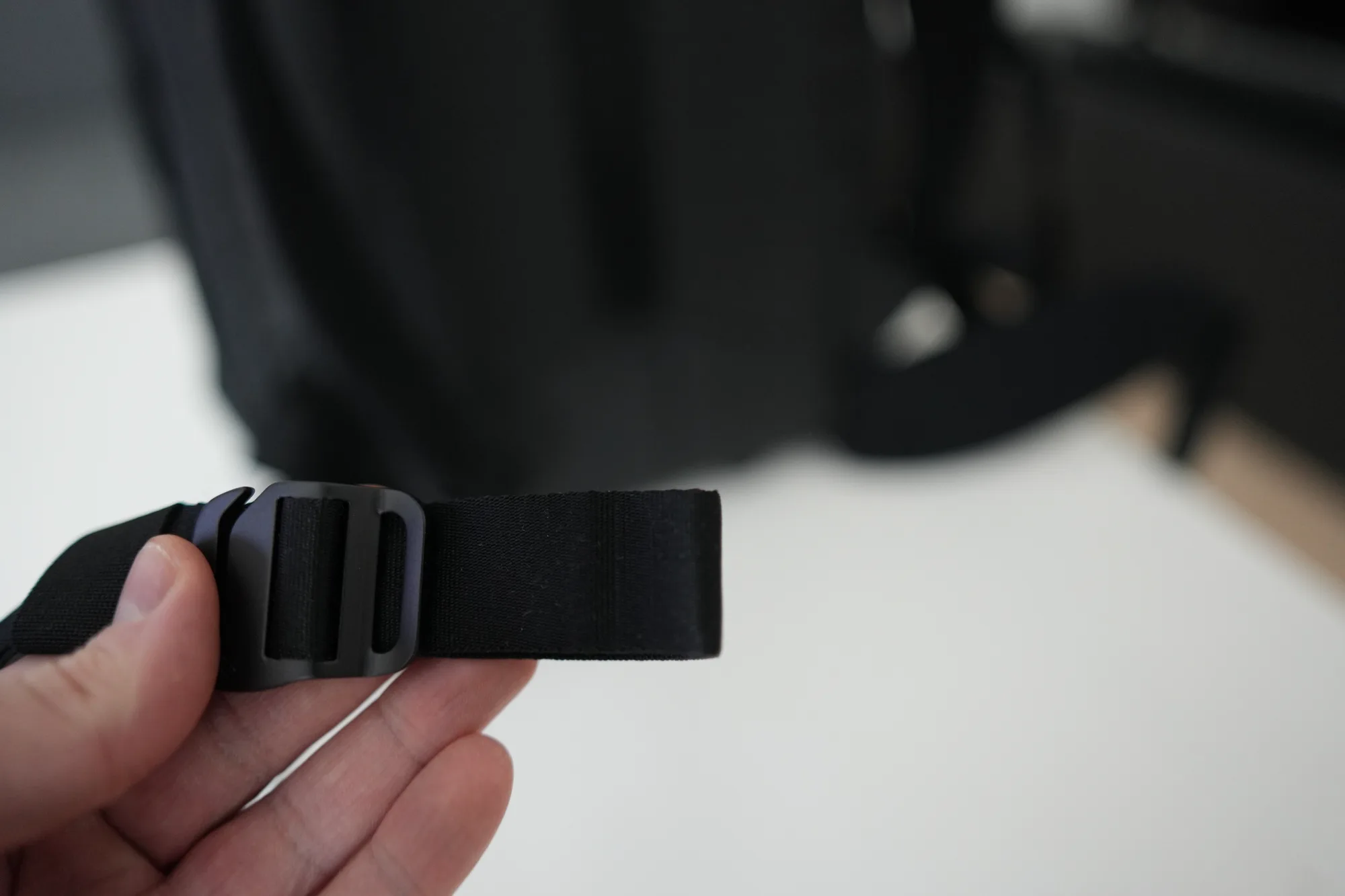
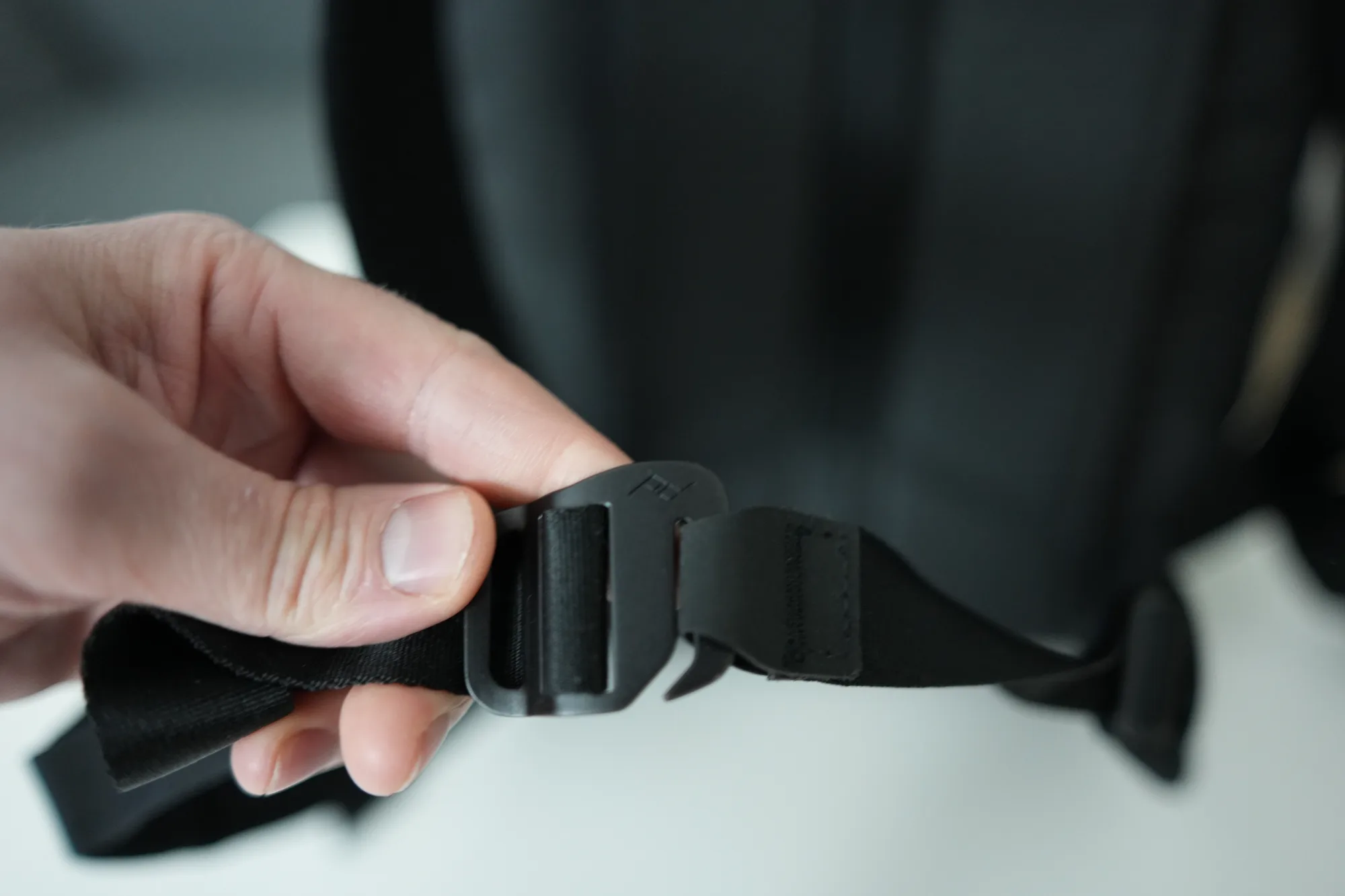
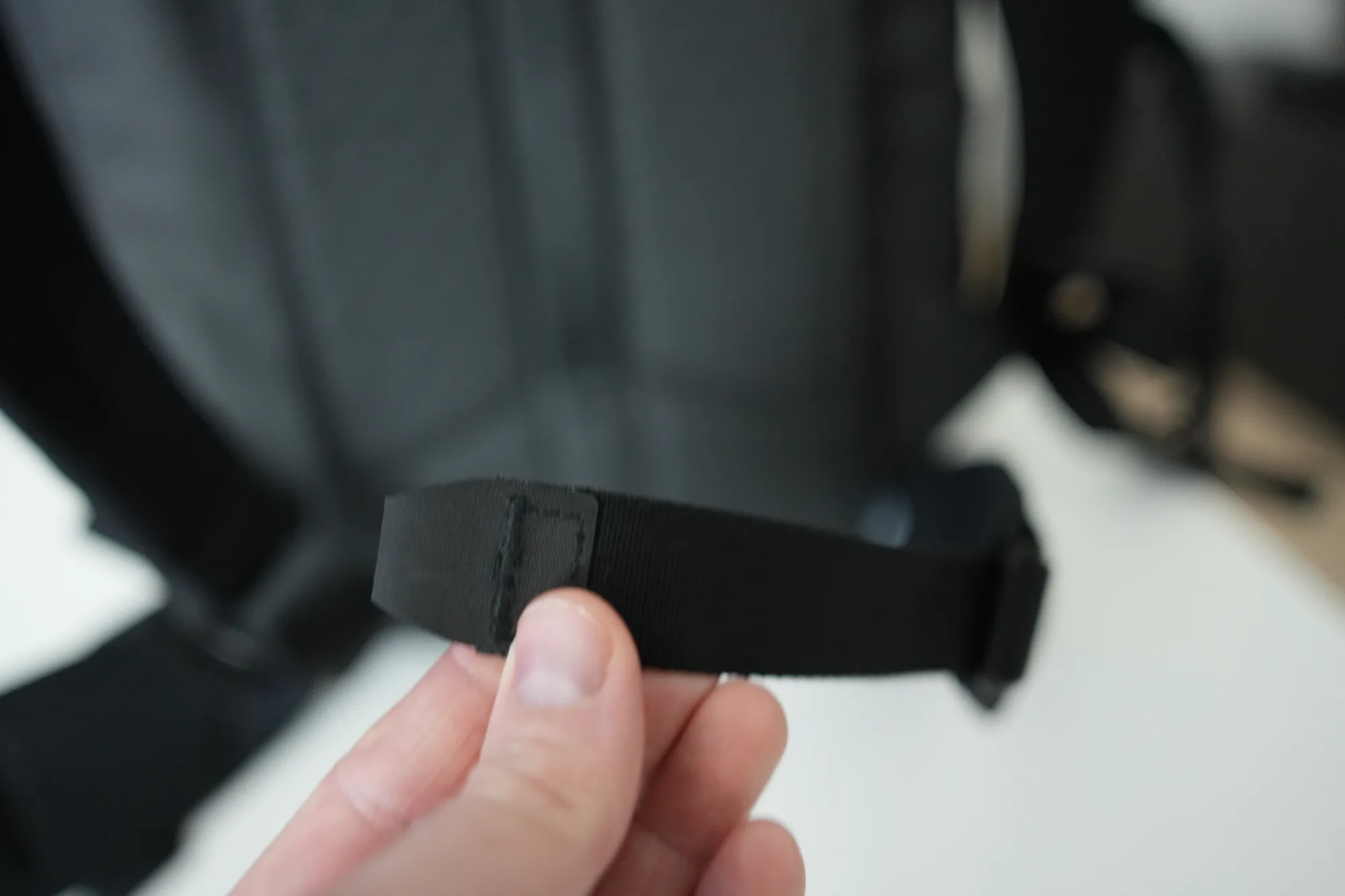
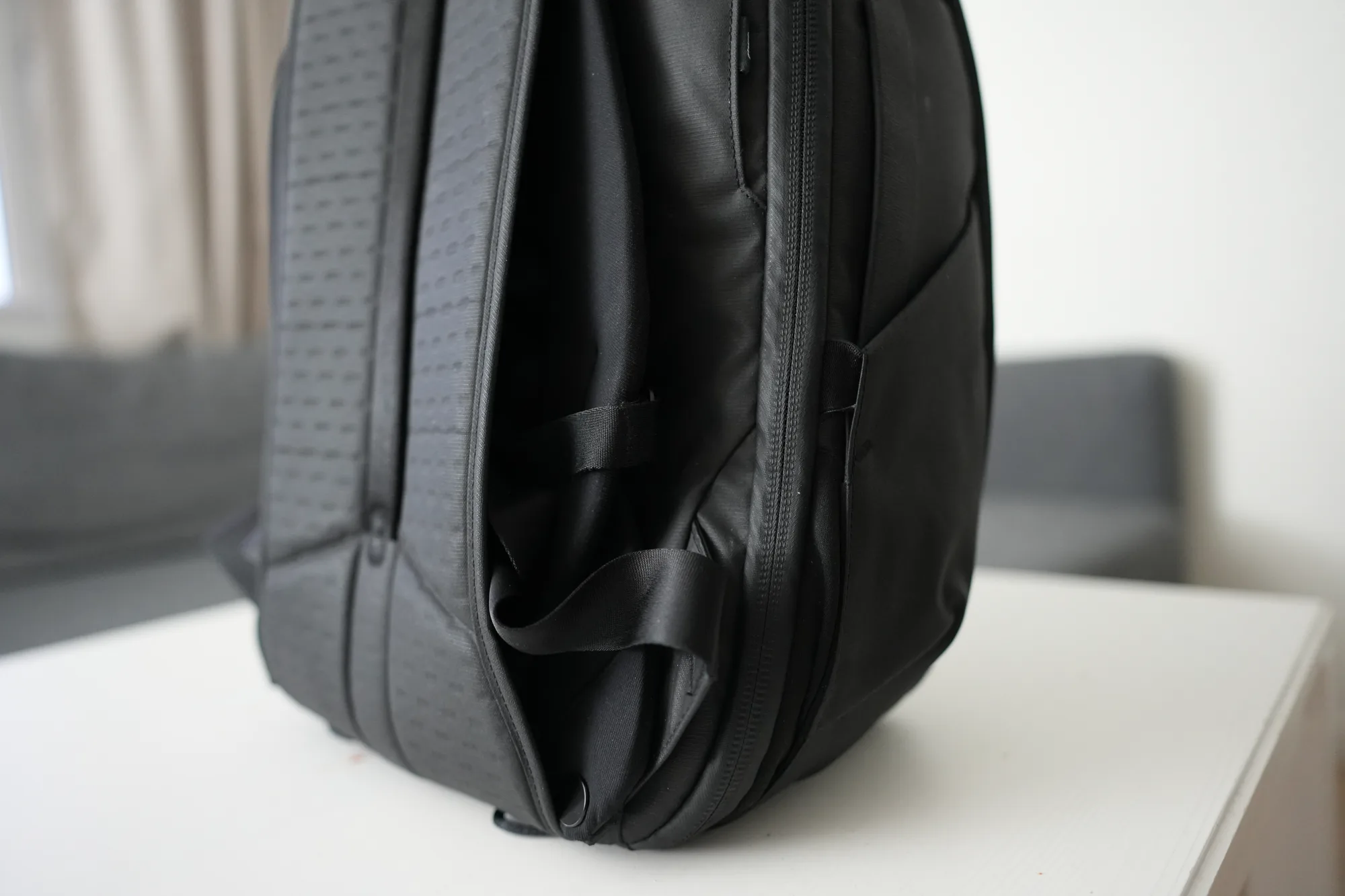
The Everyday Hip Belt is a compact, lightly padded belt that slides into place behind the luggage pass-through on the 30L’s back panel. It’s secured with hook-and-loop fasteners and can be stowed away under the Travel Backpack’s magnetic flaps when you don’t need it.
Instead of a standard clip buckle, Peak Design uses aluminum G-hook hardware for cinching and loosening. It’s a clean, minimal design that fits the Peak Design aesthetic — though it takes some getting used to compared to a traditional click-buckle. More on that later.
Installation is straightforward: slide it in, press the hook-and-loop into place, and you’re set. Removing it is just as quick if you want to go back to a belt-free carry for lighter loads.
How It Changes the Carry
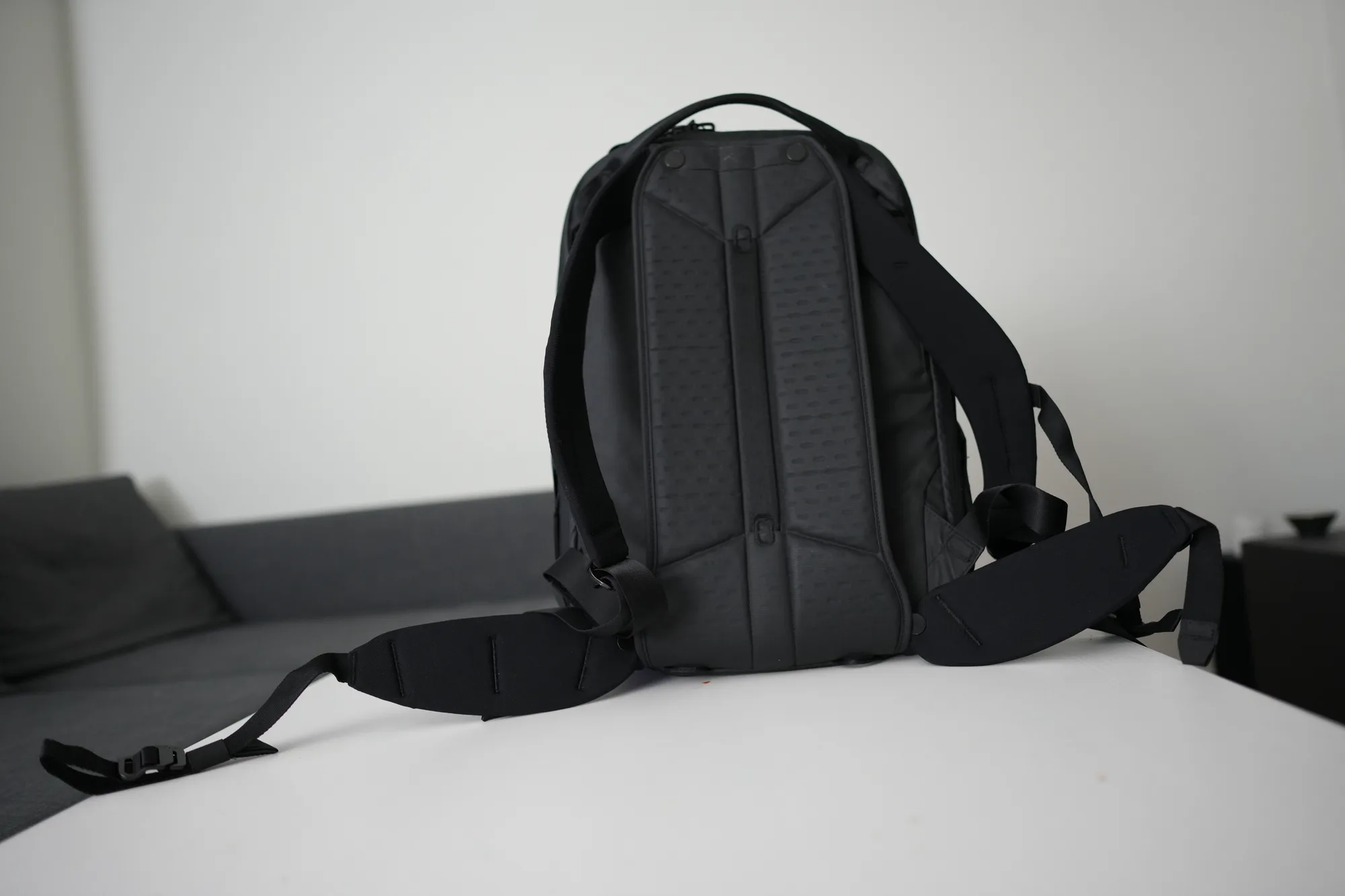
The difference is immediate.
You strap the belt on, the bag stabilizes against your body, and the weight shifts from your shoulders down to your hips. That’s the whole point of any hip belt — but what surprised me is how effective this relatively minimal belt is on a bag that wasn’t originally designed around one.
For longer walks carrying 8 to 12 kilograms of camera gear and a laptop (and even up to 15 kilograms in some setups), the hip belt turns the 30L from an endurance test into a bearable carry. It doesn’t make the bag feel like a dedicated hiking pack — it’s not trying to. But it eliminates the worst of the shoulder fatigue that made the 30L quite uncomfortable over extended periods.
The bag also sways less. Without the hip belt, heavier loads tend to shift around on your back, especially when you’re walking at pace or navigating uneven ground. With the belt cinched, the pack stays locked in place. It’s a subtle difference, but over the course of a full day of walking and shooting, it adds up.
If you own the Travel Backpack 30L and regularly carry anything heavier than a change of clothes and a book, the hip belt directly addresses the bag’s single biggest weakness: carrying comfort.
Where It Falls Short
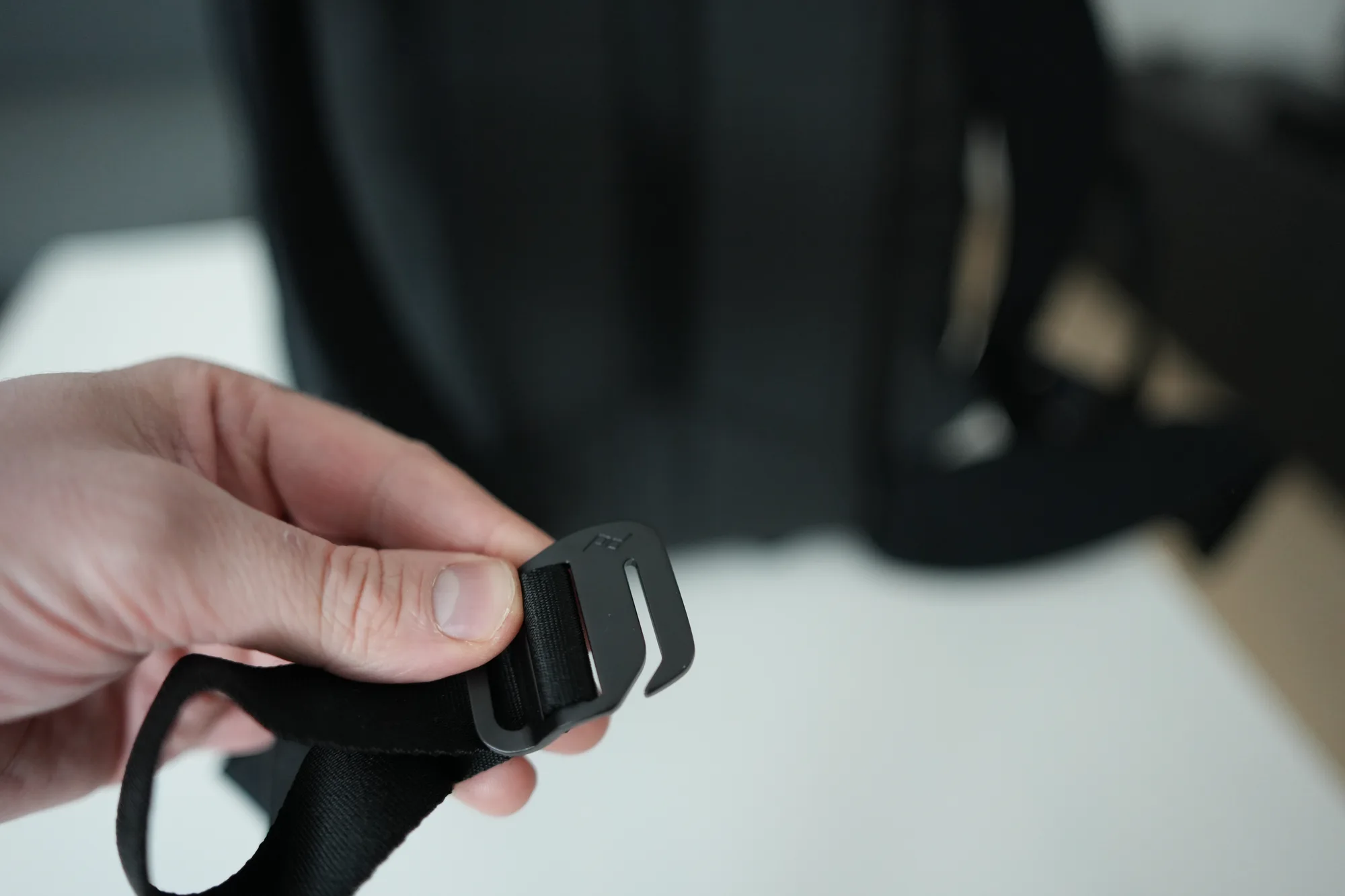
The hip belt isn’t perfect. There are a few things worth flagging before you buy.
The padding is minimal. This is not the plush, load-bearing hip belt you’d find on an Osprey or Gregory hiking pack. It’s thin and light, designed to add as little bulk as possible to Peak Design’s sleek aesthetic. It gets the job done for urban travel and city walks, but if you’re expecting serious load transfer on par with a dedicated trekking pack, you’ll be disappointed.
The G-hook closure takes getting used to. Instead of a standard click-buckle, Peak Design went with aluminum G-hook hardware. You thread the webbing through and cinch it down. It’s clean, arguably more durable long-term, and very much on-brand for Peak Design. But it’s less intuitive than a simple buckle, especially when you’re trying to get the belt on and off quickly. Whether this ends up being a real annoyance or just a learning curve depends on how patient you are — I got used to it after a few days, but I still wouldn’t call it ideal.
It adds weight. Not a lot, but for a bag that already weighs 1.44 kg (3.17 lbs) empty, every gram counts when you’re watching airline weight limits. It’s a minor trade-off, but worth noting if you’re already pushing the boundary.
It should have been included in the box. This is more of a philosophical gripe than a product flaw, but at $229.95 for the backpack, charging an extra $29.95 for a hip belt that arguably should be standard feels like a missed opportunity. The 45L includes a built-in stowable hip belt. The 30L should have shipped with at least a basic version.
Hip Belt vs. the 45L’s Built-In Belt
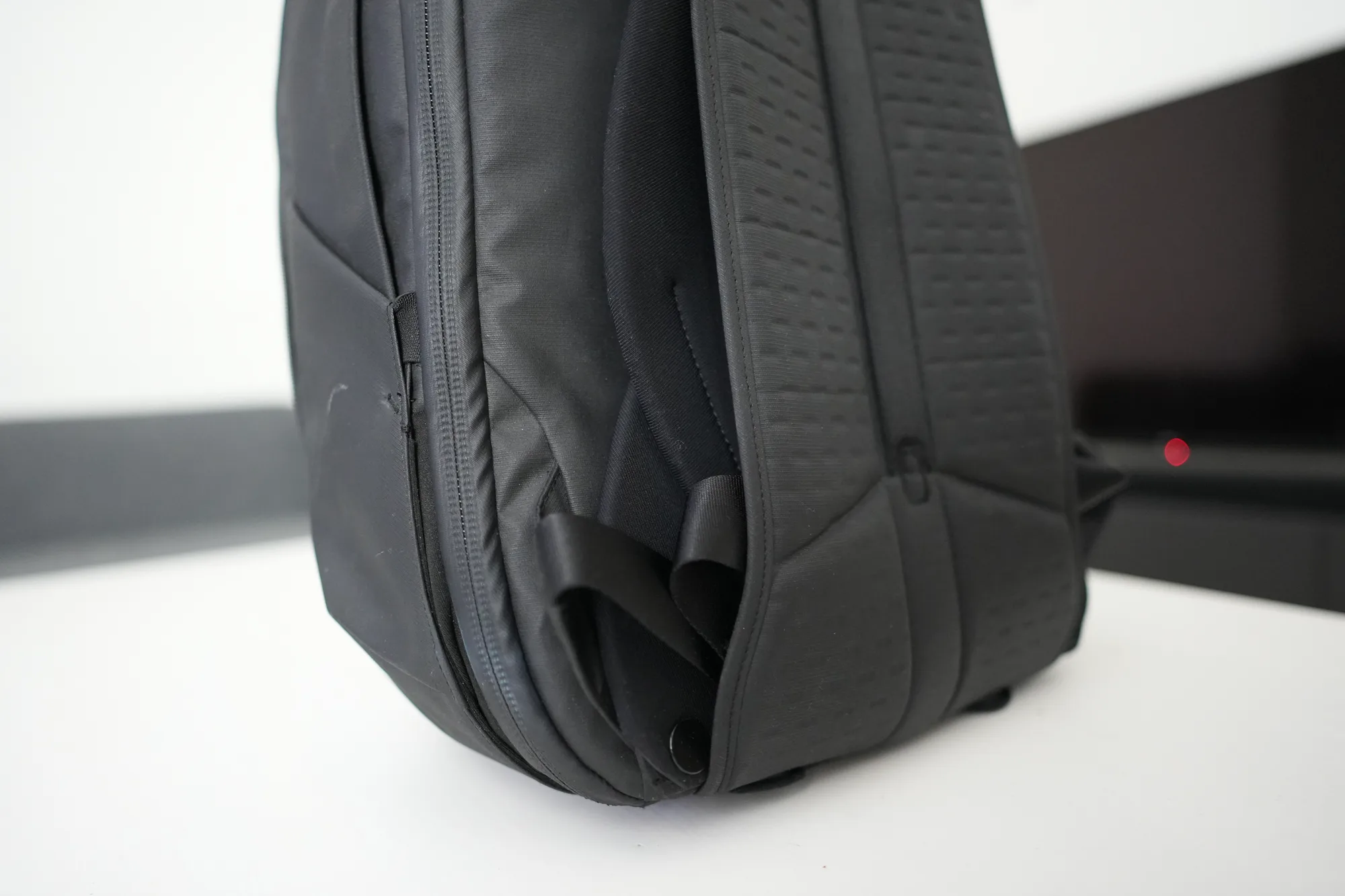
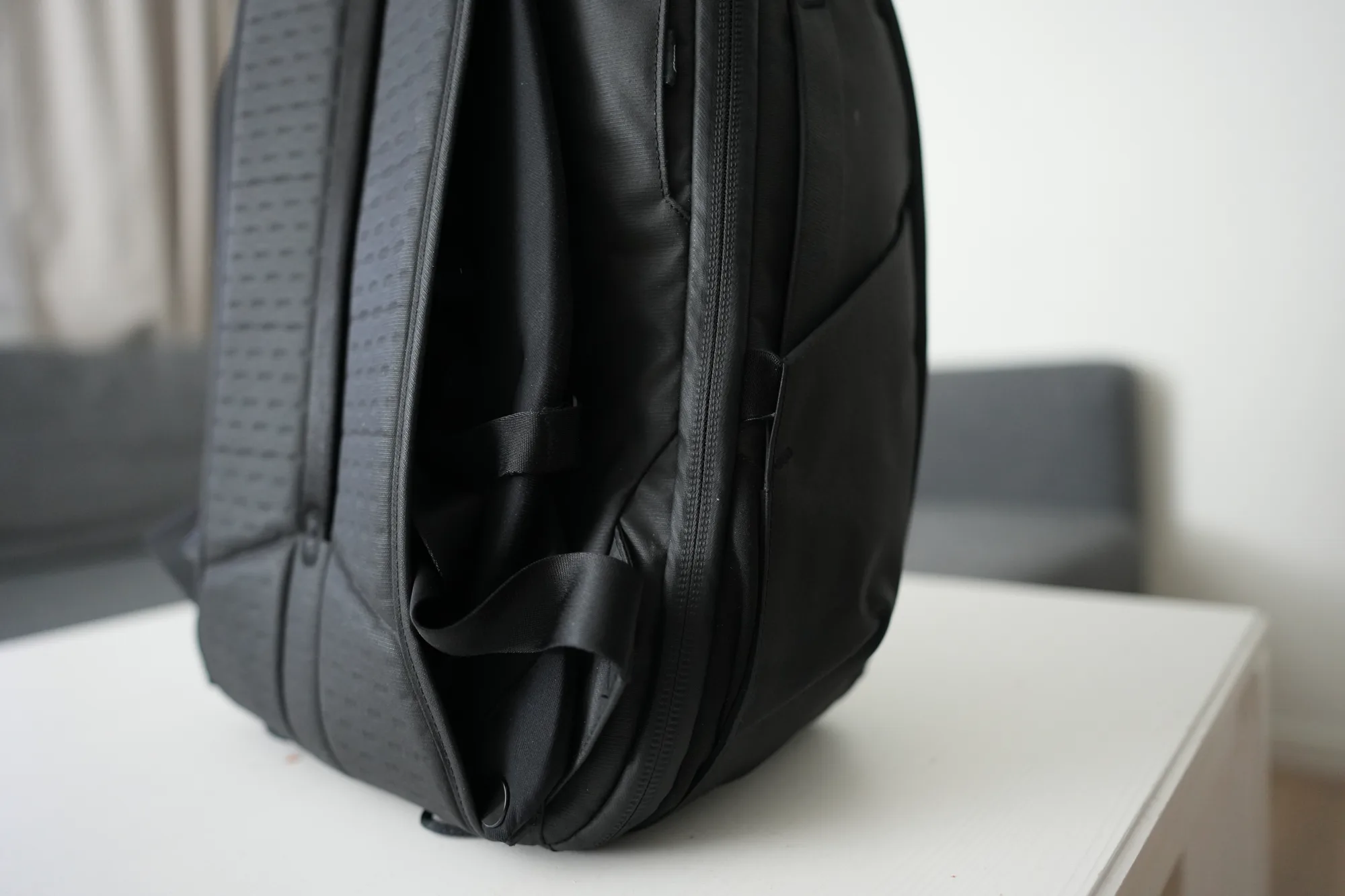
If you’re deciding between the 30L + Everyday Hip Belt combo and just going with the 45L (which includes its own belt), here’s how they compare.
The 45L’s built-in belt is more substantial. It’s integrated into the bag’s structure, stows neatly into the back panel when not in use, and generally transfers weight more effectively because it was designed as part of the overall suspension system. The 45L also has more padding in the shoulder straps and back panel, side access panels, and more internal volume.
The Everyday Hip Belt on the 30L is a retrofit, and it carries like one. It’s effective — genuinely so — but it doesn’t match the integrated feel of the 45L’s system. It also has a tendency to fall out when not in use, so its not an optimal solution oven though it is elegant compare to ever other stow-away systems. The trade-off is that the 30L is lighter, more compact, more comfortably carry-on compliant, and better suited for people who don’t need the 45L’s full capacity.
If you carry significantly more gear, the 45L is probably the better choice. I do think every tech heavy people out there will appreciate the top acces to the main compartment as well as the xtensive admin oicket. But if you prefer the 30L’s size and weight, the Everyday Hip Belt closes the comfort gap enough to make it a genuinely viable everyday and travel setup.
Who Should Buy It
The Everyday Hip Belt is for a specific type of user. If you already own the Peak Design Travel Backpack 30L and you carry it with any real weight — camera gear, a laptop, a full day’s worth of supplies — the hip belt is, in my opinion, a must-have accessory.
It’s especially worth it if you’re a photographer or content creator who uses the 30L as a camera bag. The combination of a mirrorless body, two or three lenses, and a laptop pushes the bag well past the comfort threshold of shoulder-only carry. The hip belt brings it back into manageable territory.
It’s also a smart buy if you’re considering the 30L as your primary travel backpack. For airport days, city walks, and getting to and from shooting locations, the 30L with the hip belt strikes a solid balance between form and function. It’s not a hiking pack, and it’s not trying to be one. But it’s a sleek, professional-looking bag that can actually handle the weight when you need it to.
If you only carry light loads — a change of clothes, a book, maybe a tablet — you can skip the hip belt entirely. The 30L handles lighter setups just fine on its own.
The Verdict
The Peak Design Everyday Hip Belt is a straightforward accessory that solves a real problem. It’s not perfect — the padding is thin, the G-hook closure is an acquired taste, and the extra cost on top of an already premium bag stings a little. I genuinely believe Peak Design should have included it with the 30L from day one.
But what it does, it does well. It takes the 30L’s single biggest weakness — carrying comfort under heavy loads — and fixes it. Not completely, not to the level of a dedicated hiking pack, but enough to transform the bag from something you dread carrying over long distances into something you can comfortably live with all day.
If you own or are considering the Peak Design Travel Backpack 30L and plan to carry anything heavier than the basics, budget an extra $30 for this belt.
It makes the bag what it should have been out of the box.
Where to Buy
You can pick up the Peak Design Everyday Hip Belt directly from Peak Design:
Peak Design Everyday Hip Belt on peakdesign.com
Have questions about the Everyday Hip Belt or how it pairs with the 30L? Drop a comment below, and I’ll see you in the next one.
This post does not contain affiliate links. The link above goes directly to Peak Design’s website. I only recommend products I’ve personally tested and believe in.