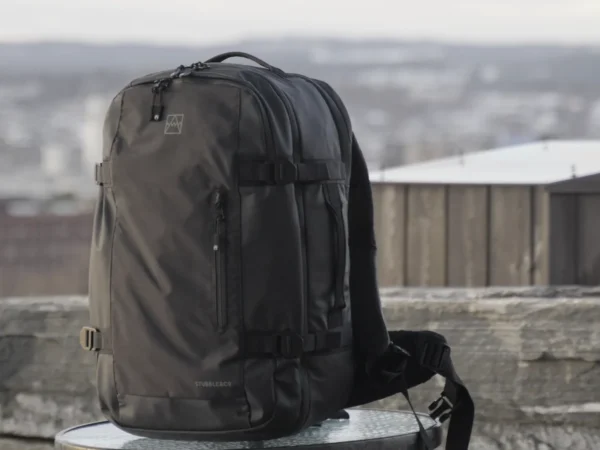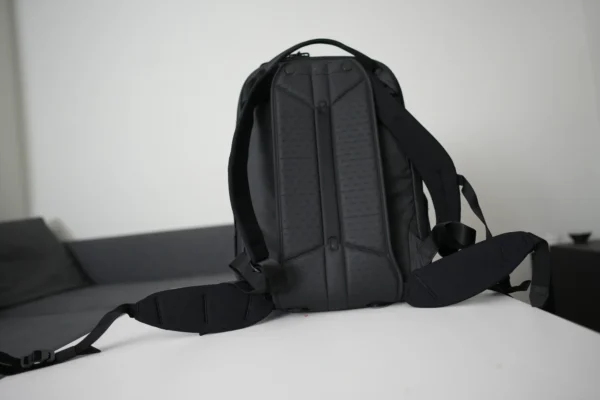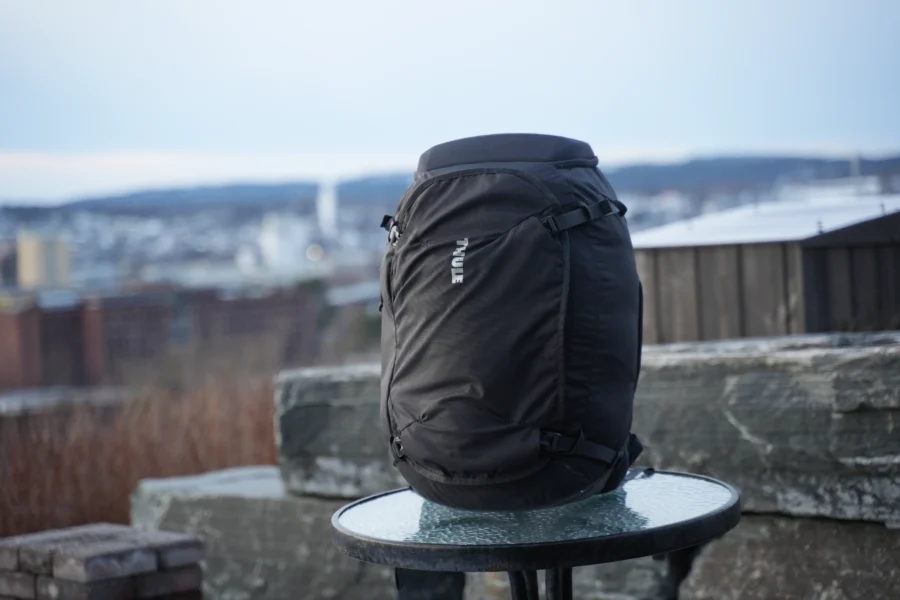
Get the Thule Landmark 40 here
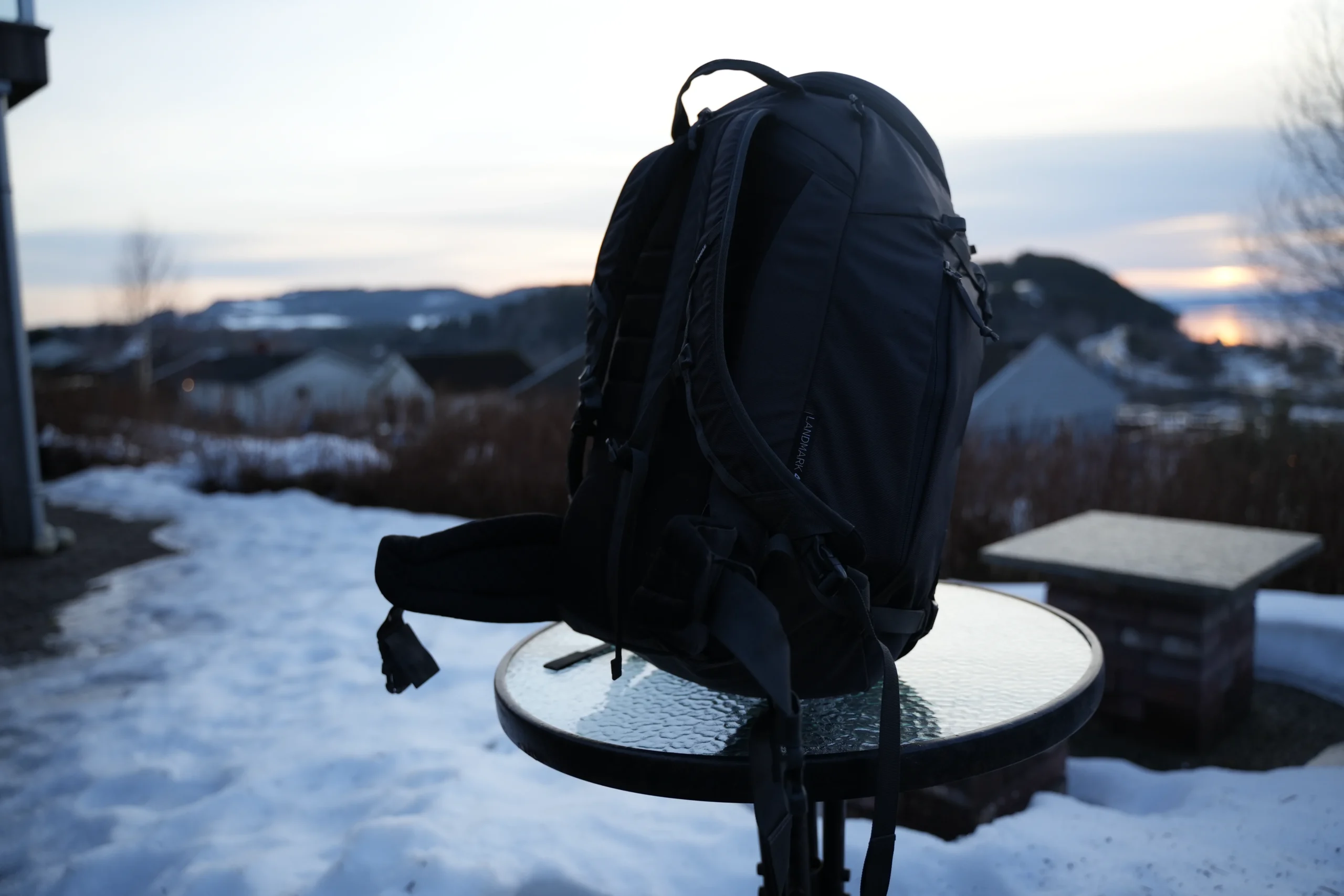
I bought my Thule Landmark 40 in the fall of 2019. It’s now been my “heavy-duty” travel backpack for years — dragged through train stations, stuffed to the brim, and routinely loaded up to around 12–12.5 kg. I’ve actually never flown with it, but for ground travel (especially trains) and trips where I’m carrying more than I probably should, this has been the bag I keep choosing.
This is a purpose-built travel pack, not a hiking pack. If you want something that looks crisp on Instagram or holds a perfect boxy shape, this probably isn’t it. But as a functional tool for moving your life around, the Landmark 40 has a few genuinely unique strengths that have kept it in my rotation for years.
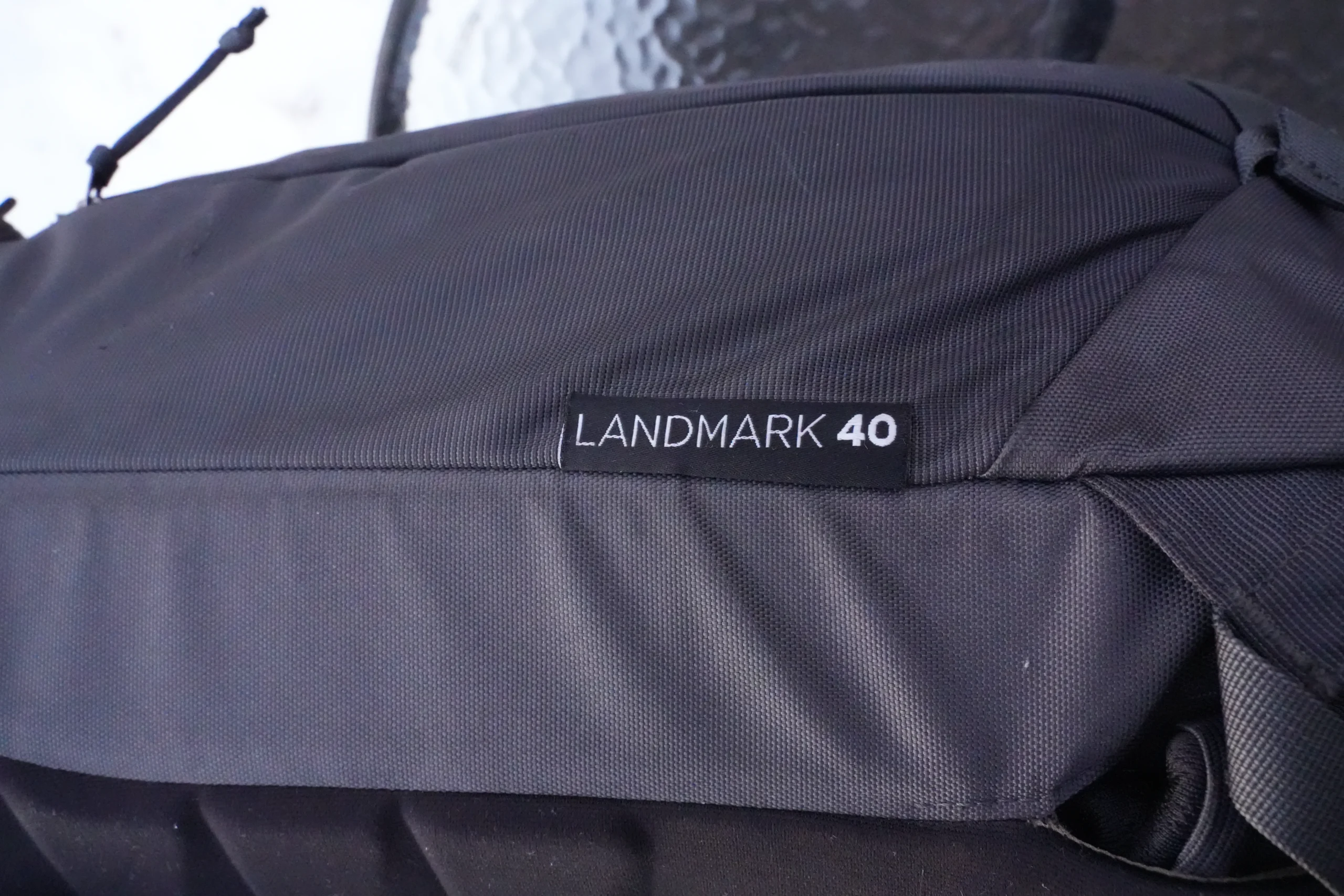
Quick Specs
| Spec | Details |
|---|---|
| Capacity | 40 L |
| Weight | ~1.44 kg / 3.17 lb |
| Dimensions | ~55 x 33 x 25 cm (21.5 x 13 x 9.8 in) |
| Key Features | SafeZone top compartment, hidden CashStash pocket, stowable harness/hipbelt, LoopLocks, laptop + tablet sleeve |
Why I Bought It
When I bought the Landmark 40, it looked like the ideal match for how I travel. What hooked me was the design philosophy:
- A big duffel-style main compartment that runs deep into the bag
- A harder “SafeZone” top compartment for the things you need fast — tech, sunglasses, cables, etc.
I liked the idea of the “hard-shell top” concept (it reminded me of certain camera and hardshell designs I’ve enjoyed), and I wanted one pack that could carry both travel gear and camera gear without me stressing about crushed items.
How I’ve Actually Used It
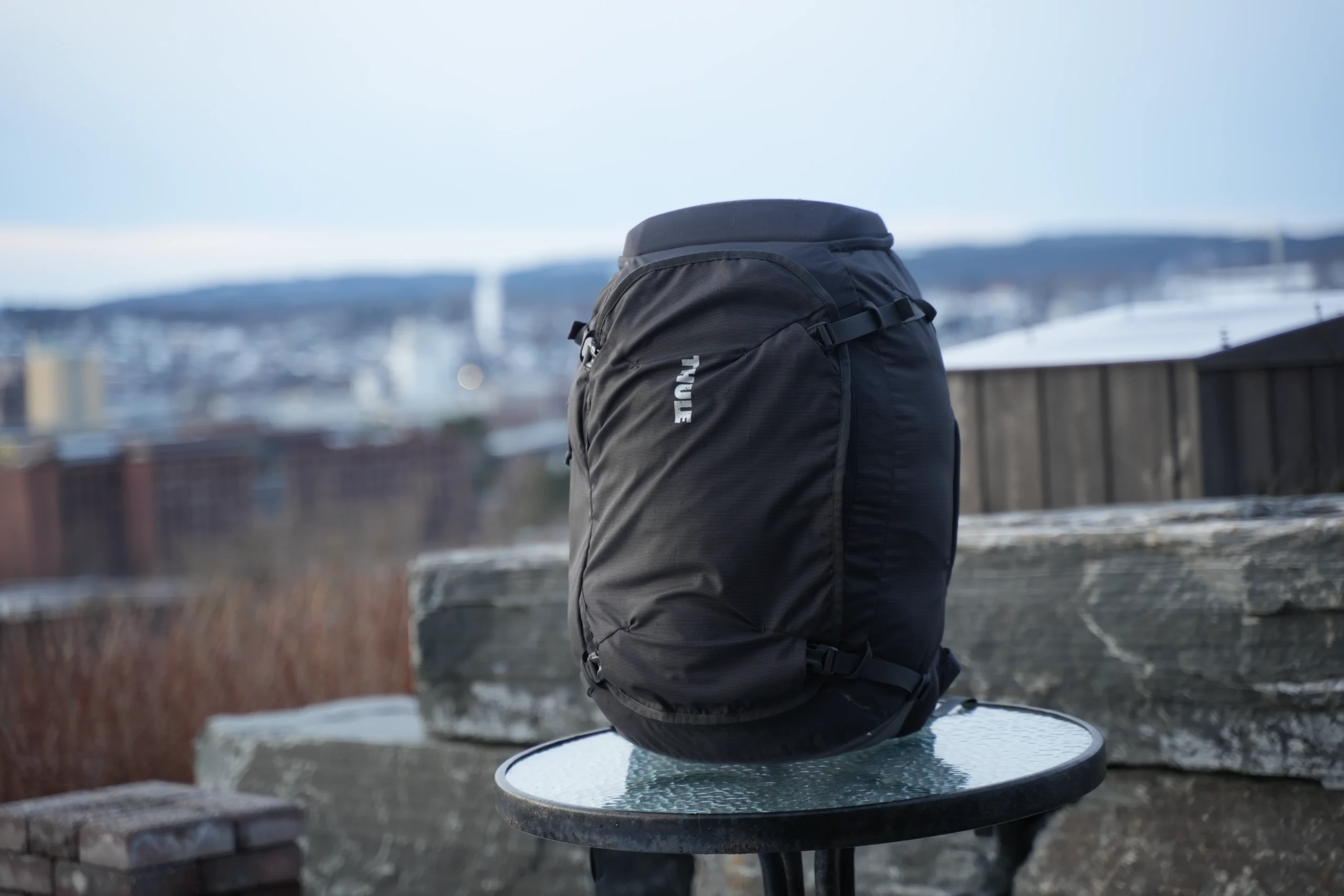
The Thule Landmark 40 has been my go-to pack for heavier loads:
- I’ve packed it up to ~12–12.5 kg when bringing camera gear and extra tech
- I’ve used it for longer trips — one standout was a 10-day trip (Dec 17 to Dec 27) where the bag was basically maxed out
- I’ve even used it on a 30 km day hike (not ideal, but it worked) because we were training with extra weight and I wanted to test it under stress
In short: it’s been my “I need space, and I need it to survive” backpack.
Durability After Years of Abuse
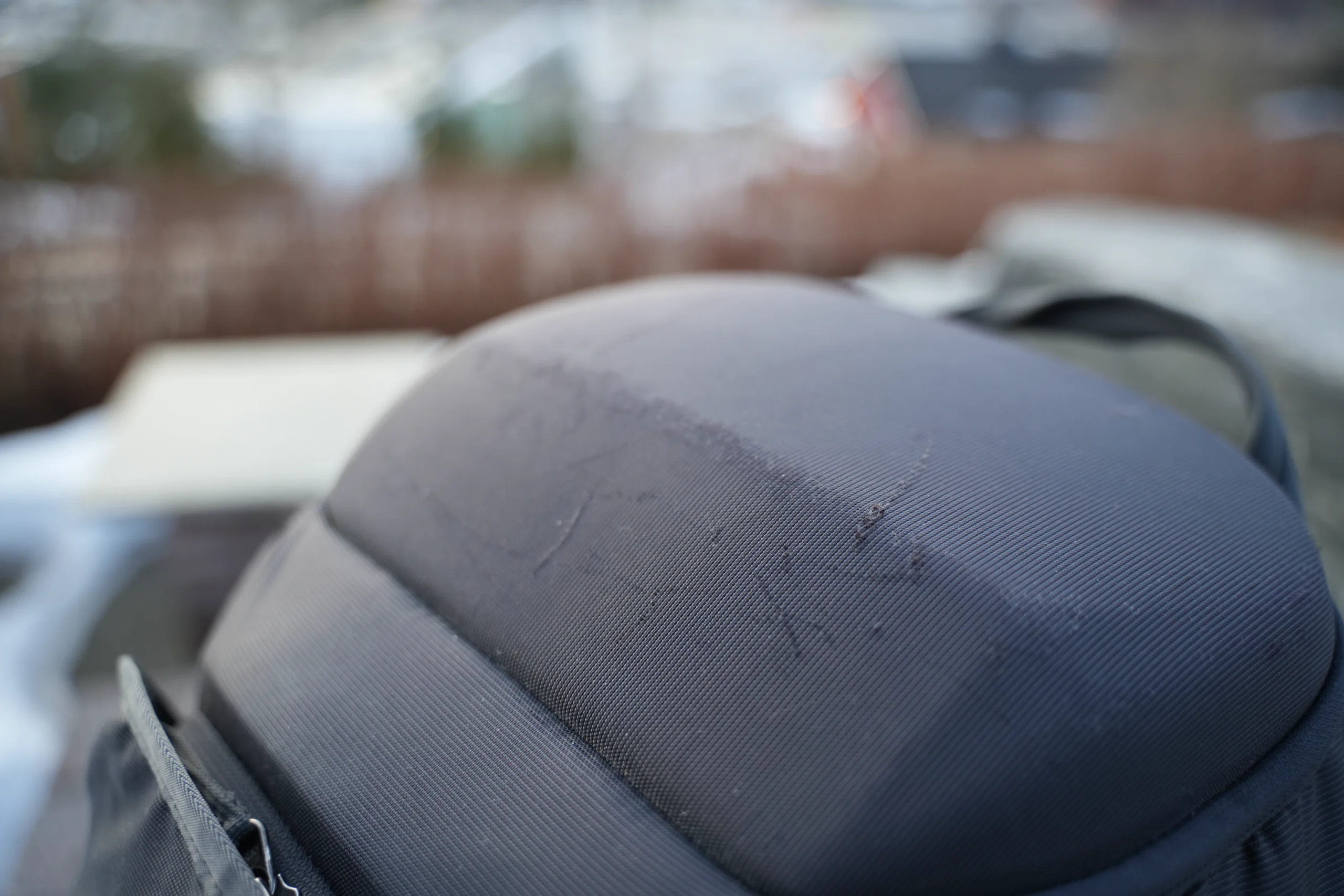
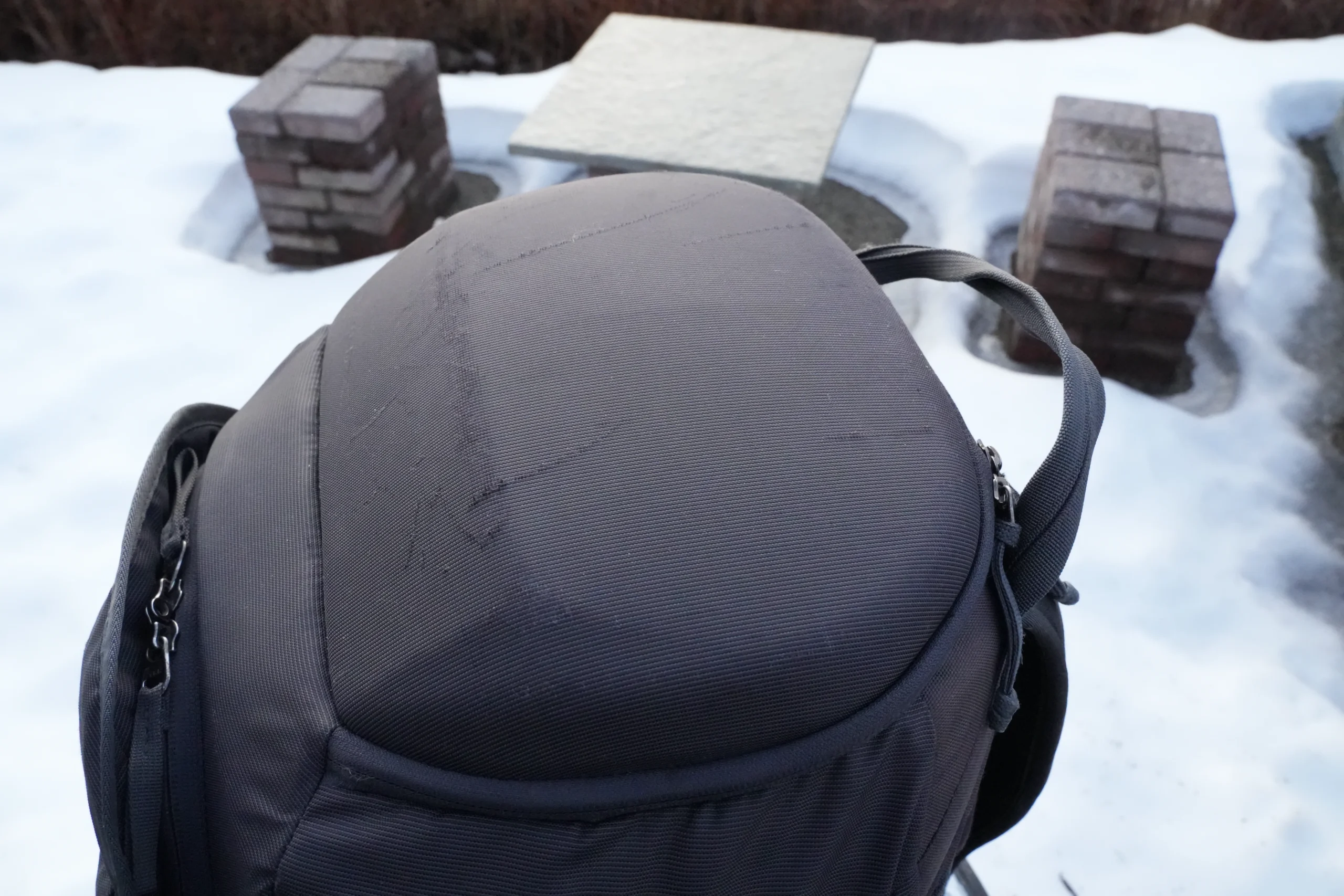
Let’s be honest: it’s not pretty anymore.
This bag has clearly been my workhorse. It has scuffs, it doesn’t look fresh, and it has that “used tool” vibe. But functionally? Zippers and compression straps are still working well. Hardware is generally fine.
The One Real Failure (And It Was My Fault)
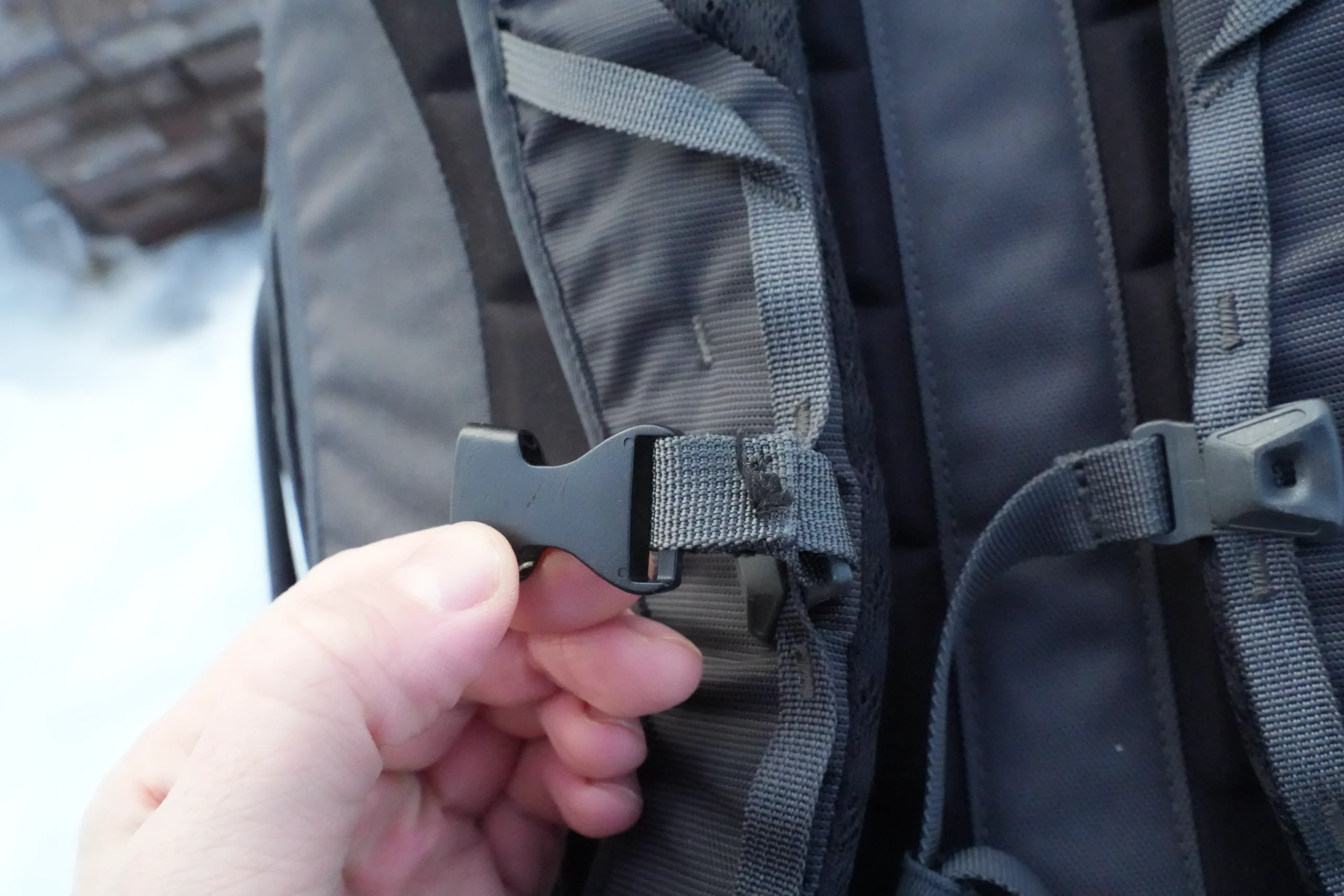
I stepped on the sternum strap buckle while traveling and snapped it. That wasn’t a quality failure — it was a user failure. I ended up opening the stitching and sewing on a new buckle so it could keep working.
Lesson learned: when you arrive at your destination, stow the shoulder straps and hipbelt and use the carry handles instead. The Landmark 40 has top and side handles for a reason. If the bag is on the floor, it’s surprisingly easy to step on buckles from the shoulder straps or hipbelt.
Carry Comfort — The Biggest Downside
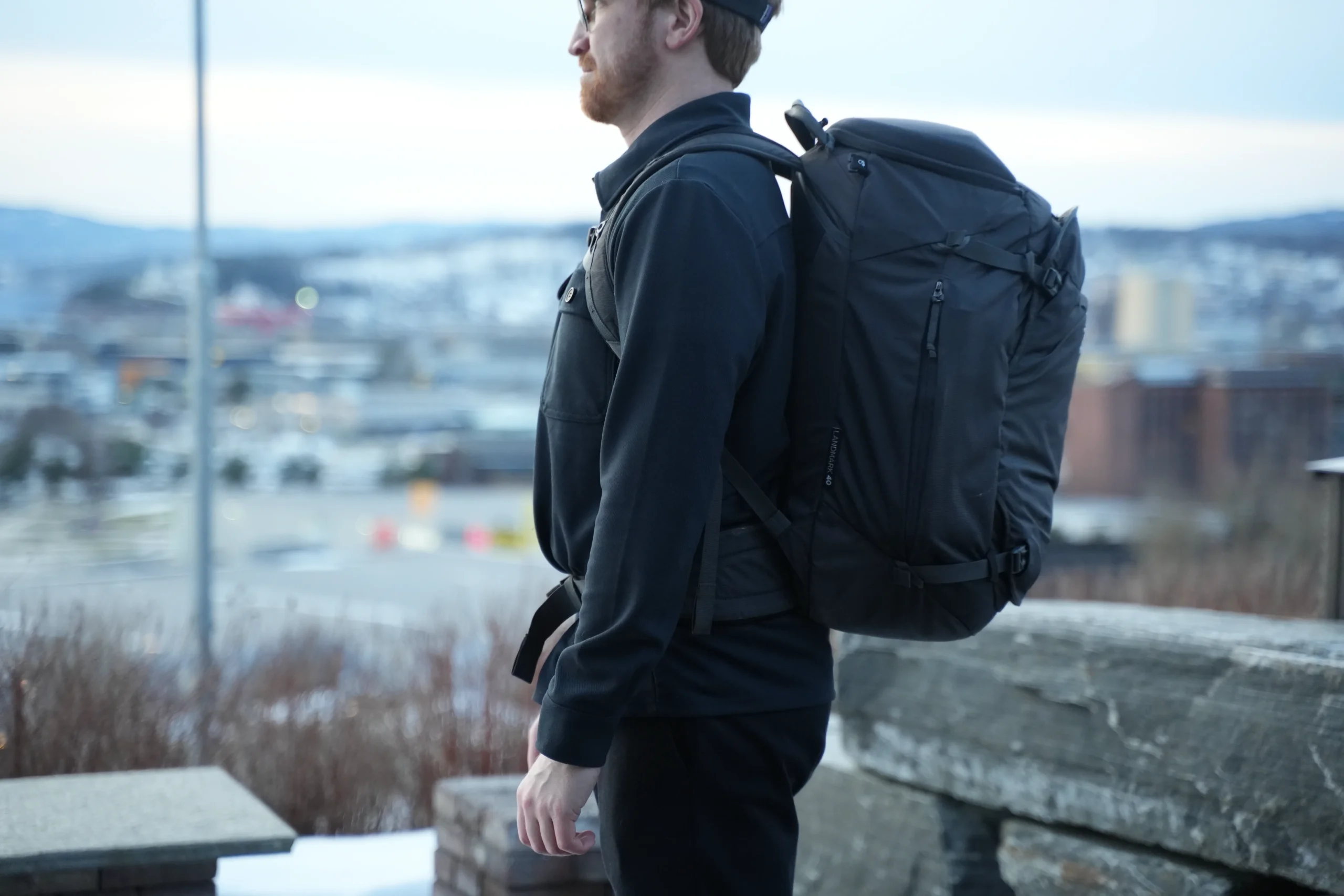
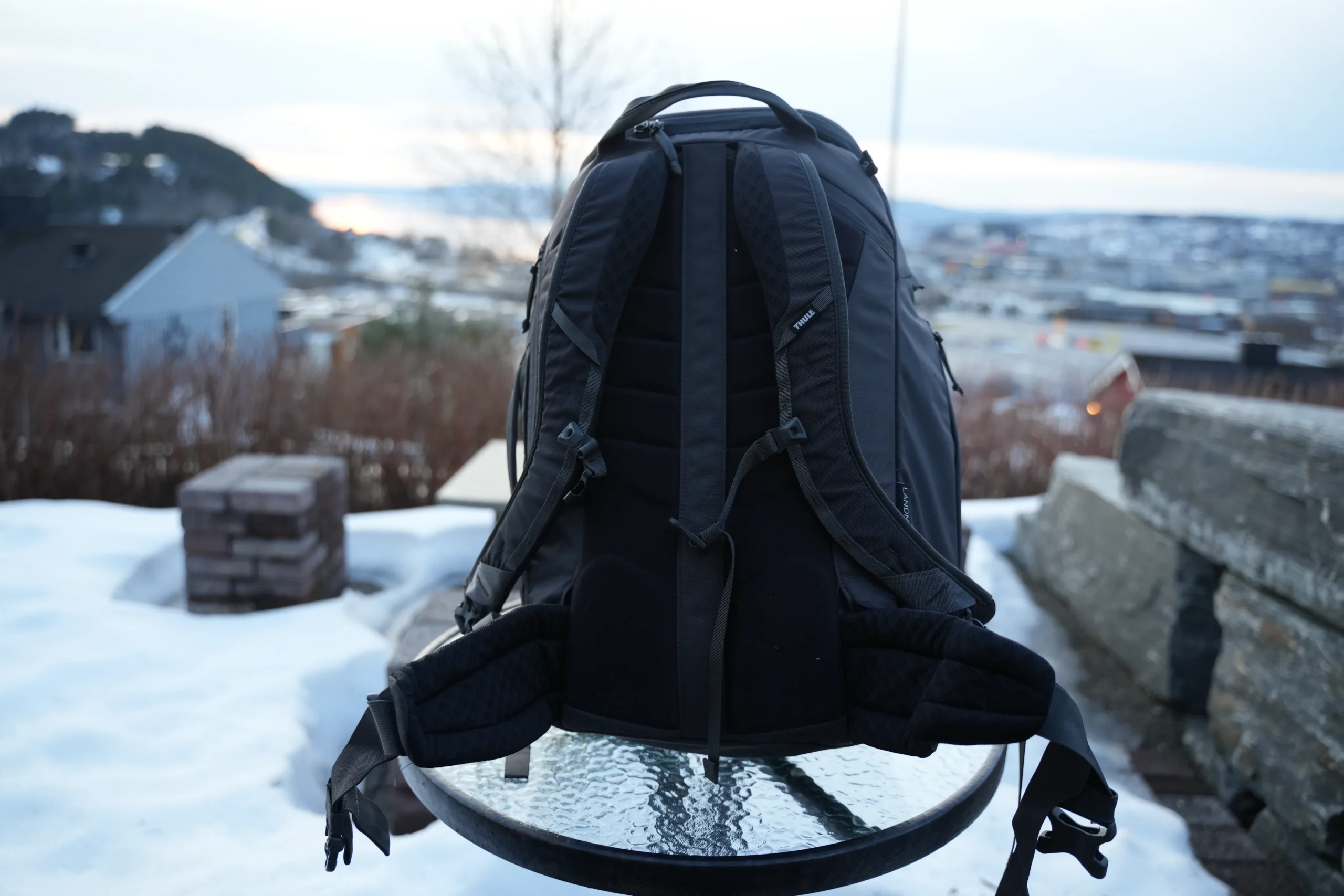
If there’s one reason I don’t call the Landmark 40 a “perfect” 40L travel pack, it’s the carry.
- When packed heavy, it can feel back-heavy and pull you slightly backwards
- Comfort depends a lot on how you pack and where the weight sits, but with a lot of tech in particular, the balance can be tricky
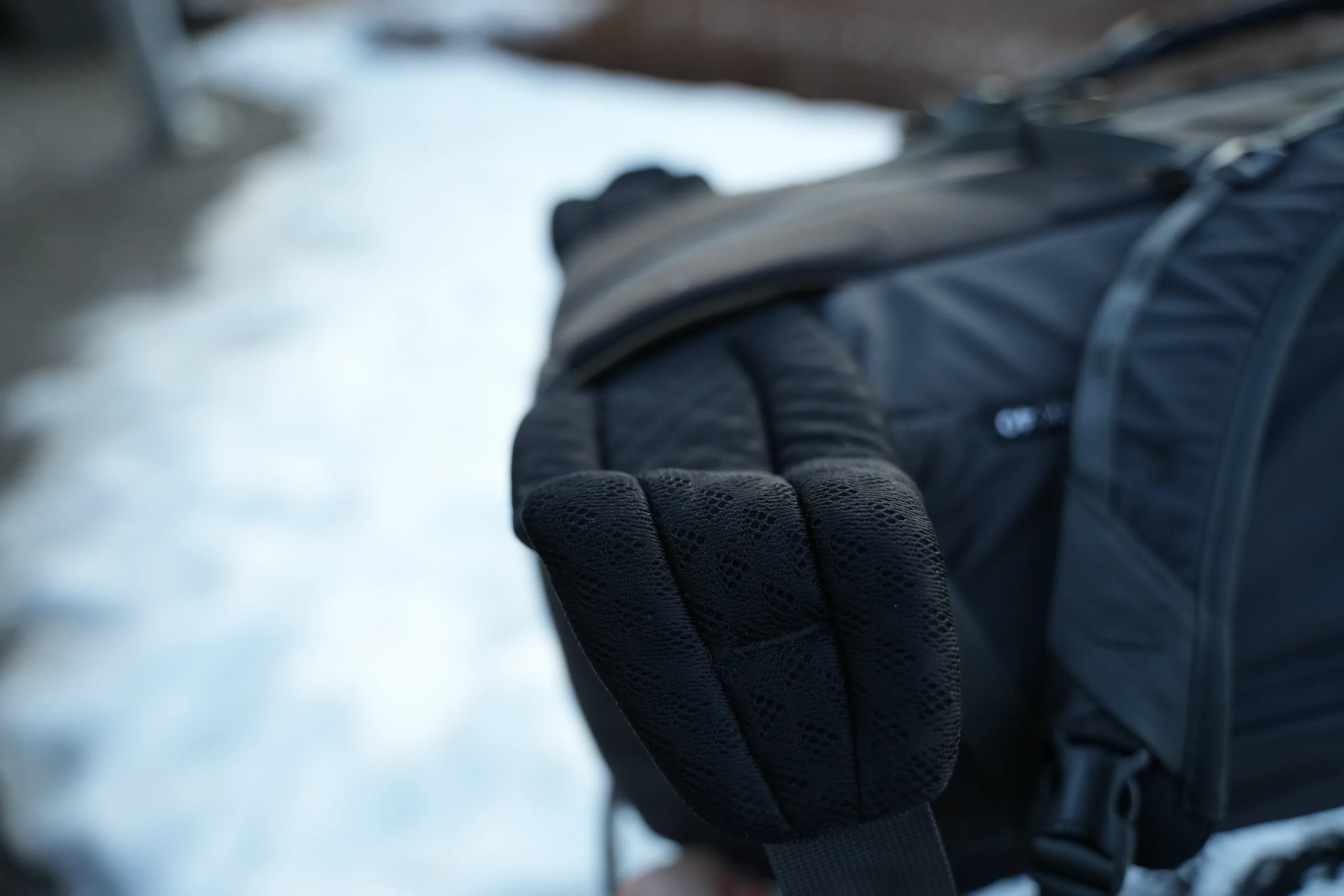
What I Miss: Load Lifters
After later using the Osprey Farpoint 40, I really started appreciating load lifters and a more supportive harness design. The Farpoint is still in a league of its own for carrying comfort with heavy loads. If I’m going to carry a lot of weight, I’ll usually choose the Farpoint.
Under ~10 kg: Totally Fine
Under about 10 kg, the Landmark 40 is completely fine — especially if you use the hipbelt properly. And I do love that you can stow the hipbelt when you don’t need it.
Organization: Where the Landmark Shines
1. The Main “Duffel” Compartment
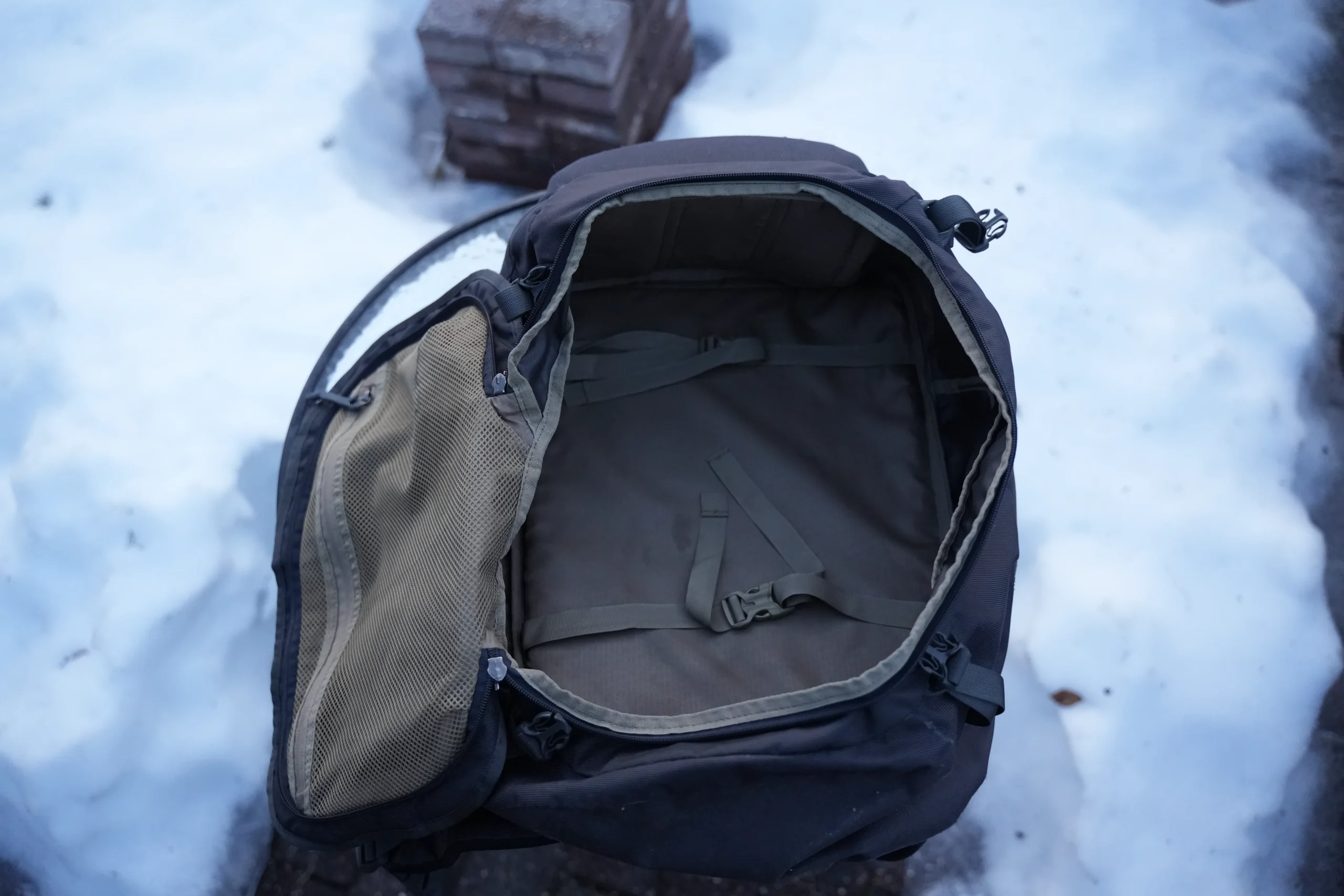
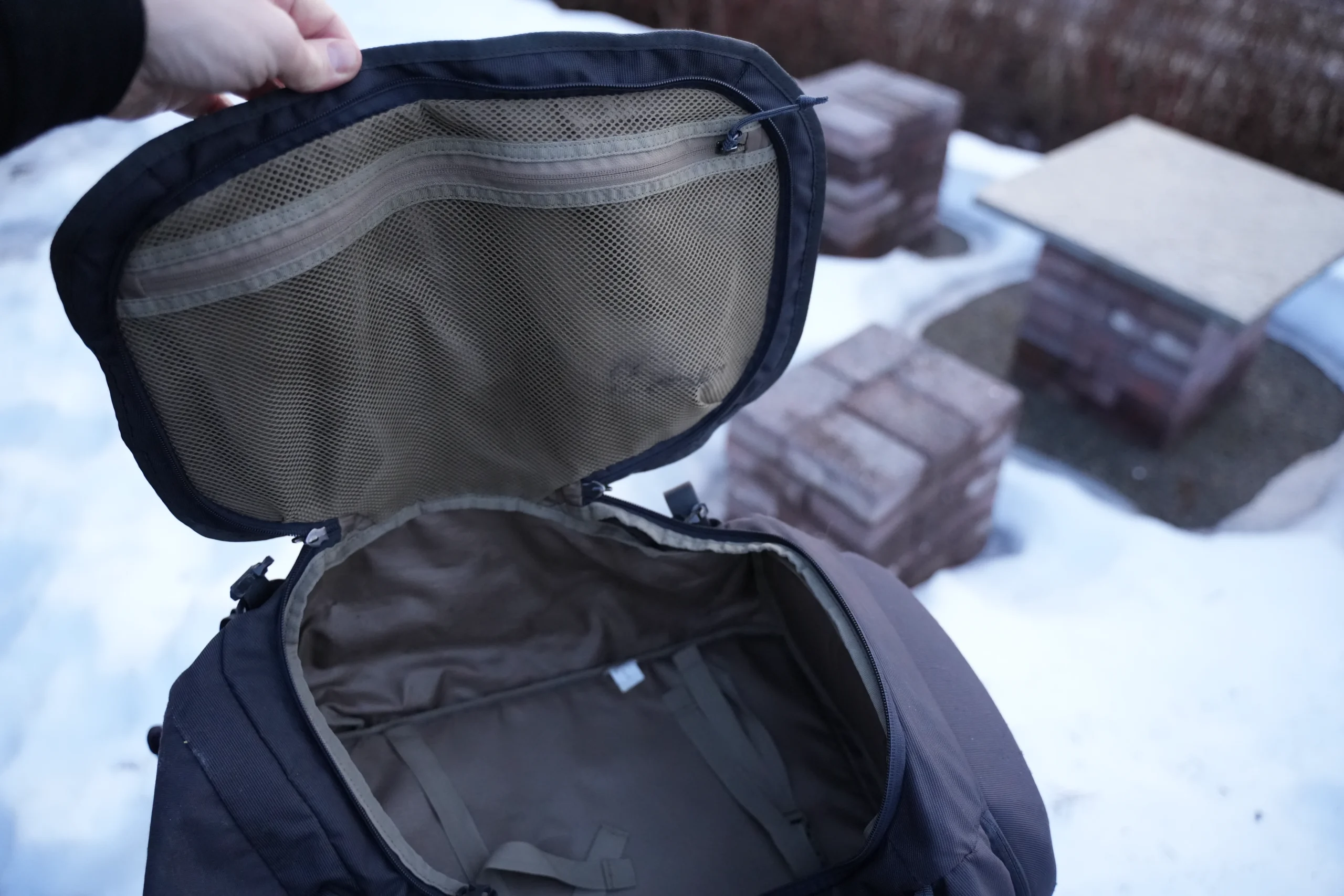
The big, deep main compartment is forgiving. I like that I can stuff things into the sides, and the shape means I don’t feel like I’m constantly fighting zipper pressure. Even when it’s full, the design doesn’t create the same “zipper is about to explode” feeling some boxy clamshell bags can.
2. The SafeZone Top Compartment — A Travel-Tech Cheat Code
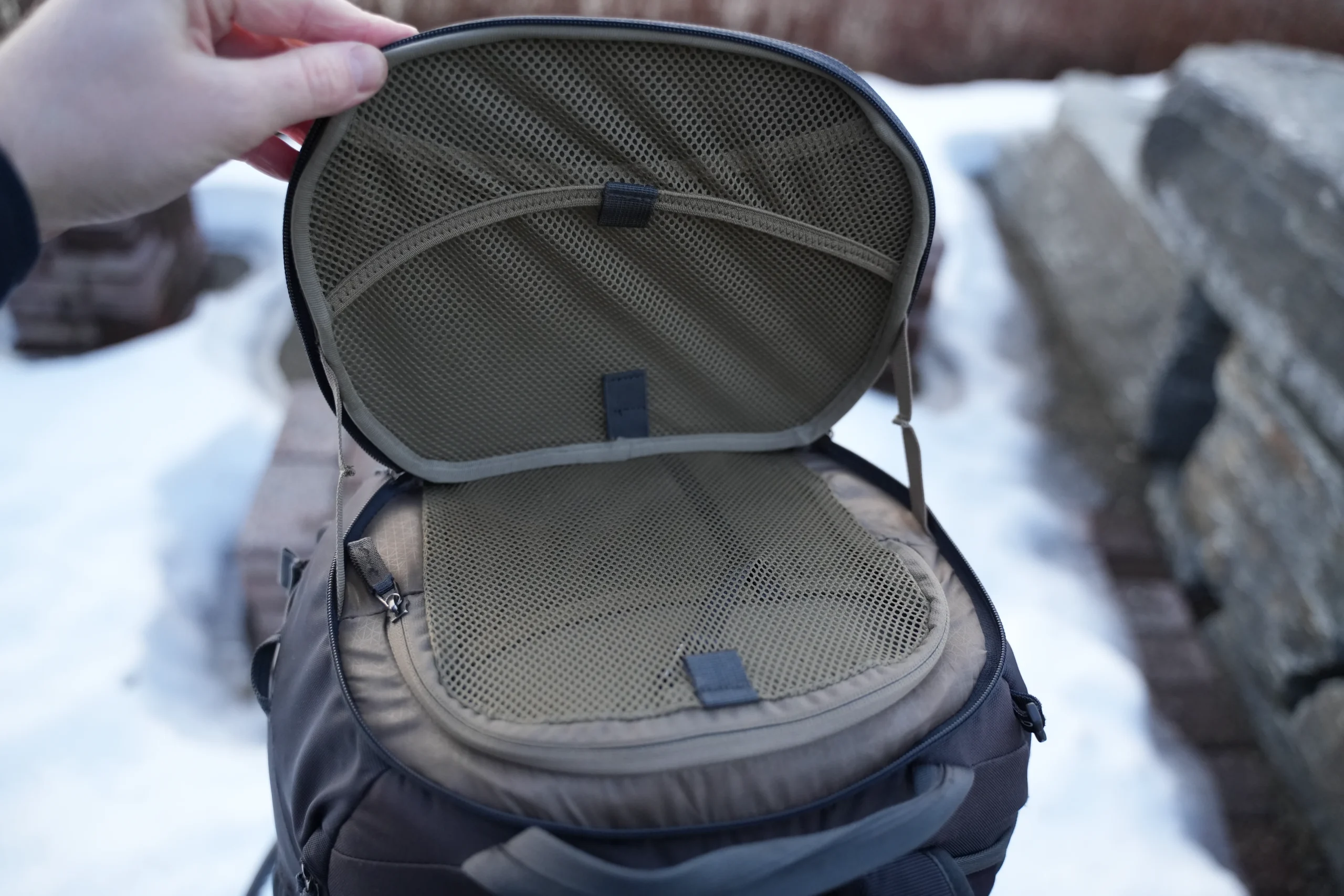
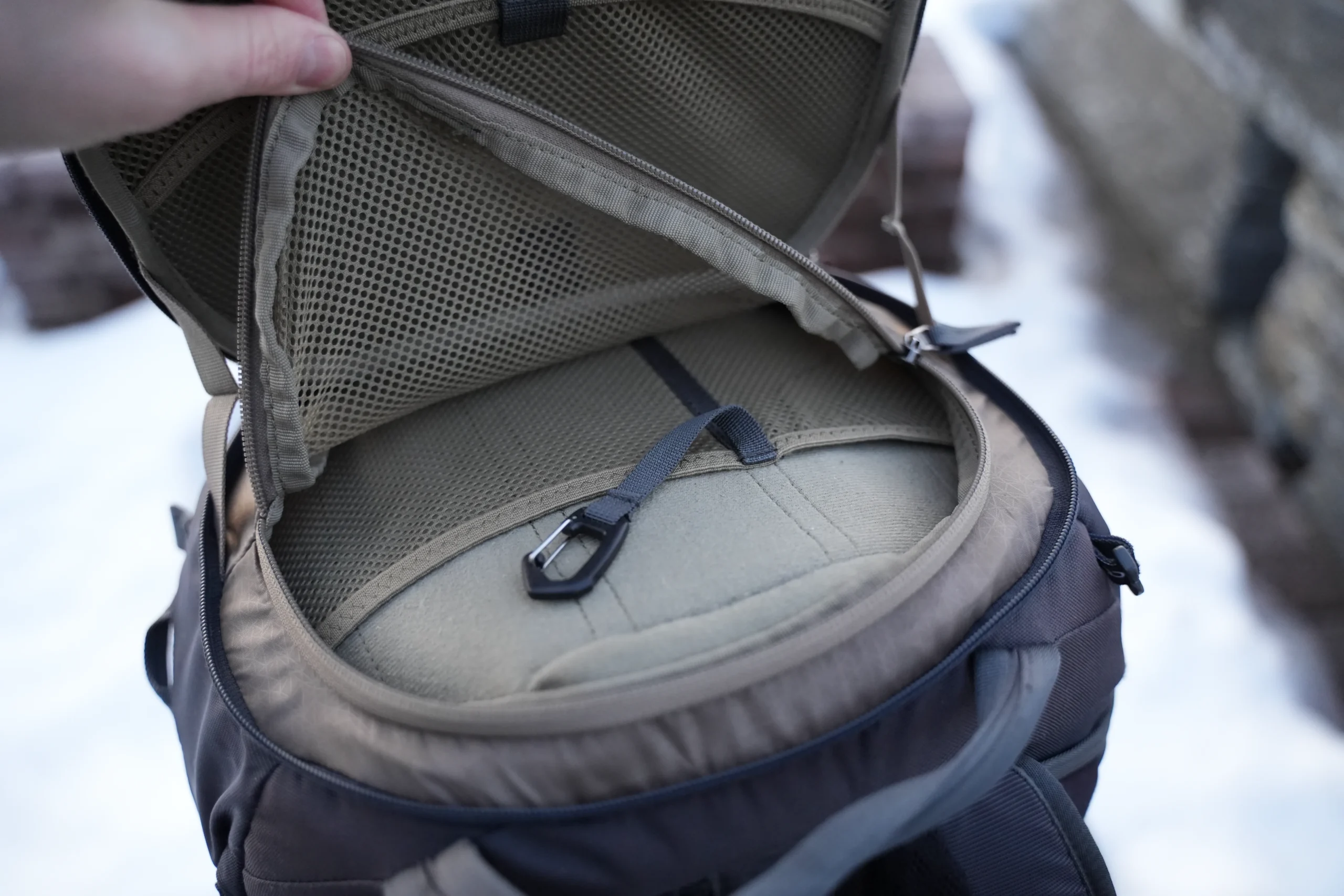
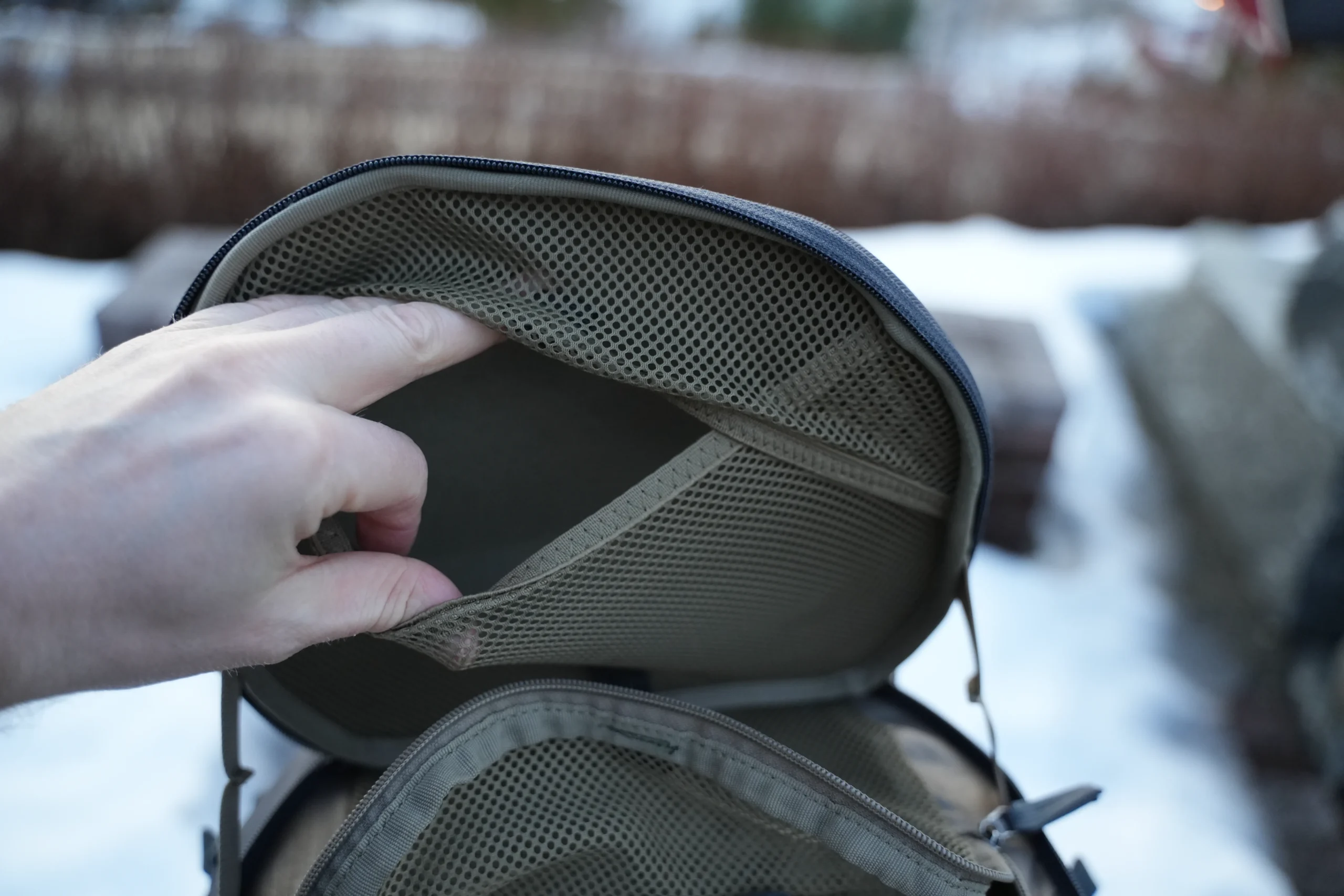
This is my favorite part of the bag.
I can keep almost all of my tech up top: chargers, cables, small electronics, sunglasses, and any misc quick-grab items.
Bonus: if you have a fairly compact noise-canceling headset (like the Bose QC45), the SafeZone basically works like a semi-hard case for it. If I skip the headset, I can fit even more: bigger chargers, adapters, and travel tech essentials.
3. Mesh Pockets and Internal Straps
There are mesh zip pockets inside the bag, which I appreciate because even if someone got into the SafeZone, they’d still have to open additional zippers to reach smaller valuables.
I personally don’t use the internal compression straps much. They’ve mostly just been… there. After years, I’ve even considered trimming them off (unless I plan to gift the bag someday).
4. The Side Pocket / Bottle Pocket
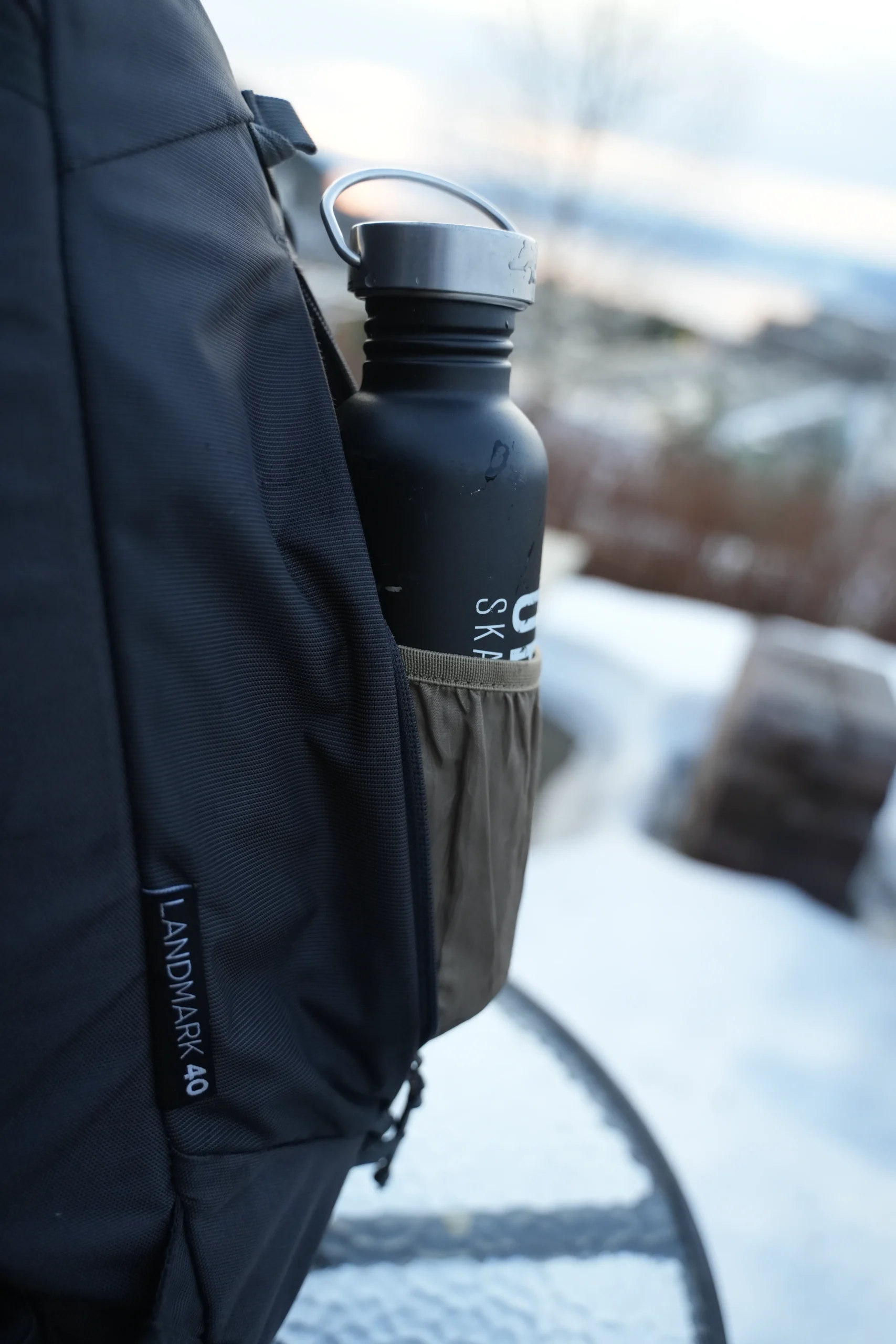
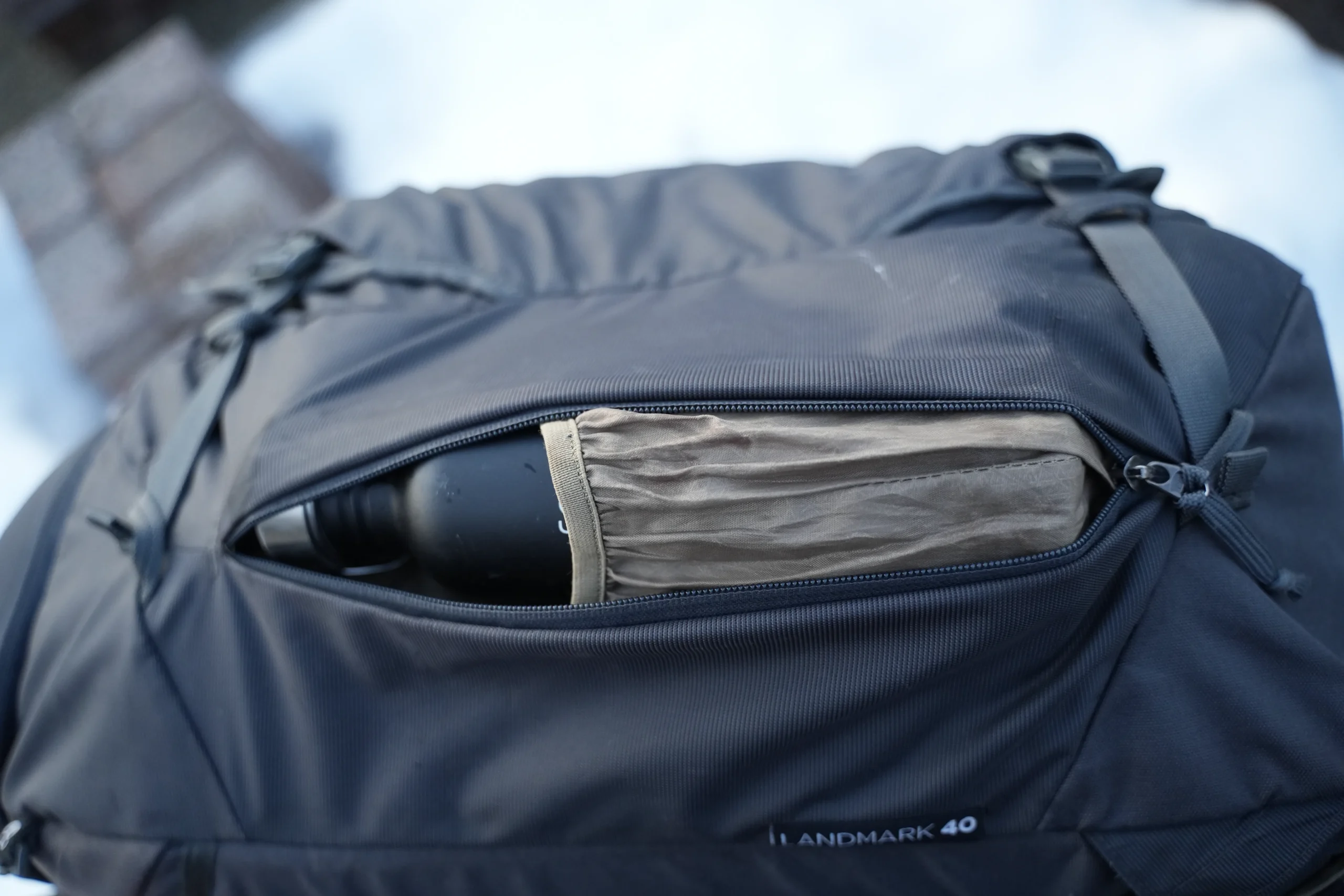
The side pocket has been almost exclusively a water bottle pocket for me. I also love that it can be zipped fully away so it’s not flapping around or catching on things when I don’t need it.
Security: The Landmark’s Most Underrated Strength
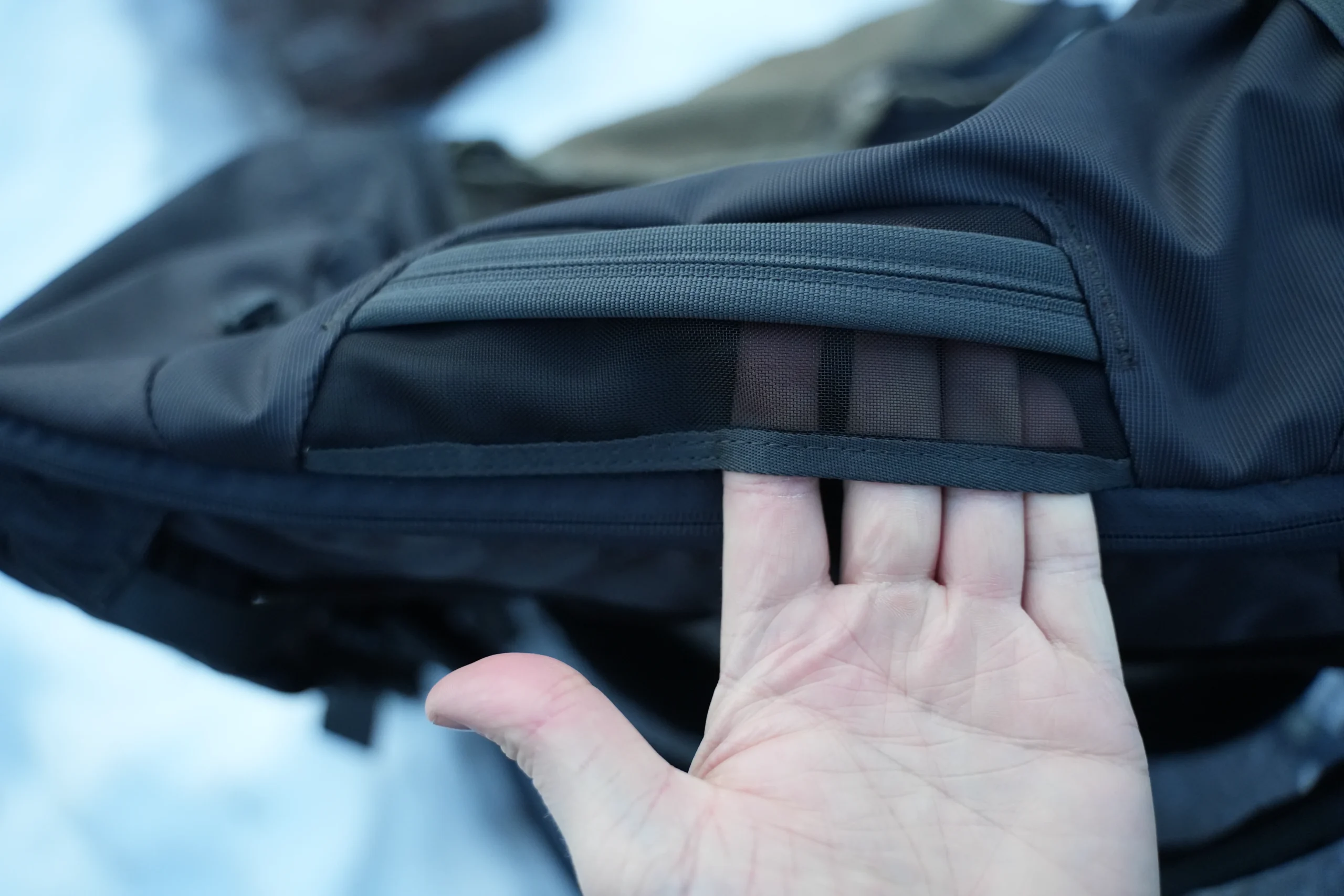
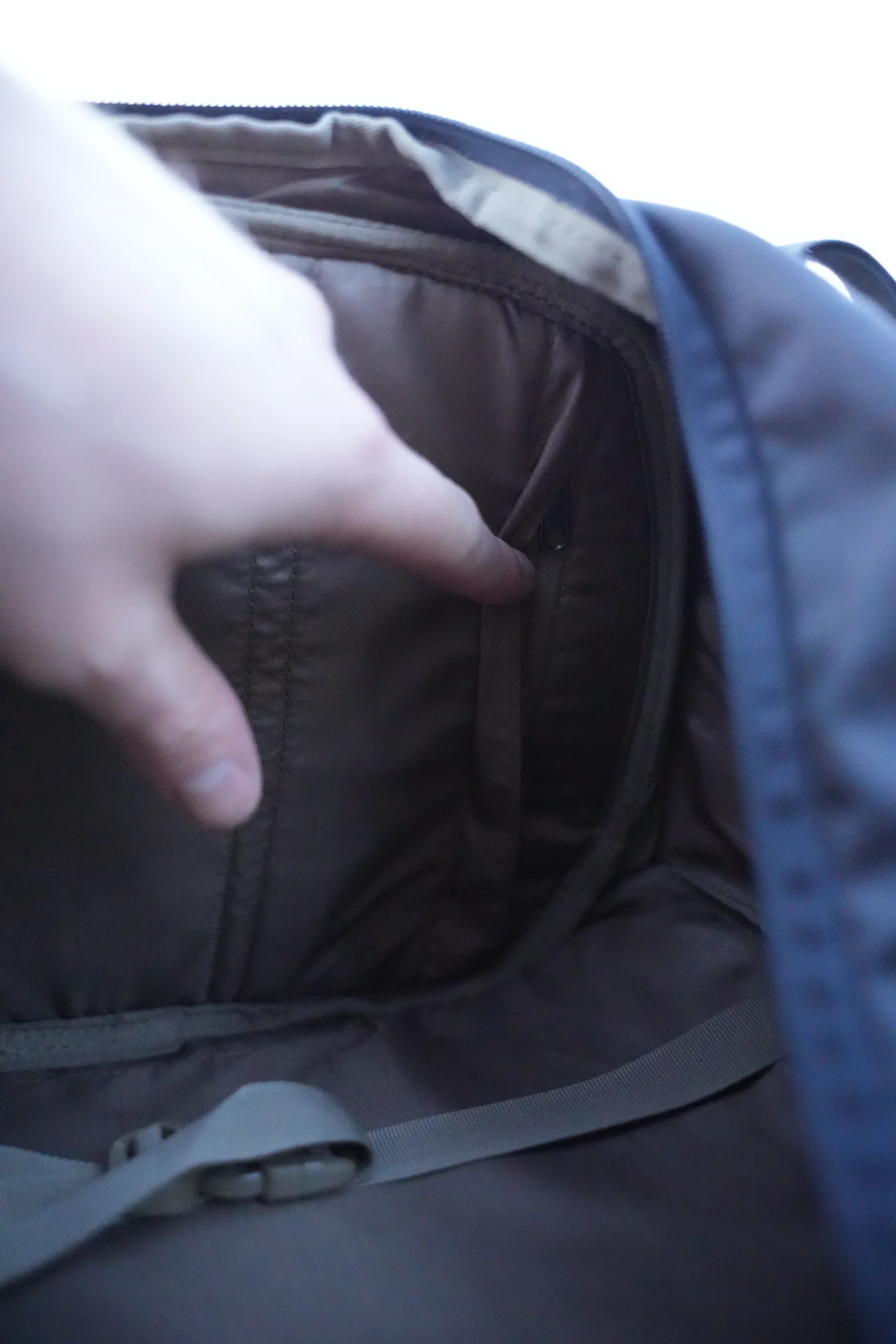
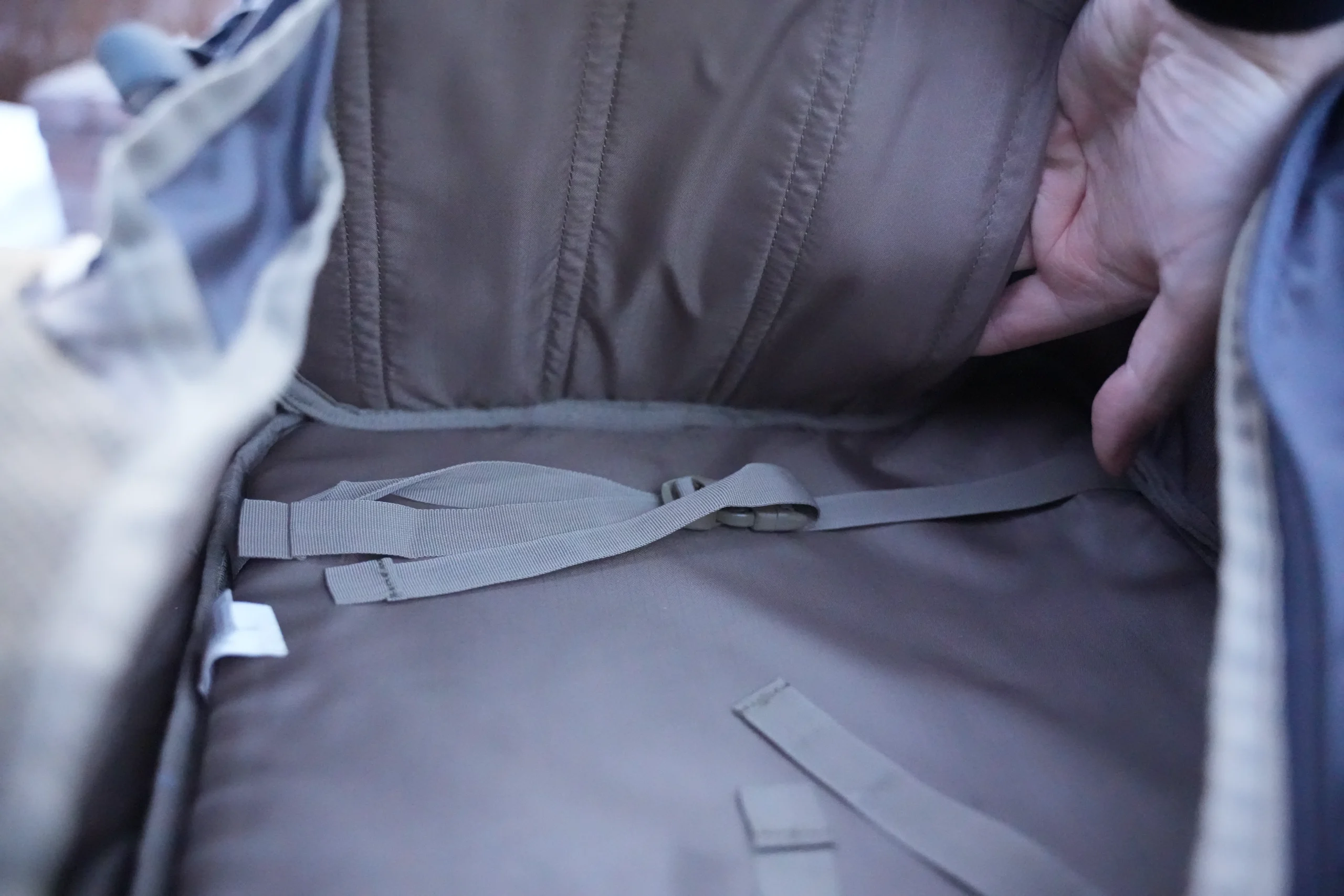
This bag has the best passport pocket I’ve personally used.
The hidden CashStash pocket under the SafeZone is so well concealed that if the bag was stolen, I genuinely think many thieves wouldn’t even find it. If the bag ever ended up in lost-and-found, I’d bet there’s a good chance your passport would still be sitting right where you left it — because it’s just not obvious.
On top of that, you get:
- LoopLocks to secure zipper pulls
- Zipper flaps and compression straps adding friction against quick theft
That said: I wouldn’t call it “the most secure bag in the world.” If maximum anti-theft is your #1 priority, I’d still look at something like the Osprey Porter line or other more security-focused travel packs. My approach: I keep boring, replaceable items in the more exposed pockets.
Laptop Compartment: Mostly Fine, Sometimes Annoying
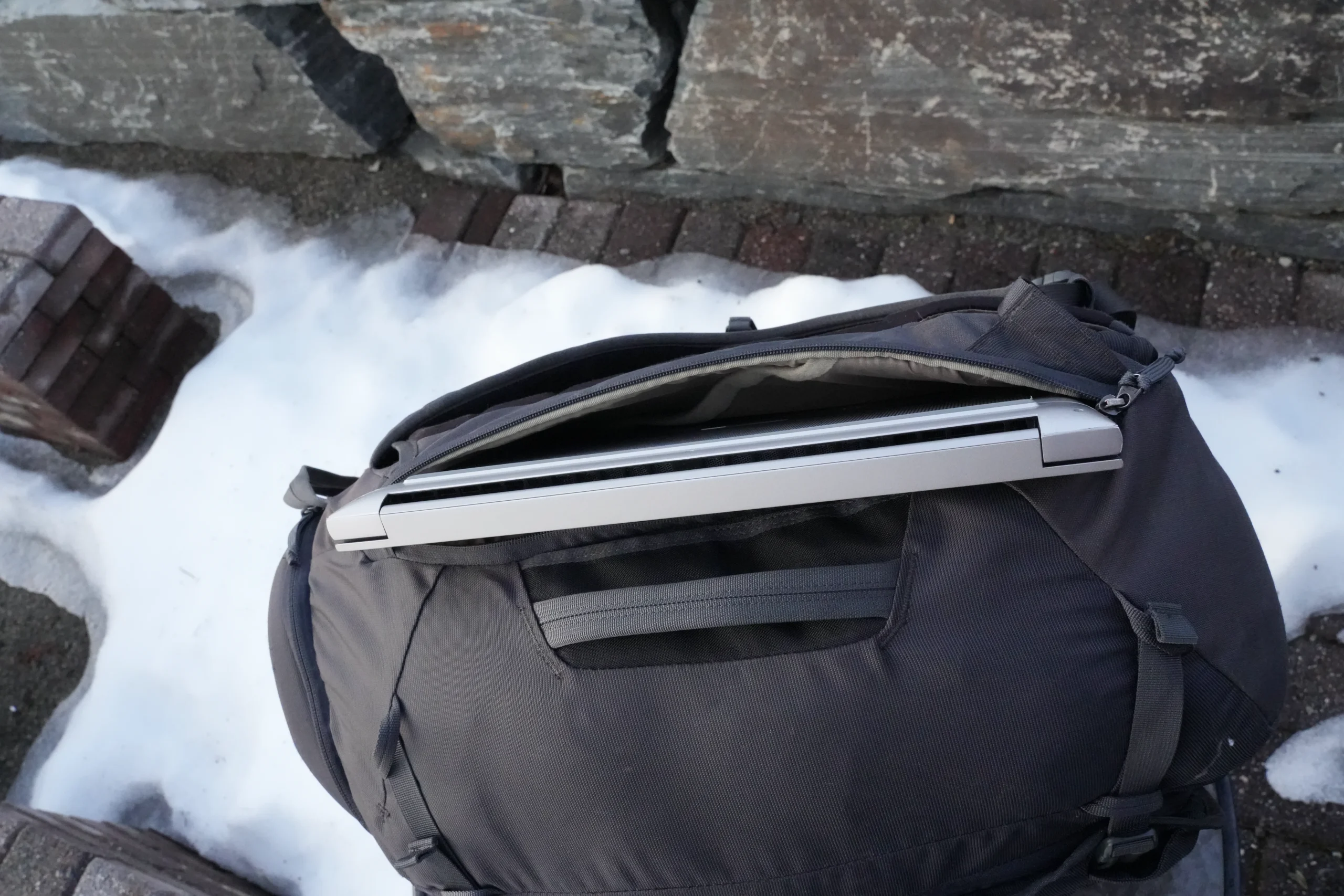
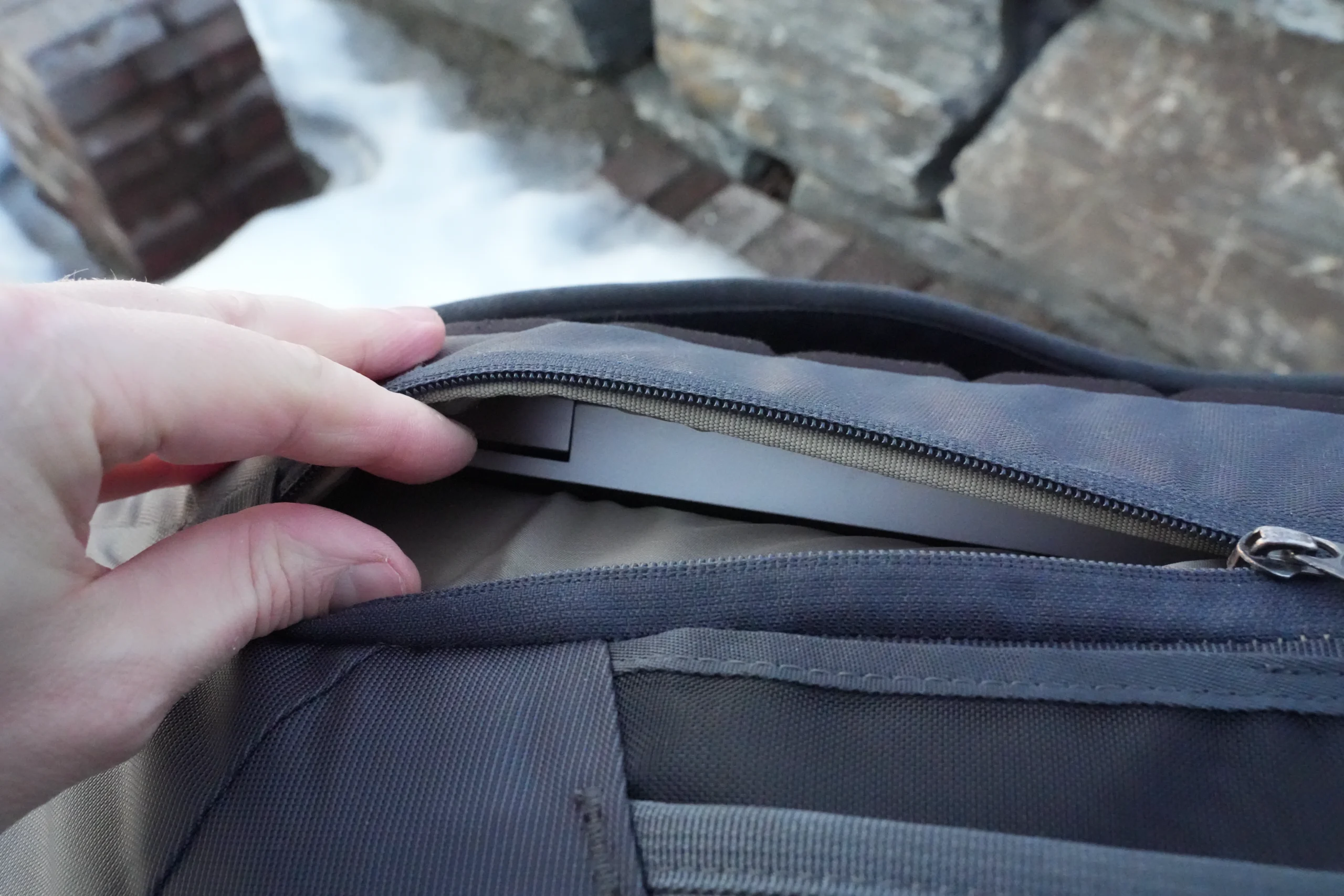
The laptop compartment has been a mixed experience. With a 14–16″ MacBook Pro, it’s generally okay. But when the bag is fully packed, it can be harder to slide a laptop in and out. I’ve sometimes worried the zipper might be under stress — but it has never failed.
So: not perfect access when the bag is stuffed, but reliability has been solid.
Rain and Weather Resistance
I’ve used the Thule Landmark 40 in rain plenty of times. The bag has held up better than expected and I haven’t had issues with gear inside getting wet on normal rainy days.
That said, if you’re walking a long time in heavy rain — especially with expensive tech — I’d still recommend a rain cover as extra insurance.
The “Looks and Structure” Problem
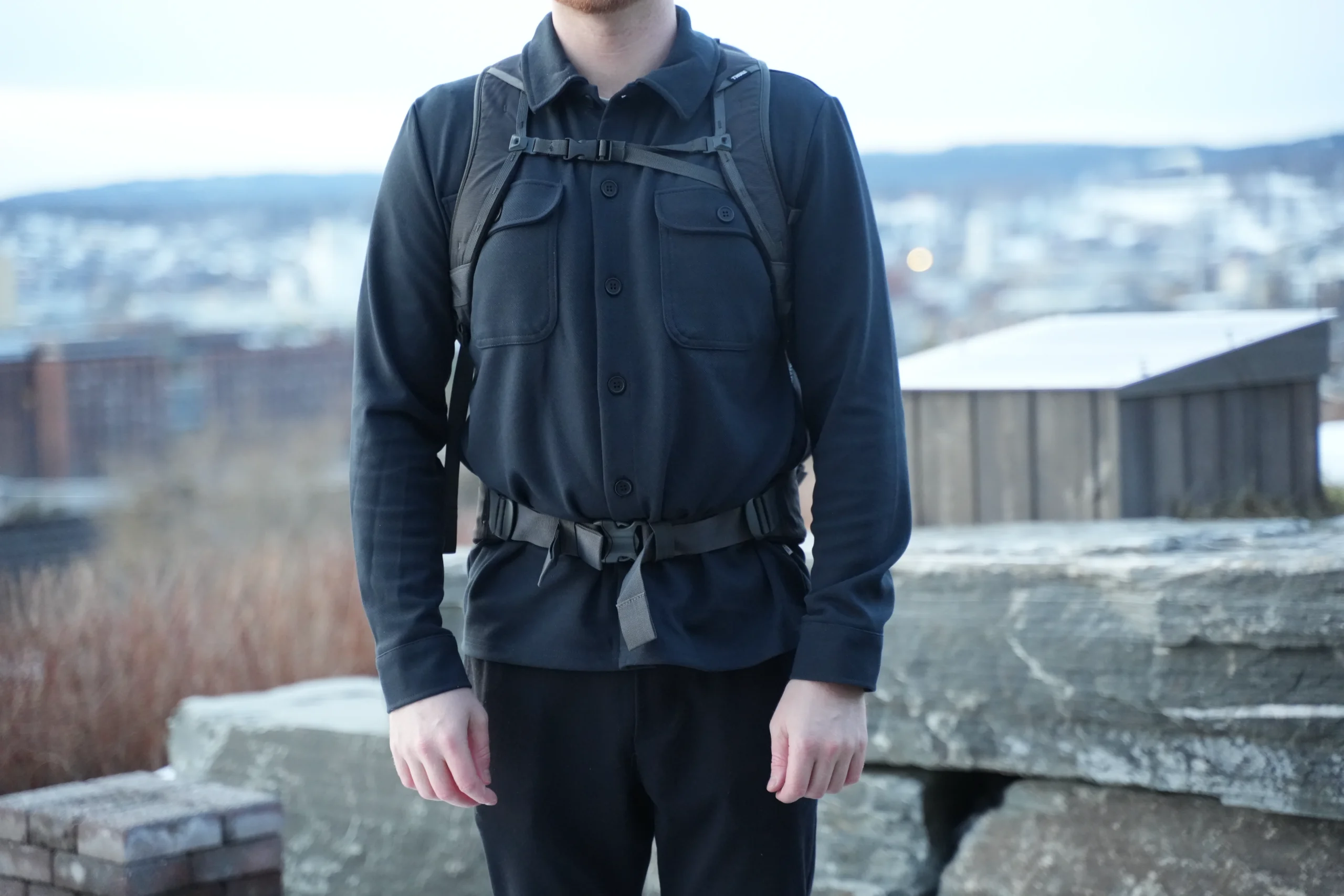
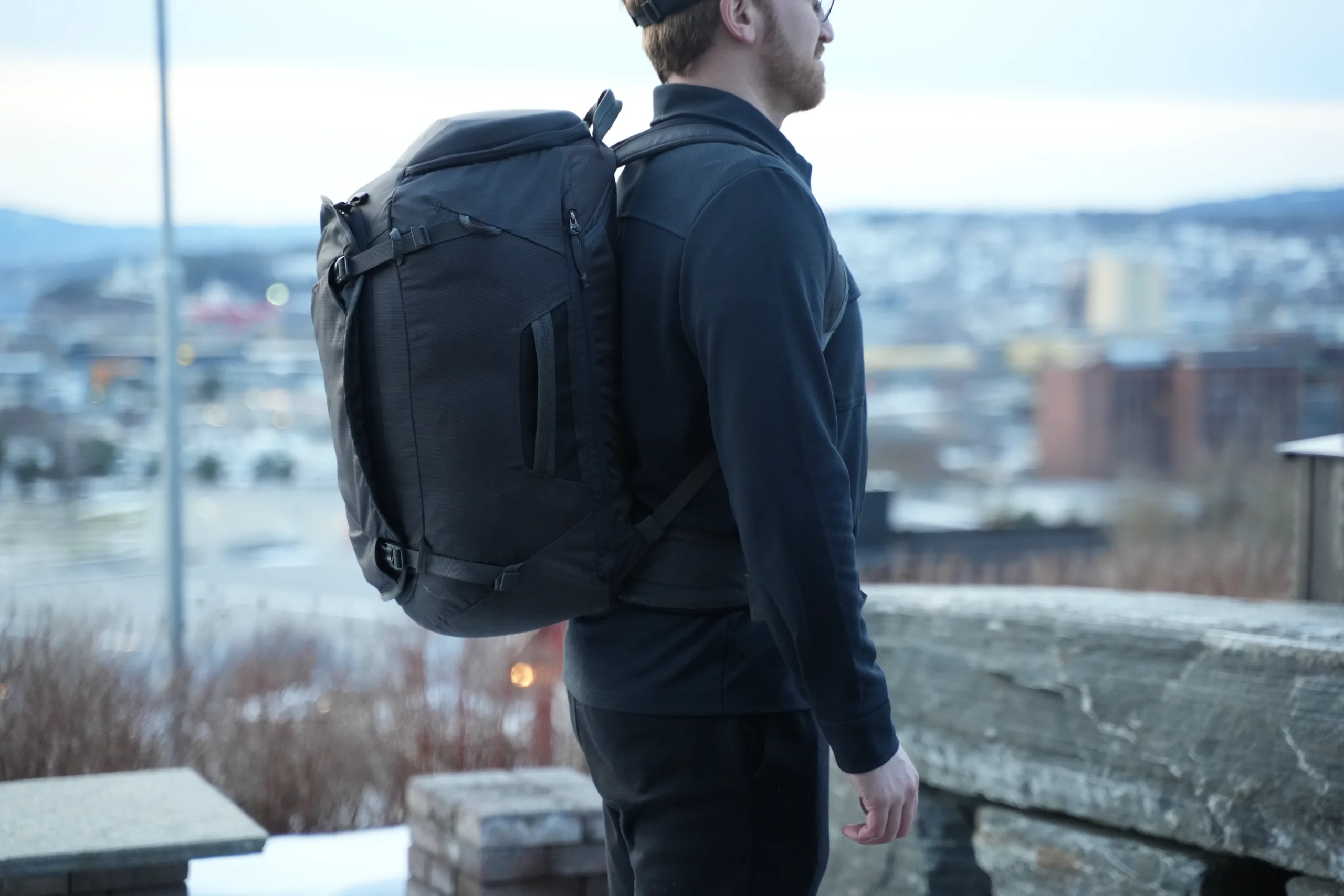
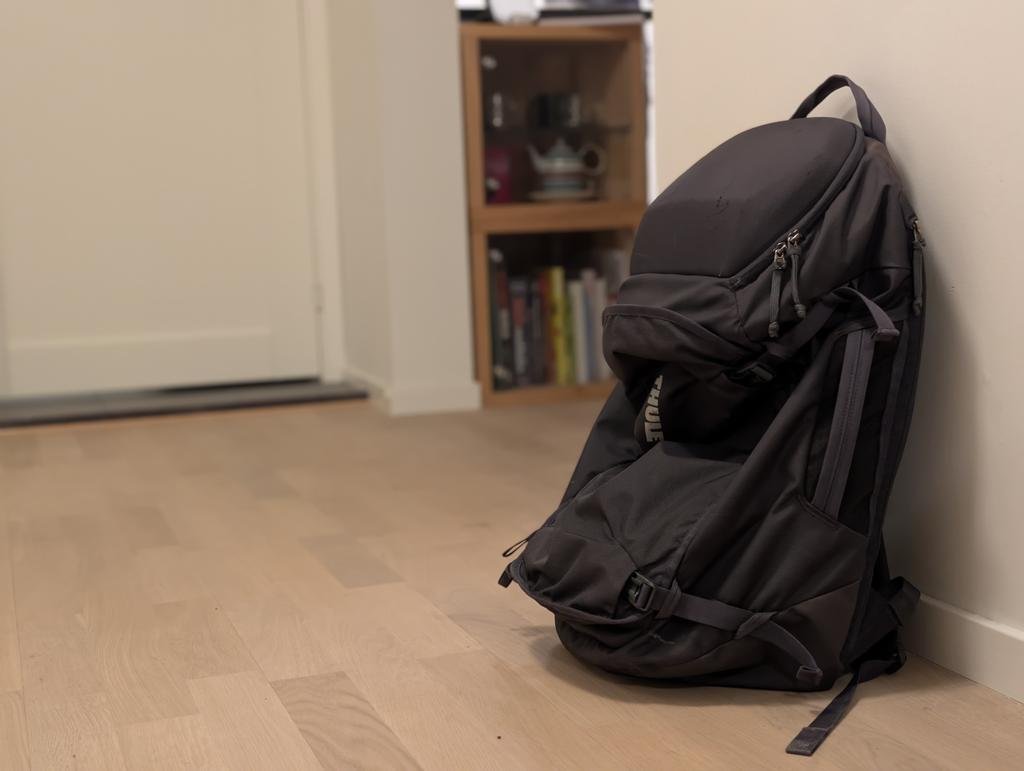
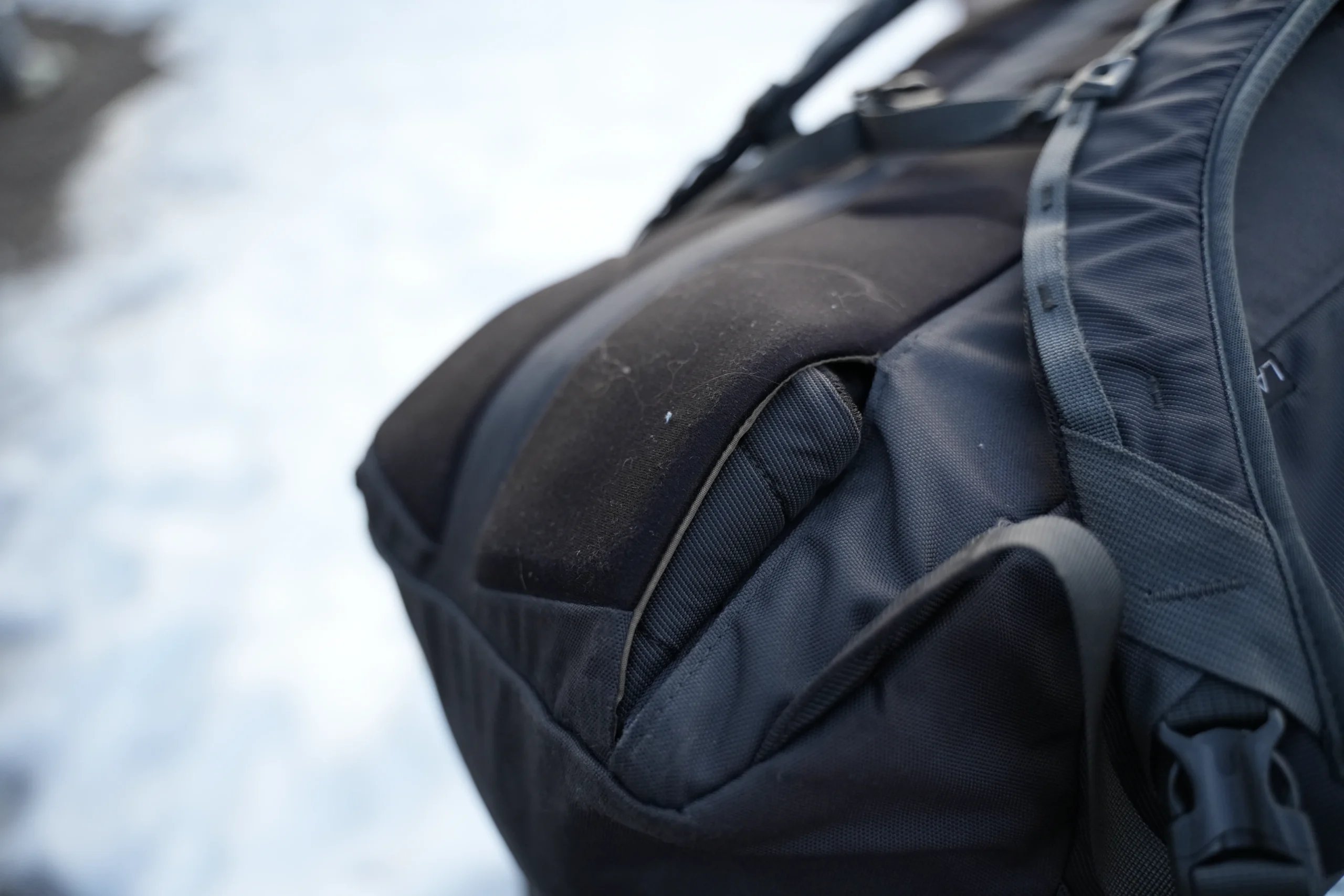
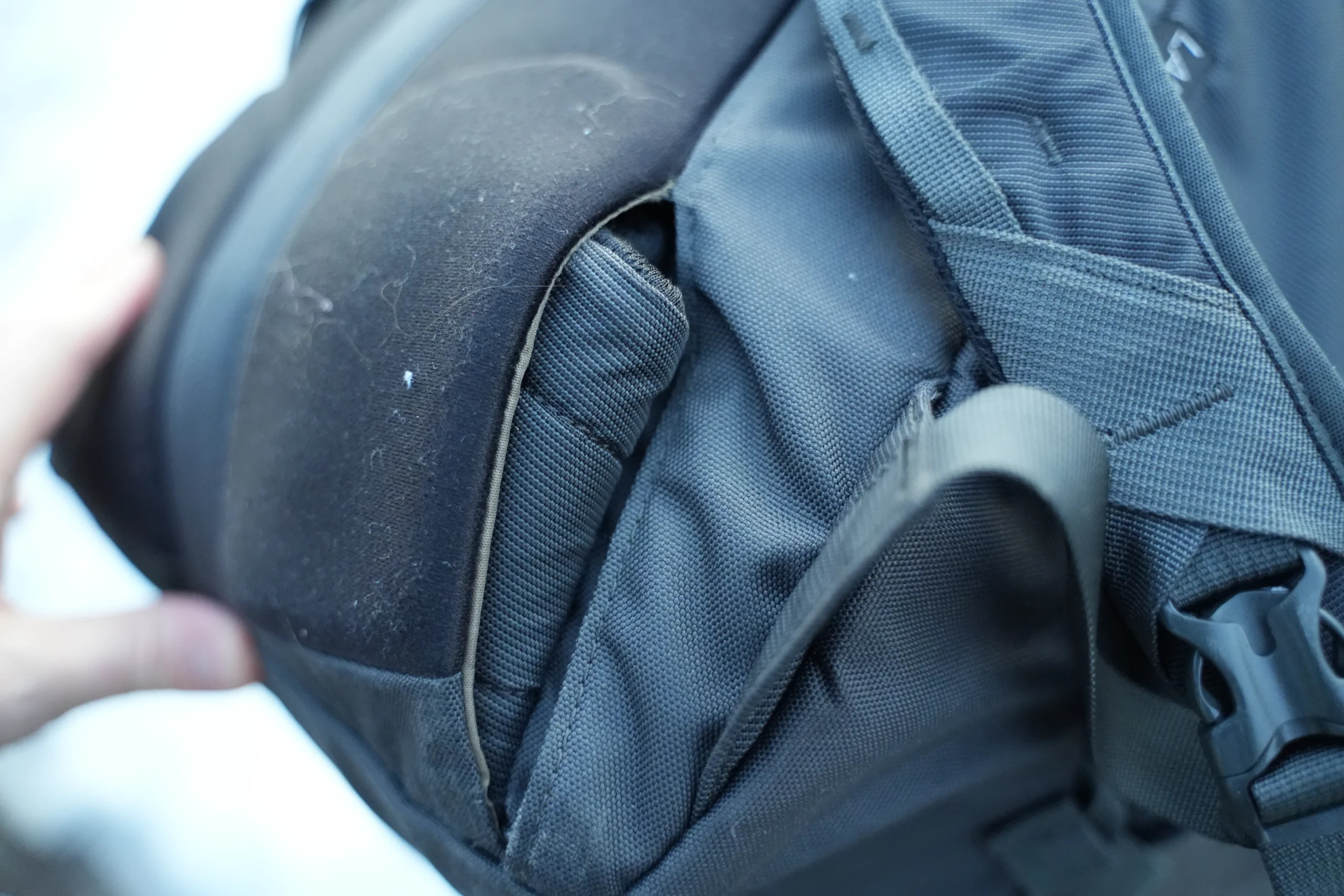
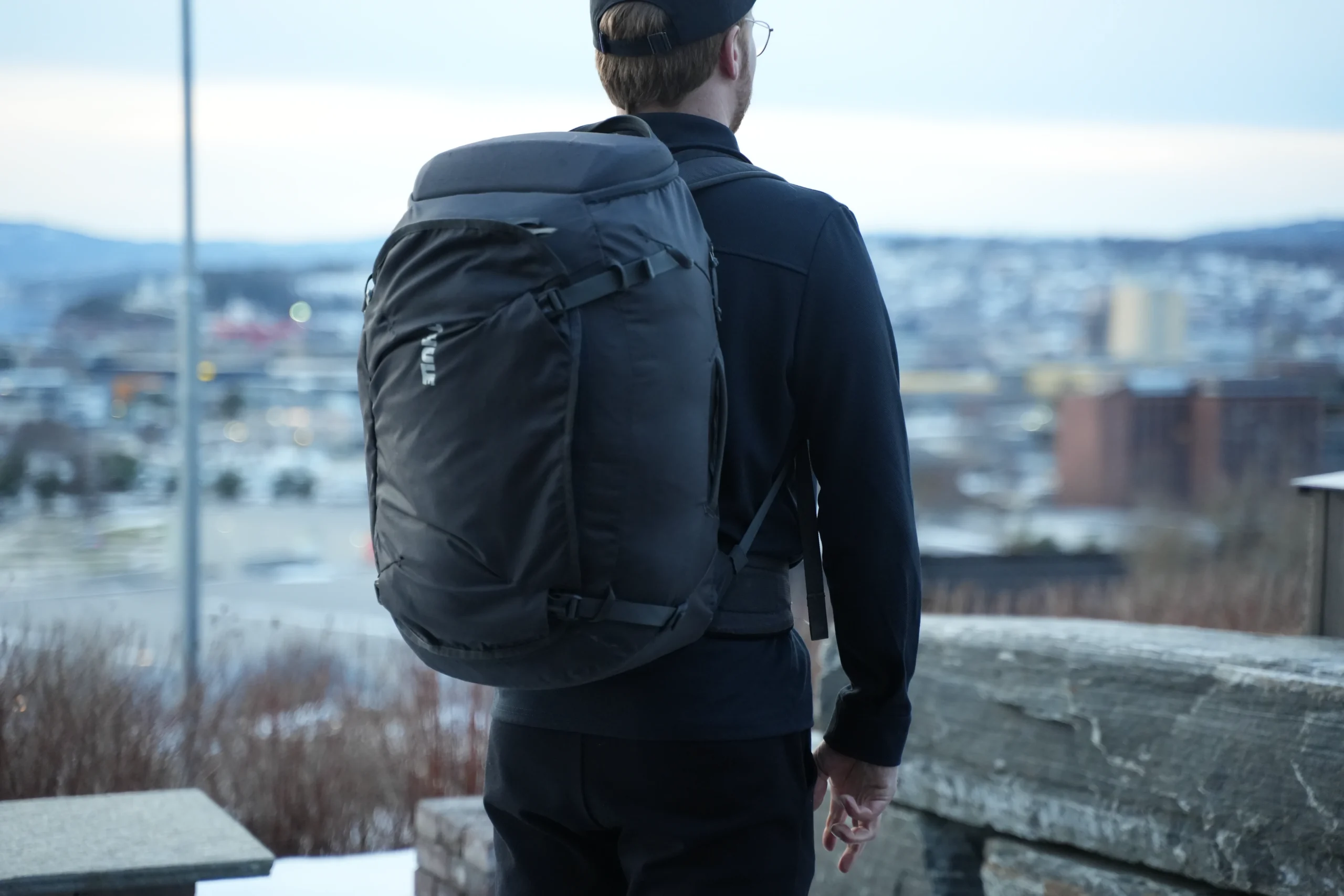
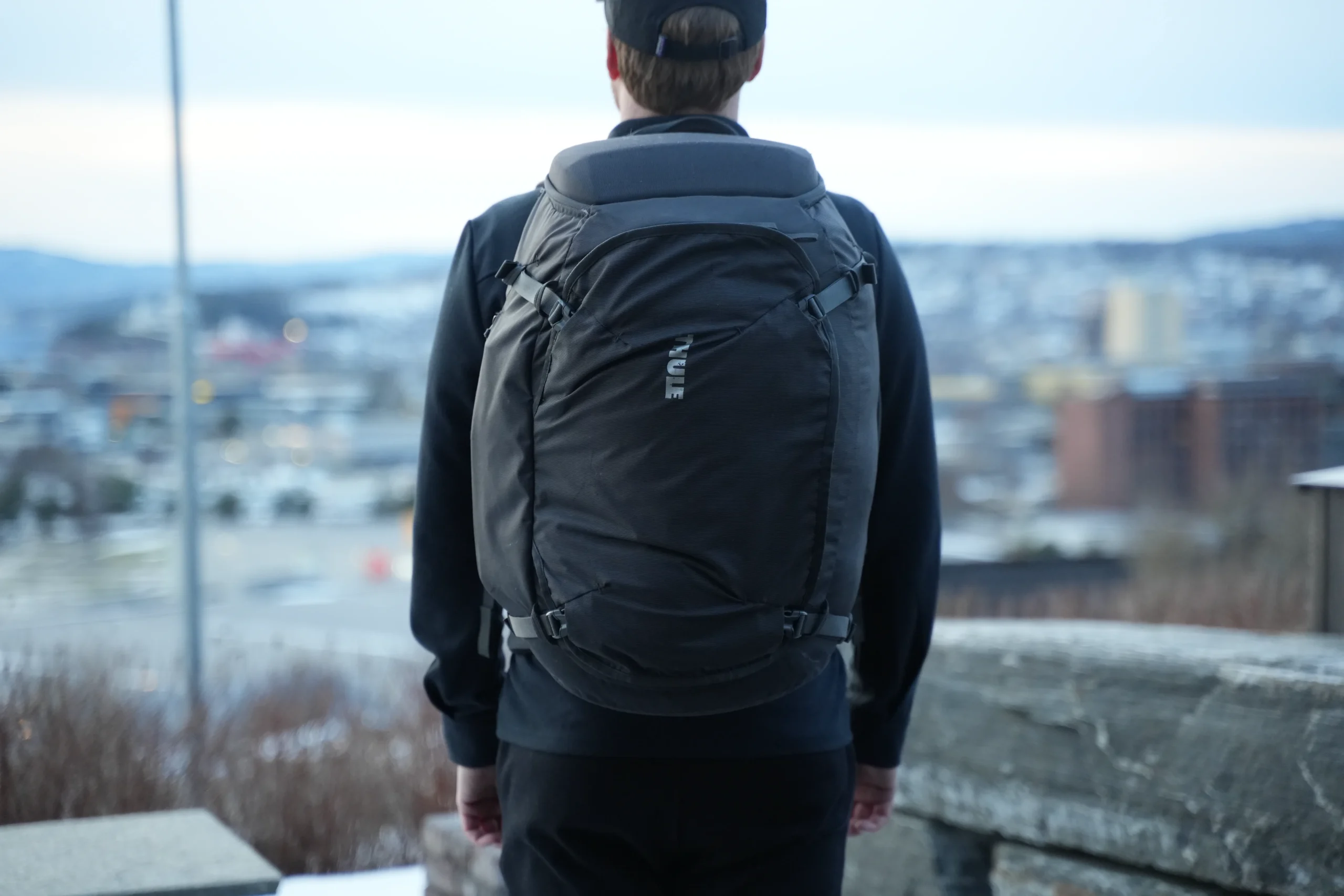
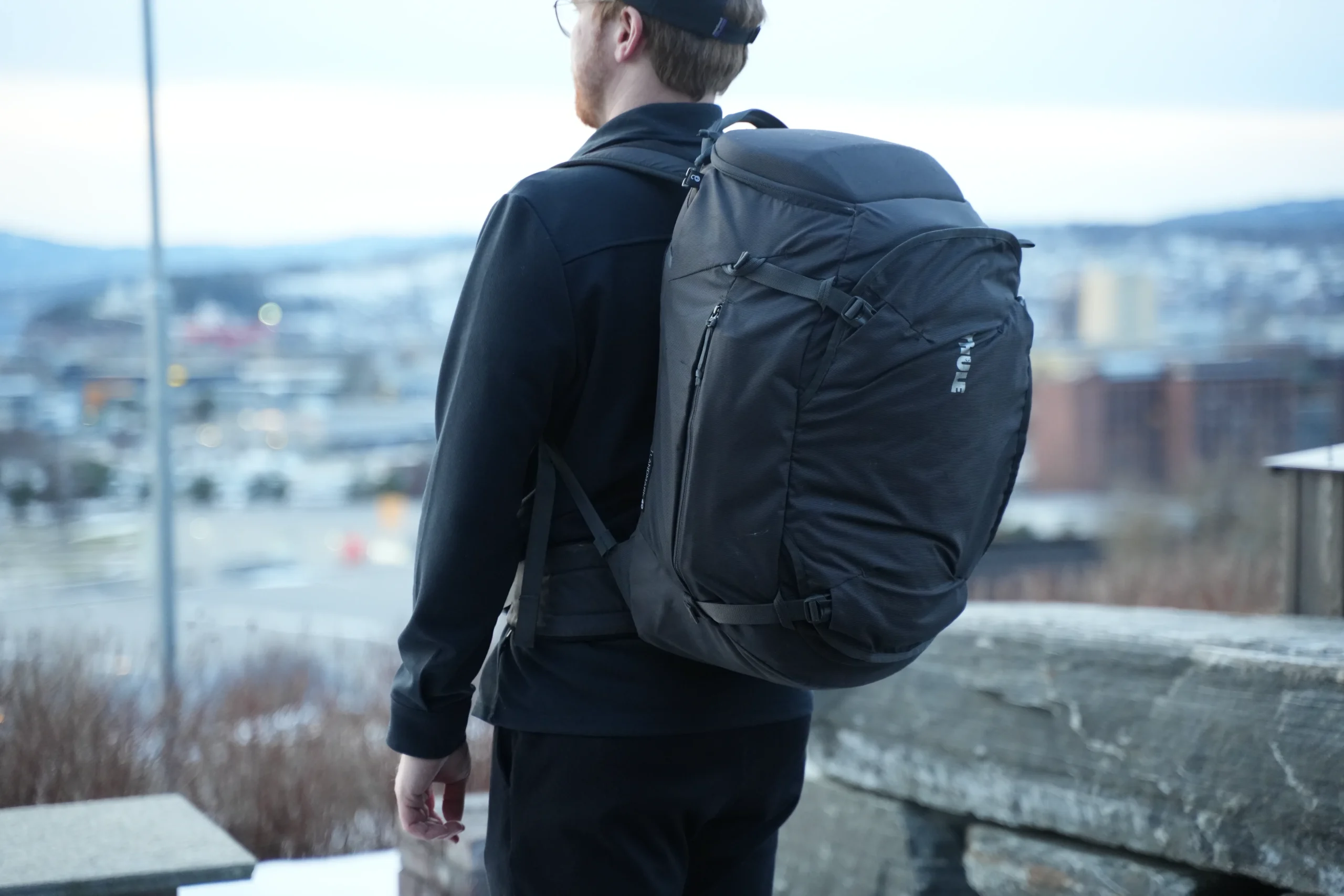
On photos, this bag often looks sharper than it does in real life. In reality, it rarely holds that clean shape because the materials are relatively thin. That helps keep the weight down, but it also means:
- The bag can look a bit slouchy
- It reads more like a functional tool than a premium “structured” travel pack
Color-wise: mine isn’t truly gray — it has a subtle green tint. I also wish Thule offered a more classic, true black option like some competitors.
What I Would Change
If I could redesign the Landmark 40 while keeping the core idea:
- Add load lifters — the single biggest improvement for heavy carry
- Add a touch more internal structure to help it keep its shape
- Slightly better top external access — either a bigger top pocket or an extra external pocket
Peak Design-style structure would help, but I also know that would likely mean higher price and higher weight.
Who I Still Recommend It For
Even after years — and despite the Osprey Farpoint 40 being more comfortable — the Thule Landmark 40 is still a very good travel pack if you want:
- A 40L carry-on-leaning travel backpack
- A unique top SafeZone compartment for tech and quick access
- A genuinely great hidden passport/money pocket
- A bag you can stuff, abuse, and not baby
- Stowable straps/hipbelt so it behaves better in transit
If you’re a “bring your life” traveler who values organization and security over perfect structure and hiking-pack comfort, the Landmark 40 is worth considering.
My Rating After Years
7 / 10
What keeps it high:
- SafeZone top organization is excellent
- Hidden CashStash pocket is outstanding
- Great overall travel functionality
- Has survived years of heavy use
What holds it back:
- Comfort isn’t best-in-class under heavy load
- No load lifters
- Looks and structure degrade when packed
Alternatives Worth Considering
Depending on what matters most to you, here are a few alternatives I’d recommend looking at:
- Osprey Farpoint 40 — Best carry comfort for heavy loads. My full review is right here.
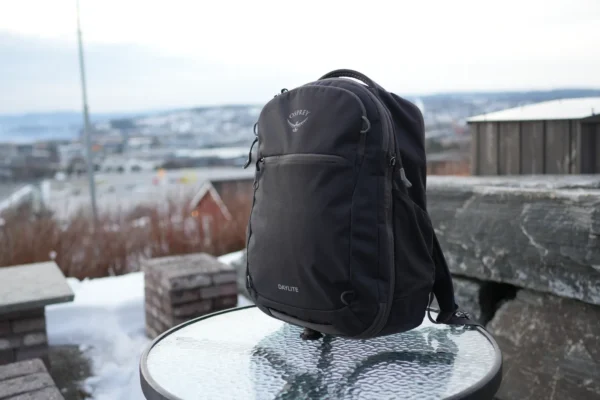
- Osprey Daylite 44 — Lighter and simpler, depending on your needs
- Osprey Daylite 35 — A more compact option in the Daylite family
- Osprey Daylite 26+6 — Great for lighter, everyday carry
- CabinZero Classic 44L — Often a value pick in the one-bag space
- Tomtoc 40L — Currently around $75 USD — a solid budget option
Final Thought
If the Farpoint 40 didn’t exist (or if I didn’t care as much about carrying comfort), the Thule Landmark 40 would probably still be my main 40L travel pack.
It’s not the prettiest and it’s not the most comfortable when overloaded — but it’s smart, it’s durable, and that SafeZone + hidden CashStash combo is still one of the best travel-oriented designs I’ve used.
Get the Thule Landmark 40 here
Disclosure: This post contains affiliate links. If you purchase through these links, I may earn a small commission at no extra cost to you. I only recommend products I’ve personally used and believe in.